Congress’s Bipartisan Child Online Safety Coalition is Unraveling
Cristiano Lima-Strong / Dec 2, 2025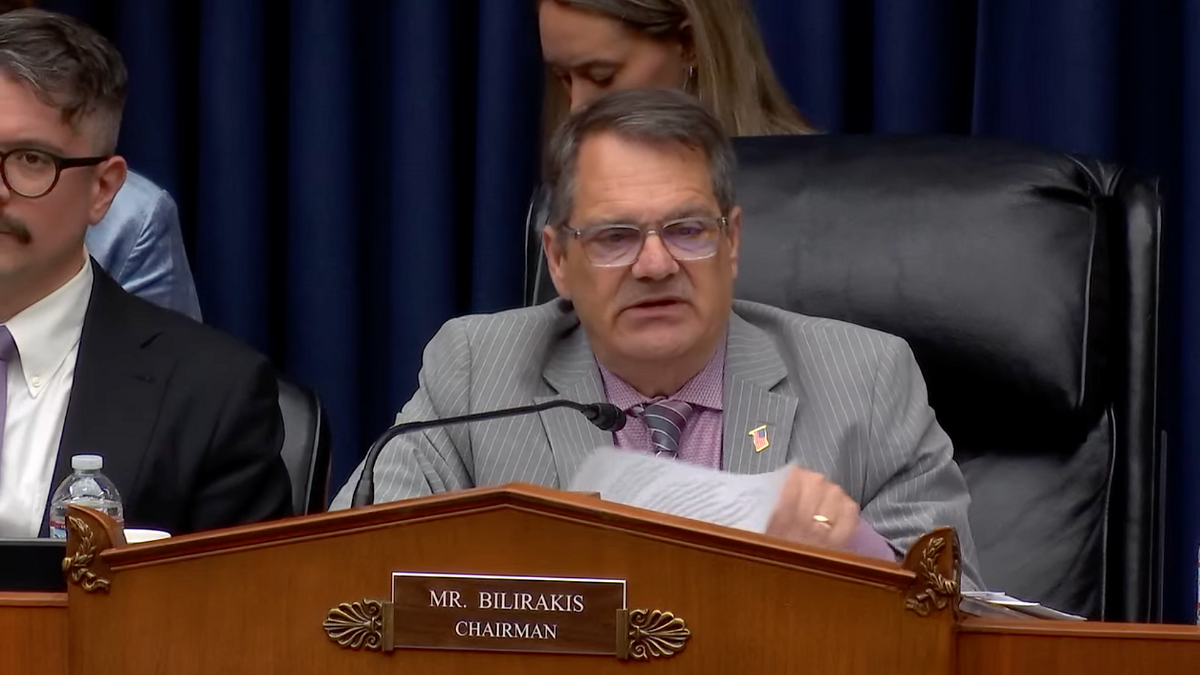
House Energy and Commerce Subcommittee on Commerce, Manufacturing, and Trade Chair Gus Bilirakis (R-FL) led a hearing on Tuesday, December 2, 2025, titled "Legislative Solutions to Protect Children and Teens Online." Source
The once-surging alliance of federal lawmakers pushing to bolster protections for children online in the United States is splintering.
The House Energy and Commerce Committee convened its latest hearing on child online safety on Tuesday, discussing 19 bills that spanned across issues including age verification, data privacy, parental controls, AI and platform transparency, screen time, scientific research, digital literacy and more.
While bipartisan support for those efforts has swelled to historic proportions over the past half-decade, the hearing was punctuated by forceful rebukes from many of the members that have led the charge on child online safety in the House, who argued the chamber has lost its way on the issue.
During the session, key Democratic lawmakers hammered the panel’s Republican leaders for diluting protections in the two most significant proposals under consideration, the Kids Online Safety Act (KOSA) and COPPA 2.0, versions of which overwhelmingly passed the Senate on a bipartisan basis last year.
“The flagship proposals for today’s hearing … have been gutted and co-opted by Big Tech, and in their process of backroom deal-making, committee leadership has shunned parents, advocates and bipartisanship,” Rep. Lori Trahan (D-MA) said of recent changes to KOSA and COPPA 2.0.
The House versions of both of the bills enjoyed bipartisan support during the last congressional session, but that is no longer the case.
Rep. Kathy Castor (D-FL), a longtime child safety champion who previously served as the two bills’ lead Democratic sponsor, said Republicans are now pushing ahead with “weak, ineffectual versions” that amount to a “gift to the Big Tech companies” and a “slap in the face” to those seeking strong guardrails.
Prior to the legislative hearing, Rep. Gus Bilirakis (R-FL) unveiled a new version of KOSA as a discussion draft that lacked Democratic support. Rep. Tim Walberg (R-MI) likewise reupped the Children and Teens’ Online Privacy Protection Act, known as COPPA 2.0, without bipartisan backing.
While an earlier House version had already narrowed protections afforded under the one that cleared the Senate last year, the latest iteration goes even further by removing KOSA’s core “duty of care” standard. The provision would impose a legal obligation on digital platforms to mitigate certain harms to kids.
Instead, the newest version would require companies to submit to annual audits of their safety practices and to maintain and enforce “reasonable policies” to address harms like violence and sexual abuse.
On COPPA 2.0, Castor took issue with the fact that many companies would only be subjected to some of its requirements if they have “actual knowledge” that children are accessing their sites, an extension of an existing standard that critics have long argued lets platforms feign ignorance to dodge accountability.
“That’s basically preserving or maintaining the status quo,” witness Kate Ruane, director of the Center for Democracy and Technology’s Free Expression Project, told Castor during the hearing.
Leaders of the more expansive version of the bills in the Senate, including Sens. Marsha Blackburn (R-TN) and Ed Markey (D-MA), have also spoken critically of the new House iterations.
While many of these lawmakers voiced reservations about earlier House versions of KOSA and COPPA 2.0 that were advanced by the panel last year, their denunciations on Tuesday were far more decisive.
Democratic lawmakers also panned the GOP-led committee’s approach to state regulation across many of the bills under consideration, arguing it would override far too many state-level child safety laws.
CDT’s Ruane said she feared the broad preemption language sought by Republicans could lead to “children having less protections at the state level than they do today.”
Democrats also voiced concern that weakened national standards would put an even greater spotlight on the enforcement efforts of the Federal Trade Commission, which has seen its workforce slashed under the Trump administration and is currently operating without any Democratic commissioners.
“Today we will be talking about all the things we want and need the FTC to do to protect kids online, but who will be doing that work: the remaining employees at the FTC who are already stretched too thin?” said Rep. Kevin Mullin (D-CA).
Energy and Commerce Chairman Brett Guthrie (R-KY) suggested KOSA had been tweaked to address concerns raised by members on both sides of the aisle. Efforts to pass KOSA and COPPA 2.0 flamed out in dramatic fashion last year after top Republicans spoke out against the push.
In preemptive defense of the measures, the committee’s Republican leadership kicked off the hearing by arguing that their bills had been carefully crafted to withstand legal scrutiny, particularly in light of recent court decisions striking down a raft of child online safety laws at the state level.
Guthrie said the bills were “curated to withstand constitutional challenges,” adding, “A law that gets struck down protects no one, and if that happened, we'd fail to protect the very children we're here to protect.”
Bilirakis echoed the remarks: “Laws with good intentions have been struck down for violating the First Amendment. We are learning from those experiences because a law that gets struck down in court does not protect a child, and the status quo is unacceptable as far as I’m concerned.”
Authors