Poland’s DSA Veto Shows How National Politics Can Stall EU Tech Rules
Fernanda Seavon / Jan 23, 2026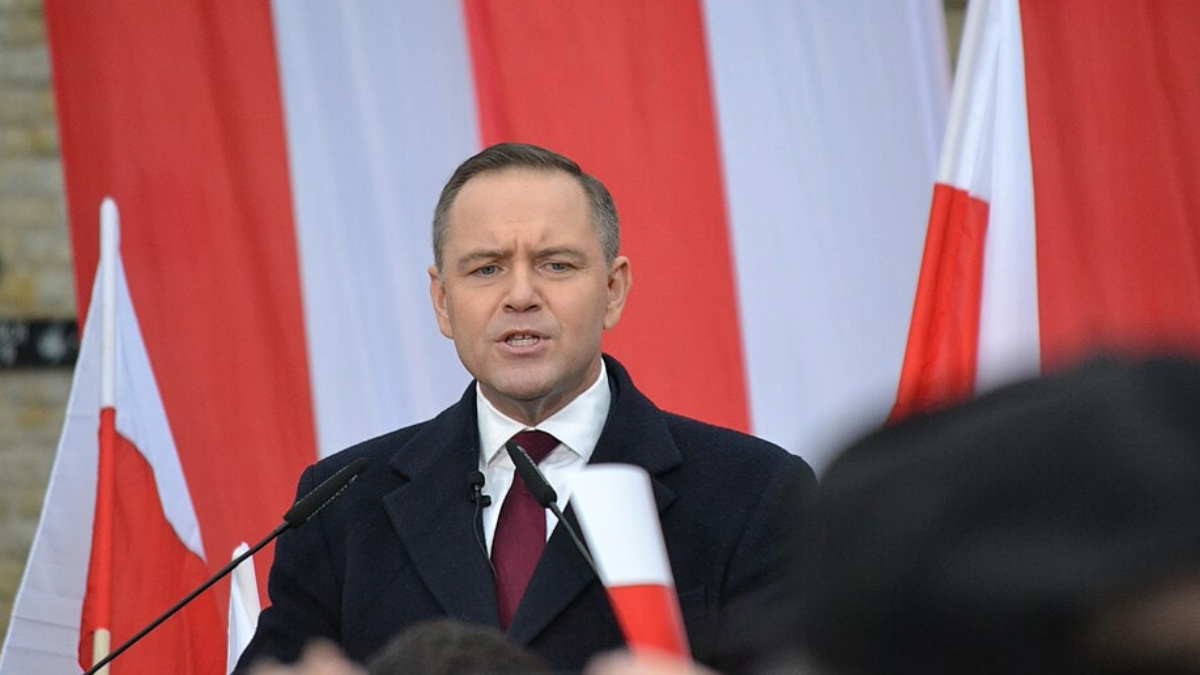
Poland's President Karol Tadeusz Nawrocki. Source: Marsilar, CC BY-SA 4.0, via Wikimedia Commons
Poland is becoming a key test case for whether Europe’s Digital Services Act (DSA) can survive the politics now gathering around it. President Karol Nawrocki has vetoed a bill that would have set up the national enforcement machinery required under the DSA, arguing it risked enabling “administrative censorship.” The move echoes a growing US-style attack line that casts the DSA as a tool for free speech control, just as the EU is trying to prove it can regulate platforms without being accused of running a “Ministry of Truth.”
The veto lands at an awkward moment for Warsaw.
Last December, Poland asked the European Commission to investigate TikTok, citing AI-generated content that encouraged Poland’s withdrawal from the European Union. In a letter to the Commission, Deputy Minister for Digitalization Dariusz Standerski warned that the widespread dissemination of AI-generated content raised doubts about whether TikTok is meeting its obligations as a “very large online platform” (VLOP) under the EU’s DSA. “The content poses a threat to public order, information security, and the integrity of democratic processes in Poland and across the European Union,” he wrote.
Poland’s request is not the first to put TikTok on regulators’ radar. The platform is already under scrutiny over allegations of foreign interference and manipulation during Romania’s 2024 presidential election, and it has drawn criticism for its lack of data transparency for researchers, weak protections for minors, and addictive design features.
“When it comes to an investigation [against VLOPs], we have different options on the table,” said Thomas Regnier, a European Commission spokesperson. “The preferred option is always when a company offers remedies to the situation and so-called commitments,” Regnier told Tech Policy Press, adding that a negotiated outcome can benefit all sides, but warned that companies that refuse to engage could face financial penalties of up to six percent of their global turnover.
An “Orwellian” plot twist
As the Commission considers whether to step up action against TikTok, Poland’s right-wing President Karol Nawrocki has moved in the opposite direction at home.
His veto blocks legislation that would have designated the authorities responsible for enforcing the DSA in Poland, laid out national procedures for penalties, appointed trusted flaggers, and established mechanisms for users to file complaints. Without these domestic rules and institutions, enforcement can be delayed or fragmented.
The move also clashes with centrist, pro-EU Prime Minister Donald Tusk, whose parliamentary majority passed the legislation to bring the DSA into force in Poland. The country’s current political landscape is set on this tension: Nawrocki has used the presidency as a counterweight to Tusk’s agenda. Even though Poland’s president does not run day-to-day government, the office has strong tools — especially the power to veto legislation — which gives Nawrocki significant leverage to slow or block Tusk’s reforms and keep the country in a state of institutional tug-of-war.
In his public statement, Nawrocki argued that while the bill’s goal of protecting citizens, particularly minors, was legitimate, the Polish version would hand government officials excessive power over online speech, enabling what he called “administrative censorship.” He went on to compare it to the “Ministry of Truth” in George Orwell’s 1984 — a metaphor that mirrors Trump administration-style criticism of the DSA.
“When the Ministry of Justice published an early draft of the bill in 2025, concerns about threats to freedom of expression were entirely justified, as the draft allowed the Office of Electronic Communications (OEC) to fast-track content blocking without proper due process,” explained Dorota Głowacka, a Polish lawyer and litigation expert at the Panoptykon Foundation. “Ultimately, numerous safeguards were added, significantly reducing the risk of arbitrary restrictions on freedom of expression online.”
Among these safeguards, Głowacka pointed to the judicial oversight of blocking decisions and the right for the author of disputed content to participate in proceedings before the President of the OEC. Lawmakers also narrowed the scope of cases the President could handle, limiting them to a clearly defined list of 27 serious criminal offenses. Further protections introduced during the parliamentary process sought to reduce the risk of political abuse, such as requiring officials involved in issuing blocking orders to be politically independent and establishing a public register of those decisions. Additionally, any appeal to a court would automatically suspend enforcement, ensuring the content would remain online until a judge issued a final ruling.
“In my view, the veto therefore lacked substantive justification and was purely political in nature,” concluded Głowacka.
Where does the veto leave Poland?
“We have diplomatically engaged with the Polish authorities to try to remedy the situation [since the veto],” said Regnier, the spokesperson for the EU Commission. The Commission has already initiated proceedings, and the dispute is now headed to the Court of Justice of the EU.
Politico reported that Nawrocki’s decision puts Poland at risk of EU fines as high as €9.5 million. The potential penalty is the latest point of friction between Warsaw and Brussels, which has repeatedly clashed with Poland over rule-of-law and institutional reforms. Nawrocki’s Law and Justice (PiS) party first came to power in 2015 and began reshaping Poland’s courts and key regulations — reforms criticized by EU institutions. Between 2021 and 2023, the bloc imposed roughly €320 million in penalties on the country over those changes.
“The first ones who would lose a lot from such a decision [the veto] are Polish citizens. Not the EU as a whole — definitely we lose too — but the ones who would lose the most, who would be the most affected are Polish citizens,” pointed out the Commission spokesperson. He pointed to DSA measures such as greater user control over recommendation systems and the ban of targeted advertising to minors.
Last year, the European Commission took Czechia, Cyprus, Poland, Portugal and Spain to the EU’s highest court for failing to correctly apply the DSA. Poland is currently the only country in the EU that has failed to designate a national DSC. “Users in Poland need this law. We cannot afford to further delay the implementation of a regulation that limits the powers of technology companies and offers a real chance to hold them accountable for their harmful practices,” stated Głowacka.
In an email response, the press office of the Polish Ministry of Digital Affairs said it is preparing a new draft of the bill. “On January 12, Dariusz Standerski already launched the consultation process, with representatives of professions of public trust taking part in the first meeting,” the press office told Tech Policy Press.
Looking ahead to 2026 European elections
The Polish standoff comes as Europe heads into an election-heavy year and regulators are bracing for a new wave of online manipulation. Across the EU, authorities are increasingly focused on the use of AI-generated political content, coordinated amplification tactics, and foreign interference — exactly the risks the DSA was designed to address.
Under the DSA, DSCs hold roundtables with major tech platforms and “stress tests” to ensure they prepare for elections, discuss threats, and implement risk mitigation measures against disinformation and AI-generated content. And other resources, such as the Practical Guide from Digital Freedom Fund, exist to explain the legal pathways to hold platforms accountable.
But the DSA’s credibility depends less on what the law says on paper than on whether regulators can act quickly enough to shape the information environment in real time. “The question is: can the current regulatory authorities enforce the law properly, fast enough, decisively enough, in order to actually have a positive impact on the information ecosystem right now?” asked Jan Penfrat, a senior policy advisor at EDRi. “Not in a year or two from now when some investigation may have finished.”
Penfrat argued that this enforcement challenge is only becoming more political, as opponents increasingly frame DSA intervention as censorship — a narrative also amplified by criticism from the United States.
Authors