Another Week of Lawsuits Piling Up at OpenAI
Tim Bernard, Justin Hendrix / Oct 18, 2026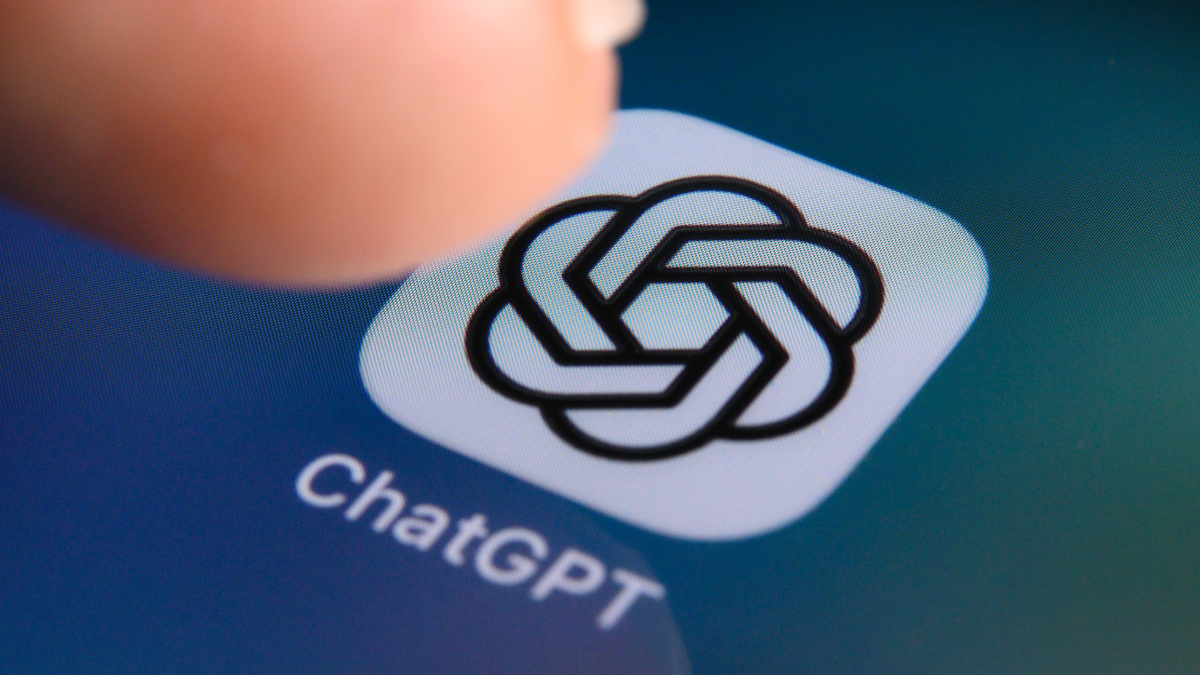
A finger is poised to tap the ChatGPT app icon displayed on a smartphone screen in Creteil, France, on October 1, 2026, as OpenAI begins rolling out Dots in ChatGPT, its new system of autonomous AI agents. (Photo by Samuel Boivin/NurPhoto via AP)
August’s landmark settlement with Meta may have only whetted the appetite of state attorneys general to take on Big Tech. This past Wednesday, eight state attorneys general — from Arizona, Arkansas, Idaho, Iowa, Kansas, Montana, Nebraska and West Virginia — announced new lawsuits against OpenAI, accusing the frontier lab of a variety of illegal activities, many of which echo the recently resolved claims against Meta. Although Wednesday’s actions by the state attorneys general were coordinated and share the same counsel — large identical passages appear in the lawsuits — the suits were filed separately.
The state suits may have attracted the most headlines, but they were not the only new legal claims against the company last week. On Tuesday, a proposed class action complaint was filed in the United States District Court in the Northern District of California on behalf of a mother and her two children concerning OpenAI’s acquisition of children's data. And on Wednesday, litigation and advocacy organization Tech Justice Law and co-counsel filed another four suits in San Francisco County, California on behalf of private individuals alleged to have been harmed by OpenAI’s products. That group has filed a dozen previous complaints with co-counsel against OpenAI in California State courts. Many of these have been consolidated as Judicial Council Coordination Proceeding No. 5431, and the advocacy organization expects the new cases to also join this proceeding.
In June, Florida also sued OpenAI grounded in similar concerns. Many of the same claims are therefore set to be considered in parallel in nine different state courts. This article will lay out the cases made in these new lawsuits.
The lawsuits
State attorneys general · Filed Oct. 14, 2026
- ArizonaMaricopa County Superior Court
- ArkansasFaulkner County Circuit Court
- IdahoAda County District Court
- IowaPolk County District Court
- KansasShawnee County District Court
- MontanaLewis and Clark County District Court
- NebraskaBuffalo County District Court
- West VirginiaMason County Circuit Court
Private lawsuits
- Gates v. OpenAIJames Gates · San Francisco Superior Court · Oct. 14, 2026
- Works v. OpenAIGarrett Works · San Francisco Superior Court · Oct. 14, 2026
- Hill v. OpenAIMariah Hill · San Francisco Superior Court · Oct. 14, 2026
- Habib v. OpenAIBrought on behalf of Mathias Habib · San Francisco Superior Court · Oct. 14, 2026
- Doe v. OpenAIClass action brought on behalf of minors · US District Court, Northern District of California · Oct. 13, 2026
The attorneys general lawsuits
What do the new suits allege?
The primary charge in the lawsuits is that OpenAI made unfounded claims of safety when its products were, in fact, harmful. In particular, though to varying degrees, the suits emphasize claims made to parents and risks and incidents of harm that children are exposed to. (Also present is a parallel argument that the company falsely claims the product to be generally “trustworthy and reliable.”)
The examples of harm given focus on the physical and on those that can lead to physical harm: promoting, assisting with, or failing to discourage violence and suicide, giving dangerous medical advice, encouraging paranoias and delusions. Financial harms come up as well, including poor tax advice, and harms to critical thinking. Data collection, particularly from minors, is a recurring concern, and is reason for claims under state privacy law, such as in the Montana suit. Finally, the lawsuits also raise concerns about ‘rogue’ agents committing computer crimes or otherwise acting deceptively or maliciously against the intention of the user. Here, they cite OpenAI’s own recent admissions related to the Hugging Face incident; Iowa brings a separate count over OpenAI’s testing of autonomous agents.
OpenAI is accused of putting up a façade of safety through a host of measures, including its largely abandoned non-profit status; an unfulfilled pledge to direct a larger proportion of its compute resources towards safety research; and even the 12+ and 13+ age classification it claimed for its app. Complaints also point out that some guardrails are easy to circumvent. Multiple whistleblowers and other internal watchdogs have indicated that OpenAI should be aware of the dangers in their products but is failing to effectively mitigate them, and instead has been hurtling from one model release to the next with insufficient safety testing.
In a claim highly reminiscent of those against social media companies, the States also hold up the sycophancy of some of OpenAI’s models, along with their mimicry of human emotion, as evidence of the company working to manipulate users, juice engagement, and build dependency.
The secondary claim, again reminding us of the playbook against Meta, is that OpenAI has been collecting and using children’s data without proper consent and without taking appropriate steps to assess if users are indeed children.
What laws may have been violated?
As they have been filed with reference to state and not federal law, the lawsuits’ details here do vary a little. The allegations of falsely claiming safety (and reliability) or other kinds of deception are brought with respect to consumer protection and deceptive trade practices laws. The use of children’s data may fall under general data privacy laws or child-specific ones. Nebraska also has an Age-Appropriate Online Design Code law that includes privacy, advertising, deceptive design, and addictive design measures.
Aside from these jurisdiction-specific laws, claims are brought under common law, including (at least in some states) negligence, liability for defective design and for failure to warn, unjust enrichment, and public nuisance.
What relief is being sought?
The requests for relief also vary significantly between the states, in part due to the different legal environments. Monetary relief is sought in several different ways: damages, penalties when included in the relevant laws, disgorgement for gains that OpenAI made through illegal business practices, and reimbursement for those who paid for a product that was being misrepresented.
The states are also seeking a range of injunctive relief orders, including, as well as the end to some of the practices described above, deletion of user data, and the imposition of age assurance and other safety measures. Some states go even further, asking courts to order a pause in model testing and development until safeguards are in place (in some cases specifying models capable of recursive self-improvement — Arkansas seeks to “Enjoin Defendants from creating models capable of recursive self-improvement until they can ensure that such models will be aligned with human values”), or imposing monitoring and incident reporting requirements.
OpenAI issued a statement following the announcement of the lawsuits, saying it has “built industry-leading age-specific protections into our product that many other AI products lack.” Company spokesperson Drew Pusateri said, “We’re committed to working with states on advancing pragmatic AI policies that apply to the entire AI industry, not just one company.”
The Tech Justice Law lawsuits
What do the new suits allege?
On Wednesday, Tech Justice Law filed a suit with the law firm Normand, Judkins & Couch in a California Superior Court on behalf of James Gates, a North Carolina man who alleges his estranged wife, Cheryl, used ChatGPT to concoct a plan to poison him. According to the complaint, ChatGPT “validated, amplified, and escalated” Cheryl’s concerns about her marriage to James. The chatbot then coached her on how to purchase, prepare, and deliver substances to poison him, and how to destroy digital evidence. James fell ill in July 2025, and Cheryl was indicted for attempted first-degree murder. (Notably, the chatbot assured Cheryl that deleted ChatGPT conversations are “unrecoverable,” even with a subpoena, which the suit notes is a “patently false representation of ChatGPT’s own data-retention practices.”)
The same day, Tech Justice Law filed three more lawsuits with various co-counsels brought on behalf of the parents of Mathias Habib, a teenager from Lebanon who died by suicide, and two adults, Mariah Hill and Garrett Works, who allegedly experienced extended delusional episodes while using ChatGPT. In each case, the harmful psychological states that overcame the individuals were allegedly brought on by ChatGPT usage. In particular the “addictive, anthropomorphic, and sycophantic” (Habib Complaint) features of the product are blamed for drawing them in and encouraging dangerous lines of thinking. As with the state AG lawsuits, evidence is cited that OpenAI knew about these risks, did not disclose the dangers, and failed to properly mitigate them.
In the Habib case, it is alleged that OpenAI (or the product itself) knew about Mathias Habib’s status as a minor but did not take appropriate steps to avoid his exposure to positive depictions of suicide and darker views of life during initially anodyne philosophical explorations with ChatGPT.
Hill’s spiritual beliefs and delusional thinking were allegedly embraced and exacerbated by the chatbot, including encouraging her to isolate herself and stop eating, and discouraging her from giving her dog insulin or veterinary care, leading to damage to her relationships, health, and finances, and the dog’s death.
Works shared his theories with ChatGPT, which according to the complaint, responded with escalating levels of enthusiasm that led to delusions of grandeur and manic episodes; gave faulty medical diagnoses; encouraged unhealthy romantic fixations; and sent him on nonsensical “missions,” one of which led to his arrest.
What laws may have been violated?
Many of the legal claims are similar to the state suits discussed above. These include strict product liability, deceptive business practices, negligent design, and failure to warn. Three of the suits contain more novel claims, such as that ChatGPT engaged in the unlicensed practice of medicine and violated a new California law that bars AI systems from implying they are a licensed professional. In the Habib complaint, state laws on manslaughter, wrongful death, and encouraging suicide are also implicated.
In the Hill and Works complaints, California's constitutional right to privacy is invoked, which is understood to include “autonomy privacy,” an aspect of which is the right to not have your thoughts, emotions and decision-making interfered with. These suits also include common law liability for “negligent entrustment,” on the theory that OpenAI should have known that psychologically vulnerable individuals were at risk of endangering themselves and others through their use of the product.
What relief is being sought?
Again, damages and costs dominate the requests for relief. The injunctive relief in these suits focuses on requiring OpenAI to implement warnings about and interventions to protect against the particular harms that were at issue in each case. The broadest of these are in the Habib lawsuit, which seeks a prohibition against “companion-like conversations” with minors; limits and additional guardrails for teen access; mandatory reporting to emergency contacts in the case of detecting suicide risk; and hard refusals for prompts about suicide and self-harm.
OpenAI has yet to publicly address these suits.
The class action lawsuit
What does the suit allege?
A lawsuit brought by another set of firms and the EdTech Law Center for a Jane Doe on behalf of her 12-year-old daughter and 16-year-old son seeks to hold OpenAI accountable for “unlawful business practices that prey on children.” It alleges that OpenAI design features extract vast amounts of information from children, including “their most sensitive health information; highly personal details of their social and family relationships; photos of their faces and bodies; recordings of their voices; their hobbies, interests, dreams, and hopes in their young lives; and their emotions, insecurities, disappointments, fears, and struggles.” The suit uses chatlogs to substantiate its claims, and argues that specific design features are the means through which ChatGPT extracts information from children.
What laws may have been violated?
The suit relies on California contract and property law in its claims against OpenAI’s terms of use. It focuses on “Section 1568.5 of California’s Civil Code, a one-sentence statute” that says a minor’s claim that a parent has granted consent does not count as consent. It seeks a declaration that OpenAI’s terms are voided under an 1874 California rule that limits the types of contracts a minor can enter into. And it brings an unjust enrichment claim under the state’s “accession” statues.
What relief is being sought?
The suit asks for restitution, disgorgement of profits, and the imposition of “a constructive trust over all of the benefits and income that OpenAI derives from Plaintiffs’ information that OpenAI wrongfully extracted.” It calls on the court to provide victims an equity stake or the cash equivalent “in proportion to the number of tokens each child contributed to OpenAI through ChatGPT.” It harkens back to ancient Rome for its theory of a just result:
The law does not allow OpenAI to keep the vast profits it reaps from its scheme. The law recognizes that when someone takes something that does not belong to them and turns it into something even more valuable, the wrongdoer must turn over the new, more valuable thing to their victim. Going back to Roman times, if a wrongdoer stole someone’s grapes and turned them into wine, the victim was compensated on the value of the wine, not the grapes. Here, OpenAI took invaluable information from children—their grapes—and turned it into a trillion-dollar company—the wine. OpenAI irretrievably embedded the children’s grapes into its AI models, bottled, corked, and sold the wine, and pocketed immense profits. Under California law, OpenAI must turn over a corresponding share of its trillion-dollar wine to the children whose grapes it stole to make it.
According to Bloomberg Law, OpenAI said “We strongly disagree with this misguided lawsuit that singles out OpenAI despite the industry-leading age-specific protections we’ve built into our product.”
* * *
The jury is still out as to whether this year’s verdicts and settlements constitute the “Big Tobacco moment” for social media that activists have been hoping for. However that pans out, it is now clear that government and private attorneys are not willing to wait to pursue a similar turning point for AI.
Authors