Can the Pope’s Magnifica Humanitas Rally Support for Technology Governance?
Daniel Dobrygowski / May 29, 2026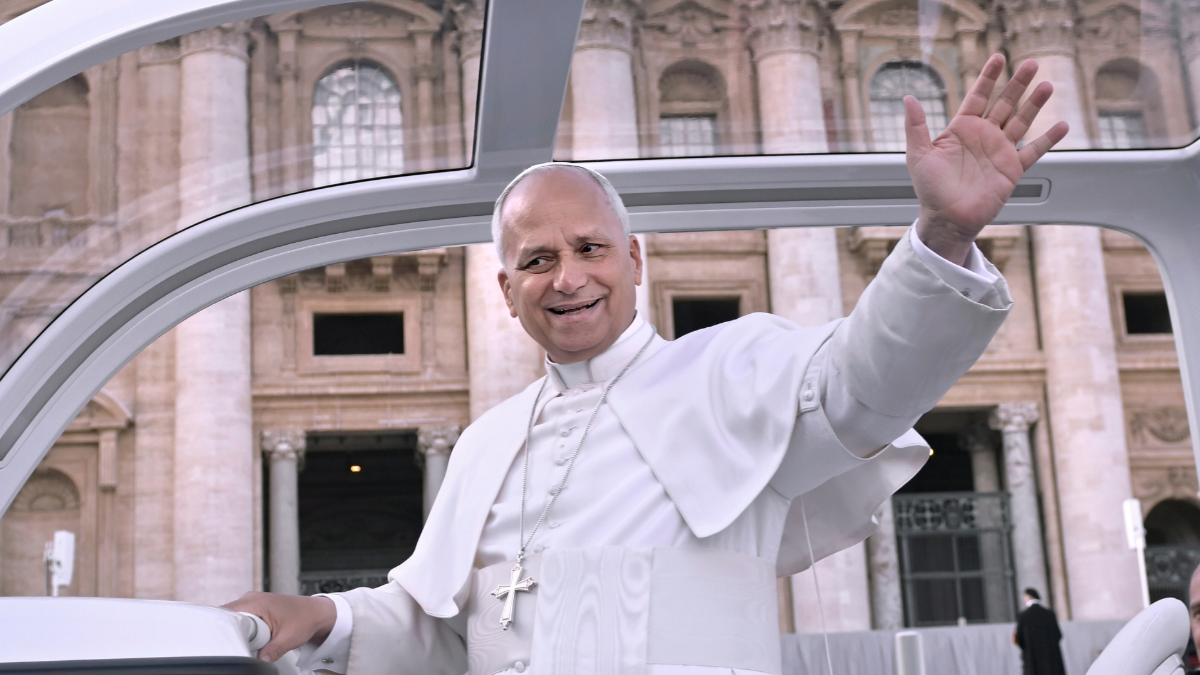
VATICAN CITY: On May 25th, the first encyclical of Pope Leo XIV, Magnifica Humanitas, will be presented at the Vatican. The photo is part of a collection of photos of Pope Leo XIV. Photo by: Rocco Spaziani/picture-alliance/dpa/AP Images
Each generation inherits the task of shaping its own era, of guiding history to become a place where the dignity of every person is safeguarded, justice is promoted and fraternity is made possible. Yet every era also runs the risk of creating an inhumane and more unjust world. (Leo XIV, Magnifica Humanitas, ❡1)
With these words, Pope Leo XIV’s Magnifica Humanitas serves as a rallying cry for good technology governance at a time when it is most needed. Technology governance refers to decisional guardrails (either enshrined in law or part of an organization’s own protocols) that help to ensure that innovation develops in a way that meets the public’s expectations and protects the things people value.
Unfortunately, the governance of AI has suffered many setbacks. While the wide scale emergence of generative AI in the 2020’s first offered a promising opportunity for promoting human dignity and protecting human agency in a time of technological change, the logic of competition rapidly overtook discussions of responsibility. By 2024, some leaders, especially in Silicon Valley and in Washington, DC, began demonizing proponents of safety and responsibility and dismantling the regulatory and corporate governance structures that had been recently created. Good governance lacked the bully pulpit of the US Presidency or the financial pull of a venture capital-backed “Techno-Optimist Manifesto.”. Even in the EU—long the bulwark of privacy and worker protections—technology governance seemed to be on its back foot.
With this new encyclical, can a Catholic ethics of technology point the way to govern AI and other technologies? Already, Magnifica Humanitas is a consequential milestone both for the Church’s engagement with developments in our modern world and for its ringing endorsement of technology governance. It crowns a century and a quarter of Catholic social teaching on the moral dimensions of economic and technological transformation, drawing an explicit line from Rerum Novarum's engagement with industrial capitalism at the turn of the 20th century through Vatican II's embrace of the modern world, Saint John Paul II's teachings, and Pope Francis's fraternal vision for a humanity encountering massive change. At the same time, it inaugurates the Church's first systematic engagement with technology governance as a field in itself rather than merely a set of ethical edge-cases.
This vision and moral leadership are sorely needed in AI and emerging technologies like biotech and quantum computing. AI oligarchs have worked to make the politics of regulation virtually impossible around the world, with governments (in all but a few cases) either stepping back from commitments to govern tech or refusing to begin the process at all. While, as discussed below, not every single tech leader belongs to this group, the vast majority have anointed themselves techno-optimists, for whom the erosion of democracy and human dignity are apparently necessary—and perhaps even desirable—components of AI advancement. Meanwhile, regular people, especially young people, disagree. Both verbally at university commencements and through self-organized action like the AI Resist List, individuals demand autonomy and choice in response to the purported inevitability of predictive algorithms. Pope Leo’s new encyclical defines a Catholic ethics of technology at just the time when people are ready to take action, and it may be the rallying point to put in place the necessary pieces to govern the future of technology for all of humanity, not just a well-networked few.
How Magnifica Humanitas supports technology governance
The formation of a Catholic ethics of technology is inextricable from people's encounters with emerging technologies for the past century and a half. Where livelihoods have been impacted by mechanization or digitalization, the church has asked how people can be protected. Where new communication media proliferate around the world, the church has asked how truth can be assured. And where technologies have threatened to sever people from their fellow humans or from their own notions of themselves or even from a relationship with God, the church has mounted a defense of human dignity. Technology governance serves similar goals, from an organizational and regulatory perspective. It is concerned with how the development and use of technology can support important values, from privacy to security to fairness.
While Magnifica Humanitas deeply contends with important issues, its core principles, based on the past century of Social Doctrine which it endorses and expands, offers a Catholic ethics of technology that includes at least these principles:
Technology is not neutral
In Magnifica Humanitas, the Pope accurately describes the choice before us: to use technology to better humanity and build a society where God can be present in our love, or to use AI to build the Tower of Babel that destructively tears us from fellow humans and holiness. This choice, it is clear, is ours. Tools, even AI, bear the moral imprints of their makers and "every technical tool embodies choices and priorities through what it measures, ignores and optimizes, and how it classifies people and situations" (Magnifica Humanitas, ❡104).
Ethics, and good governance, cannot be an afterthought to technology development because technology is never neutral. It takes on the characteristics of those who devise, finance, regulate and use it. Therefore, the primary choice is not between a 'yes' or 'no' to technology, but rather between creating the guardrails necessary to ensure we do not construct Babel but rather aim toward rebuilding Jerusalem. This ethics of technology demands a kind of governance that rejects domination and allows for people to “work together in the presence of God to rebuild the walls of fraternal coexistence” (Magnifica Humanitas, ❡9).
If AI systems encode the values of their designers and funders, then governance will never be sufficient as an ex-post correction effort or a compliance checklist. Rather, good governance principles must be engaged in the design process of new technologies from the very beginning. This non-neutrality principle of technology is therefore both supportive and demanding of technology governance. It supports the necessity of governance, but it also demands the development of a new type of governance that is able to adapt to new technologies while holding fast on the values that give humanity dignity. The kind of governance demanded here must be systemic, comprehensive, and agile.
Democratic decisions help technology respect human dignity and agency
Related to the non-neutrality of technology, Pope Leo XIV writes that a system designed to treat some lives as less worthy "has already introduced criteria that contradict the inalienable dignity of the human person." (Magnifica Humanitas, ❡104). In order to avoid those most pernicious design flaws, “it is essential that the use of AI, especially when it touches on public goods and fundamental rights, be guided by clear criteria and effective oversight, grounded in participation and subsidiarity.” (❡108). This grounding in public participation expands on over a century of Catholic teaching on the importance of democracy and protection of fundamental rights. In 1891, Rerum Novarum stated “We may lay it down as a general and lasting law that working men's associations should be so organized and governed as to furnish the best and most suitable means for attaining what is aimed at, that is to say, for helping each individual member to better his condition ...” (Pope Leo XIII, Rerum Novarum, ❡ 57). That right of association gives workers a voice in their economic lives. Since then Pope Pius XII and Saint John Paul II reiterated the great value of democracy and citizen participation in Catholic Social Doctrine as a means to ensure power is spread among the people. (Magnifica Humanitas, ❡ 39). Pope Leo XIV emphasizes the importance of all people’s voices in choosing whether and how AI will impact their lives.
Democratic governance of new technologies demands that every person who has a stake in how innovation impacts society should have a voice in that process. In technology governance, the multistakeholder model—where individual users, regular citizens, technology developers, and funders—all have a say in the development of new technologies is the gold standard for protecting important rights and values. By calling for an expansion of those who have a say in the development of technology, these new teachings can support the emergence of this more durable and more fair governance practice.
Transparency and accountability are vital
The encyclical also identifies the vital importance of both transparency and accountability mechanisms for new technologies like AI:
For AI to respect human dignity and truly serve the common good, responsibility must be clearly defined at every stage: from those who design and develop these systems to those who use them and rely on them for concrete decisions. In many cases, however, the internal processes leading to a result remain opaque, making it harder to assign responsibility and correct errors. This is where accountability becomes crucial: the possibility of identifying who must “account” for decisions, justify them, monitor them, and, when necessary, challenge them and remedy any harm caused. (Magnifica Humanitas, ❡105).
I have previously identified transparency as vital to support governance. Without information about the functioning of a system, then no control is possible. Similarly, information asymmetries destroy trust between technology developers and users, dooming any effort at governance. Accountability is likewise a foundational part of good governance. Without accountability, it is impossible to improve a system or secure redress for those harmed by it. Together, these two concepts represent a technology governance that can support the important values set out in Magnifica Humanitas and become a functional part of new technological systems.
Can Magnifica Humanitas revitalize technology governance?
Rerum Novarum, the previous Pope Leo’s reflection on the industrial revolution, had an immense impact on workers rights and other fields. There is every reason to hope that Magnifica Humanitas can do the same for our time. Indeed, Pope Leo XIV seems to promote such a parallel and Magnifica Humanitas provides a rich vocabulary for the future of technology governance: human dignity, fairness, and equality as a non-negotiable design constraints; transparency and accountability as requirements; subsidiarity as an organizing principle for multi-stakeholder governance; the "universal destination of goods" as a critique of data monopolies; the vitality of truth as an input and output of communication technologies; and the rejection of algorithmic accountability-laundering.
The concepts Pope Leo XIV describes, while deeply rooted in the values of the Social Doctrine and a Catholic ethics of technology, can also be operationalized in regulation, corporate governance, and international frameworks. Magnifica Humanitas reads as both a theological document and a road map for the future of better decisions for technology. At the same time, the Holy Father was clearly careful in choosing allies in this pursuit. A co-founder of the leading AI company, Anthropic, Chis Olah, was a prominent participant in the encyclical’s announcement and supporter of the Vatican’s efforts. While some have criticized his presence, this meeting between the values that must underlie tech development and the individuals and companies pushing it forward are a hopeful sign that both can meet this moment.
As its name implies, this Magnifica Humanitas encourages us all to recognize the grandeur of humanity and to meet the enormous task ahead of us: to make the right choices for our future. That is an exhortation toward discernment, toward deliberation, and toward rule making - in a word, toward governance. We’ve heard a lot from the self-styled techno-optimists about how we should believe in machines and algorithms to solve our problems and the dangerous belief in “a purely technical form of ‘salvation’” as the encyclical describes their claims.
Pope Leo XIV’s message is a clear and resounding counterpoint to this technocratic elite and new rallying cry for better governance: The future of technology is ours to decide. We do believe machines can be useful, but first, we believe in people.
Authors