Chicago's Amusement Tax Asks Big Tech to Start Paying Its Fair Share
Jack Bandy / Apr 20, 2026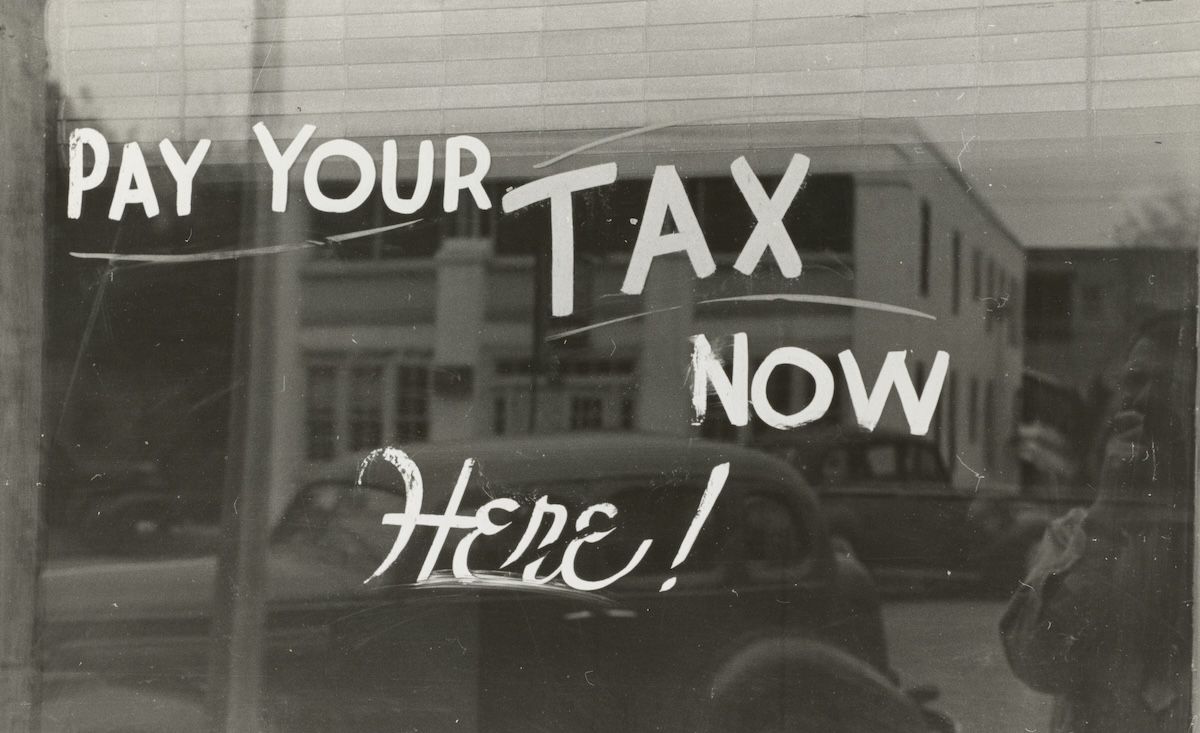
Photo by The New York Public Library on Unsplash.
Big Tech companies like Google and Meta have pleaded for years that they are not publishers, like newspapers. Instead, they have argued that they are “neutral infrastructure, not publishers,” protected by Section 230 of the Communications Decency Act, and the “safe harbor” it provides.
Now that argument may force them to pay a new tax, and the companies have changed their tune.
Chicago’s new amusement tax requires social media businesses with more than 100,000 active users to pay the city 50 cents per month for every active user (not including the first 100,000). Revenue from this tax will fund teams that respond to mental health emergencies in the city of Chicago, and is projected to bring in $31 million this year.
To grasp the modest scale of the tax, consider a few reference points. In the US and Canada, Facebook averaged $22.81 in revenue per user per month in Q4 2023 ($68.44 in quarterly revenue per user), which would have made Chicago's new policy approximately a 2% monthly tax on revenue made from Chicago residents (a little less since the first 100,000 users are not included). When it comes to federal taxes, in 2025, Meta brought in $79 billion of US income and paid a tax rate of just 3.6% on that income. The 3.6% is far short of the official 21% federal corporate tax rate, and well below the 17% effective tax rate paid by working families in 2024.
The numbers are less important than the principle: Chicago has found the political will to make Big Tech begin paying its fair share. Of course, Big Tech companies do not want to pay taxes. Lawmakers must prepare for their resistance, and perhaps even retaliation. Fortunately, they seem to be using a familiar playbook.
In particular, the tech companies’ primary industry association, NetChoice, is once again challenging the law in an attempt to overturn Chicago’s new amusement tax. Their argument against Chicago’s new tax attempts to compare Big Tech companies to newspapers that were protected in a 1983 Supreme Court decision, arguing that the tax is an unconstitutional "discriminatory tax on the press."
Ironically, in comparing themselves to publishing companies, Big Tech companies are almost attempting solidarity with an industry they have historically used as a punching bag. Over the last few decades, Big Tech has siphoned off the ad revenue that used to sustain local journalism. Now, Big Tech wants to repurpose constitutional protections earned by journalistic publishers in order to avoid taxes.
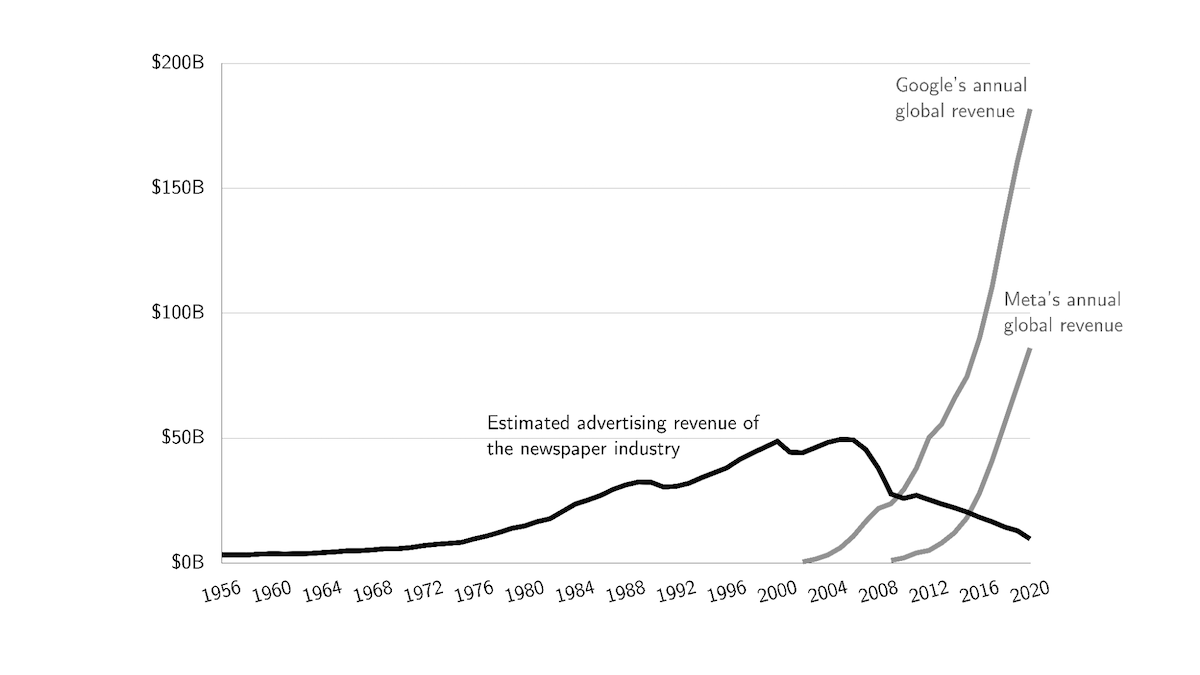
Estimated advertising revenue of the newspaper industry (sourced from the Newspapers Fact Sheet by Pew Research), Google's annual revenue (sourced from Statista), and Meta's annual revenue (sourced from Statista).
NetChoice’s appeal to the 1983 Supreme Court decision may be temporarily effective for discouraging other cities and states from passing other laws. But it might not change the legality of Chicago’s amusement tax on free speech concerns.
In the 1991 decision for Leathers v. Medlock, the Supreme Court made it clear that the First Amendment is not implicated “unless the tax is directed at, or presents the danger of suppressing, particular ideas.” Since Chicago’s amusement tax is content-neutral, NetChoice is advancing an argument that would appear to have already lost.
Still, as more cities and states implement similar taxes to make Big Tech pay its fair share, concerns may arise related to “patchwork” legislation. With various policies from different localities, compliance can become costly, particularly for smaller companies that may offer competition to Big Tech. The threshold of 100,000 active users partly addresses this concern for smaller companies. And as for Big Tech companies concerned about “patchwork” policies, lawmakers can revisit these concerns once the patch actually exists, that is, once more localities find the political will to tax Big Tech, and more such policies actually exist.
First Amendment concerns should also not be taken lightly, and our legal system is right to scrutinize any new law that could amount to a government restriction on speech. But First Amendment champions should also be concerned when the concept of “free speech” is used to mean “the freedom to pay Big Tech companies to deliver messages.” Lawmakers should pursue policies that uphold the true purpose of the First Amendment, which was to sustain an environment where informed citizens could participate in meaningful discourse to make decisions about self-governance.
Beyond these free speech debates, the constitutional path forward for these taxes will likely be contested for years to come. Maryland’s digital advertising tax, for example, has faced multiple challenges, and courts still have discretion despite strong precedents. But at this point, lawmakers should be able to anticipate Big Tech’s rhetorical strategies.
In another familiar play from the lobbying playbook, NetChoice has claimed the new tax will harm local businesses ("and everyday Chicagoans"). This rhetoric is particularly exhausted. Tech companies ran the same argument against GDPR, Apple's App Tracking Transparency, and other privacy legislation, using "local businesses" and "everyday users" as thinly-veiled stand-ins for the companies' own interests.
Rather than entertaining these familiar industry talking points, lawmakers should focus on the core issue: powerful corporations that lack accountability. For too long, Big Tech has benefited from regulatory ambiguity: claiming to be “neutral infrastructure” when convenient, while at other times invoking publisher rights. Chicago’s new tax is simply a way to treat Big Tech companies as what they are: highly profitable commercial actors that are generating revenues from the city’s residents on a massive scale.
Now is as good a time as ever to make Big Tech pay its taxes.
Authors