Does the Trump Administration’s Campaign to Rebrand AI as ‘Super Intelligence’ Matter?
Justin Hendrix / Nov 14, 2026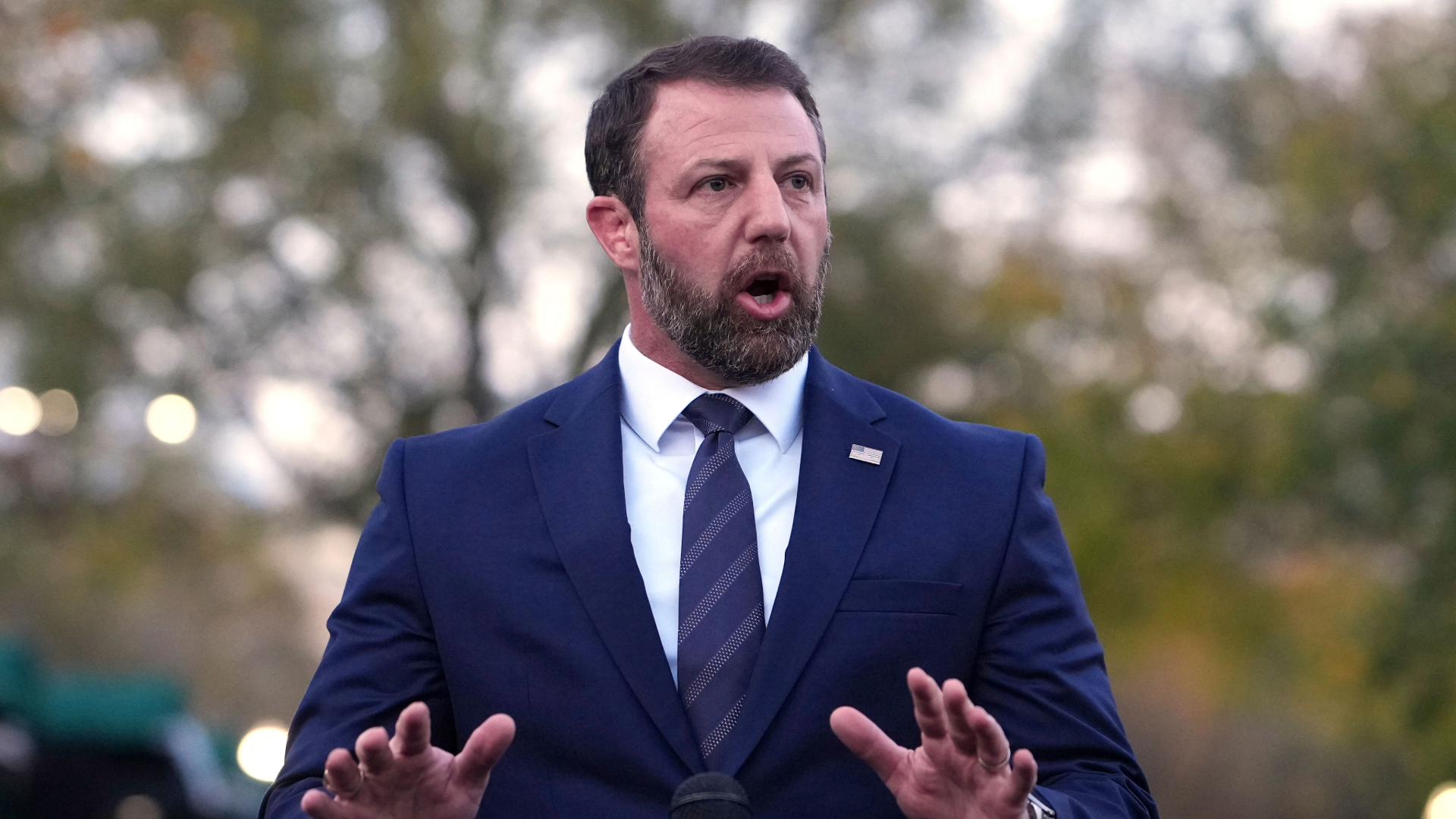
Secretary of Homeland Security Markwayne Mullin speaks at the White House, Friday, Nov. 13, 2026, in Washington. (AP Photo/Alex Brandon)
With a nationwide ground stop for all flights in effect in the United States on Friday afternoon, Department of Homeland Security Secretary Markwayne Mullin gave a briefing to reporters on the White House lawn. Asked whether the reported telecommunications failure affecting all flights might be related to artificial intelligence, Mullin paused to correct a reporter's choice of words.
Reporter: There are thoughts that this could be an AI related error or issue.
Mullin: We call it ‘SI’ around here, remember. SI. You know, you just cannot rule out anything at this point.
It was a brief aside in a short set of remarks to the press, in which Mullin indicated the cause of the coast-to-coast travel disruption has yet to be ascertained. But the fact that the Homeland Security secretary took the opportunity to promote President Donald Trump’s campaign to rename AI “SI,” short for “Super Intelligence,” struck many social media users as particularly absurd.
“The entire aviation industry is at a dead stop and he is more worried about Trump barking at him for not using his preferred computer pronoun,” wrote one Bluesky user.
“Do make sure to use the president’s SI branding throughout your full stack of crisis response communications,” wrote another.
“Release me from this hell,” posted technology writer and “Galaxy Brain” podcast host Charlie Warzel.
To be fair, Mullin almost seemed to be joking, even if it was a rather odd moment to appear to be making a joke. But is it a joke? Does it matter that the White House wants to enforce this terminology change on the nation and the world?
Pure genius
If you haven’t been following the matter that closely — and there are indeed more important things to concern yourself with — it’s worth a brief refresh on the timeline of Trump’s bid to rename AI.
The first time I heard the president indicate his dissatisfaction with the term “artificial intelligence” was in July 2025, in remarks on the occasion of the launch of his administration’s AI Action Plan:
Around the globe, everyone is talking about artificial intelligence … I find that too 'artificial' — I can't stand it. I don't even like the name. I don't like anything that's artificial, so could we straighten that out, please? We should change the name. I actually mean that. I don't like the name artificial anything. Because it's not artificial, it's genius. It's pure genius.
At the time, it seemed like just another of Trump’s extemporaneous riffs. But he did not let go of the idea. Last December, he floated adopting the phrase “supreme intelligence” while signing an executive order directing the Department of Justice to combat state AI laws. And on Sept. 19, he opened a poll on Truth Social to test other options, including “Superior Intelligence (SI) or, Extreme Intelligence (EI) or, Supreme Intelligence (SI)."
Then, in his speech at the United Nations General Assembly on Sept. 22, Trump made his preference for another option, “Super Intelligence,” official.
From this point forward, all United States documents and hopefully the world's will be changed to use the much more accurate term "super" as opposed to "artificial." So it's Super Intelligence. In other words, welcome to the new world of Super Intelligence-SI. SI, let's see if that goes, it sounds much better. It is much better, and it's much more accurate. Let's see if I have any power. Maybe I do, and maybe I don't. We're going to find out pretty soon.
Following Trump’s speech, a State Department official instructed American diplomats to “change all references of ‘Artificial Intelligence’ to ‘Super Intelligence’ in our documents and positions. We will be using ‘SI’ in all remarks, positions and press elements moving forward.” Michael Kratsios, the director of the White House Office of Science and Technology Policy (OSTP), immediately adopted the term in his remarks at the UN the next day.
On Sept. 29, Trump took it a step further, signing an executive order titled “Inaugurating the Era of Super Intelligence.” It instructs the federal government to adopt the term and to “not acknowledge” the term “artificial intelligence” in official contexts going forward:
The terminology used by the Federal Government should reflect the transformative capabilities of these technologies and the limitless opportunities they create for the American people. Accordingly, the term “Super Intelligence” more appropriately captures the promise, potential, and rapidly advancing capabilities of these technologies. It is therefore the policy of my Administration that, to the maximum extent permitted by law, the executive branch shall use the terms “Super Intelligence” and “SI” in place of “Artificial Intelligence” and “AI” and will not acknowledge the usage of “Artificial Intelligence” and “AI” in any applicable setting.
The change appears to be connected to Trump’s obsession with maintaining a dominant posture. Indeed, the stated goal of US AI policy is to “achieve and maintain unquestioned and unchallenged global technological dominance.” Trump doubled down on this idea when discussing America.gov, a new website to query government information.
Whoever wins Super Intelligence wins. It's an expression. Whoever wins Super Intelligence wins. You can have a winner and a loser. And you're probably not going to have a second place. You're going to have a winner or you're going to have a loser. We're leading now over China and everyone else and I want to keep it that way.
After Trump’s executive order, many of his close allies in industry immediately jumped on board. Elon Musk said he would rename SpaceX’s AI unit, SpaceXAI, to SpaceXSI. Meta CEO Mark Zuckerberg deployed the term in a third-quarter earnings call. Jensen Huang, until yesterday the CEO of Nvidia, defended Trump’s use of the term and his rationale in a Bloomberg interview on Oct. 14.
So, he’s serious. And industry leaders are going along with it. But does it matter?
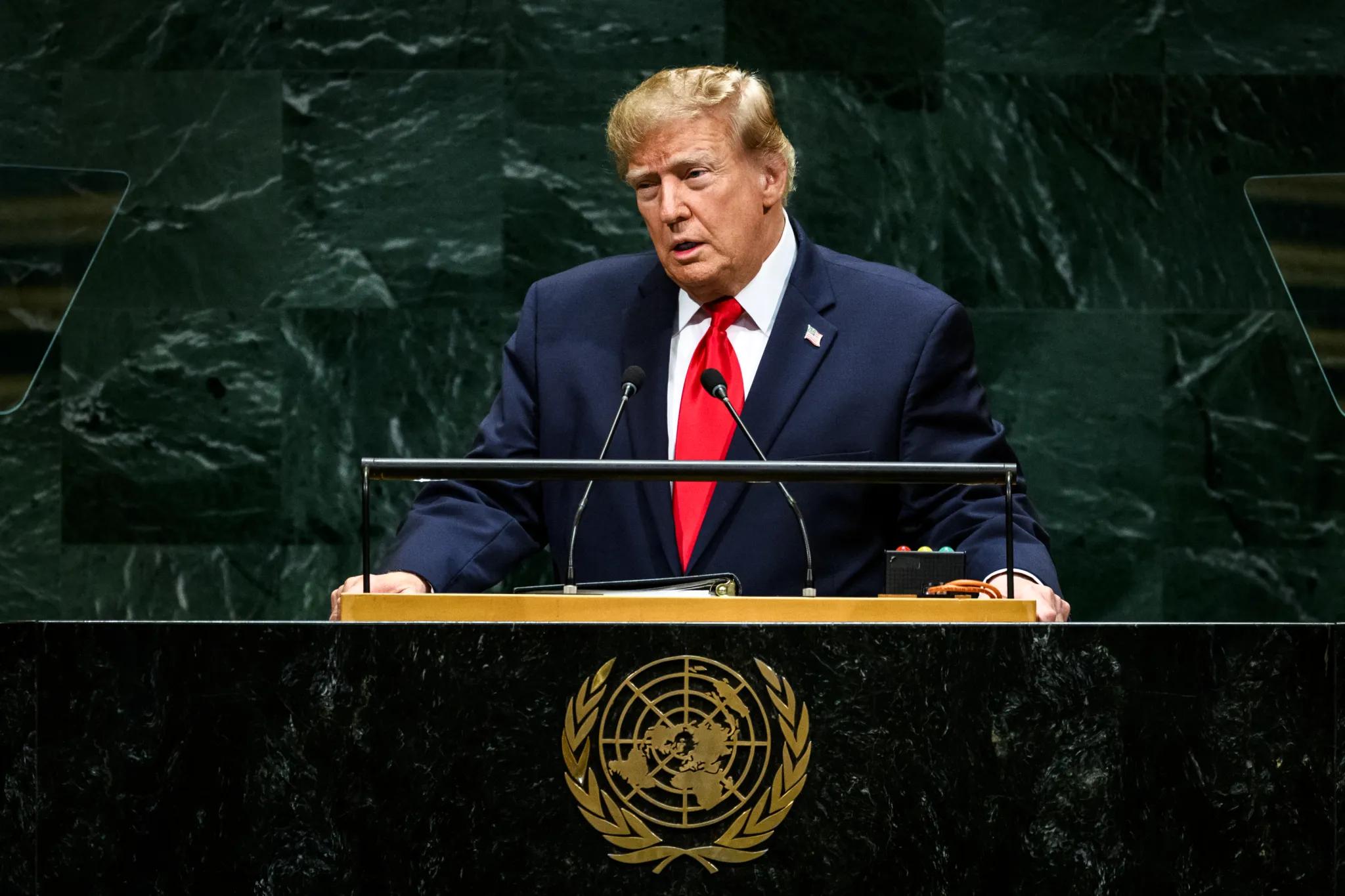
US President Donald Trump delivers a speech at the UN General Assembly on September 22, 2026. Source: White House photo
‘Out of his depth’
Of course, Trump likes to rename things. On the first day of his second term, he signed an executive order to change the name of the Gulf of Mexico to the "Gulf of America." In Sept. 2025, he ordered the Department of Defense to use "Department of War.” More recently, he signed an executive order directing the Interior Department to rename Lake Ontario "Lake America.” And he floated renaming the Strait of Hormuz the “Trump Strait.” Usually, the goal seems to be to provoke adversaries. It’s worth considering: Who is the adversary in this instance? Who is Trump trying to stick it to?
Emily Tucker, executive director of the Privacy Center at Georgetown Law, told me that she thinks sometimes Trump renames things in order to “try to preempt certain kinds of arguments or make it harder for people to use the categories with which they are used to resisting abuses of power.” According to this view, she said, “renaming ‘AI’ as ‘Super Intelligence’ is more like renaming the Department of Defense the Department of War than it is like renaming Lake Ontario Lake America. ‘Department of War’ says ‘we will no longer have certain conversations about the proper use of American military power.’”
Tucker thinks Trump is dissatisfied with the phrase “artificial” because he thinks it signals weakness. “I take him at his word when he says he doesn't want people calling it ‘artificial’ intelligence because ‘artificial’ implies a defect or weakness in something to which he wants people to simply submit,” she said.
Dave Karpf, an associate professor in the School of Media and Public Affairs at the George Washington University, told me he thinks Trump’s insistence on the term shows he is “out of his depth” when it comes to AI. “All he's really saying there is, ‘I have nothing to add to these great world historic debates, so you have to use the words that I want to use,’ with no follow-up."
But he isn’t surprised the industry went along with it.
“There were a bunch of years where they were saying that the machine gods birthed once we reach artificial general intelligence,” said Karpf. “And then at some point that brand got old, so they started calling it Artificial Super Intelligence. And now they got bored of that and now they're saying RSI, recursive self-improvement. This is an industry that's really comfortable occasionally changing up the watchwords that it uses.”
Jenna Ruddock, advocacy director at Free Press, said something similar. “If it matters at all, it shows cracks in the tenuous, transactional alliance between the AI industry and Trump,” said Ruddock. “He's trying to look like he's in control, so he's falling back on tried-and-true tactics for him: posturing and rebranding. Musk, Zuckerberg, Huang and others play along for the sake of their lucrative government contracts and the promise of regulatory fast-tracks for AI infrastructure.”
As of publication, the cause of Friday’s air travel crisis remains unclear. There are rumors and speculation. And perhaps using this opportunity to publish 1,500 words on the Trump administration’s insistence on the term “Super Intelligence” was a bit much on a Friday evening. But perhaps not.
“Prioritizing regime-approved rhetoric during an emergency is a sign of authoritarianism,” noted Harvard political scientist Ryan Enos, commenting on Mullin’s aside.
Authors