Done Data Work? You Might Have Worked With the US Military Without Knowing.
Krystal Kauffman / Feb 26, 2026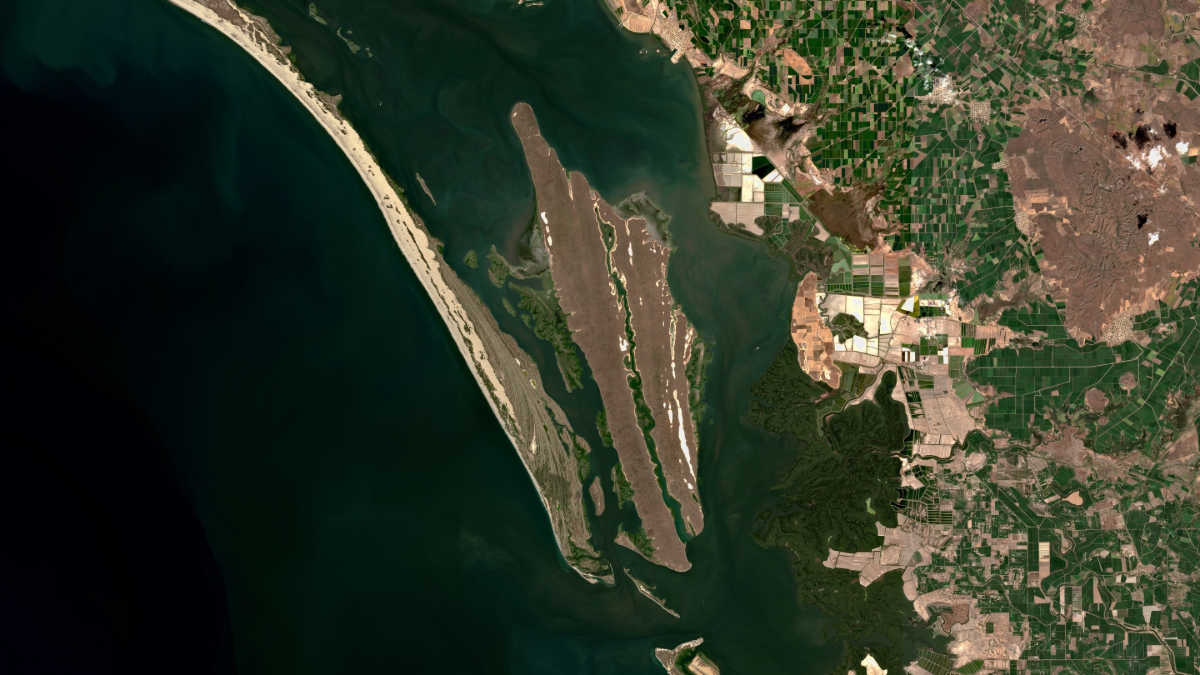
Isla Talchichilte in the Gulf of California on a satellite image taken in February 22, 2023. Shutterstock
On Monday, the Bureau of Investigative Journalism published a report about Appen, an Australian-founded company that contracts with nearly a million data workers worldwide. The piece revealed that countless underpaid workers, many located in Kenya, had unknowingly been performing work for the United States military. Together, workers contributed to systems used to surveil countries and governments around the world, including, most recently, Palestine and Venezuela.
While this story just came to light, it is not the first time tech companies have used data workers to unknowingly contribute to military intelligence. I know this because I am one of those workers.In 2015, I signed up for Amazon Mechanical Turk to help pay bills while I was recovering from health problems and desperately needed to work from home. Prior to the pandemic, remote work was much harder to find, and there weren’t any companies offering the option in my small community.
On the surface, the work appeared innocent enough: transcriptions of conversations, categorization of YouTube videos to ensure search results were accurate, and labeling various items in photos, anything from people to cars to traffic signals. The pay was just a few dollars an hour when the work was steady, but it often wasn't.
Still, it was my only option. I quickly learned how to find higher-paying jobs and methods to maximize my time and earnings. I worked on the platform as a data worker from the moment I opened my eyes in the morning until I was too exhausted to keep working. Much of the work was tedious and underpaid, but I occasionally enjoyed a job.
My formal education was in geology, so I was very excited to see a new work requester named GeoHIVE pop up. The tasks involved looking at satellite and aerial images and identifying various targets. I had enjoyed learning ArcGIS, and these tasks reminded me of the field I loved but had to give up. GeoHIVE joined Amazon Mechanical Turk in 2015. When I first obtained the qualifications to work for them, it was late 2016. I looked for nesting cranes, whales, and other coastal wildlife. The locations were sometimes supplied to us, such as the Galapagos Islands, when I had to mark tortoises. In tasks involving marking items such as solar panels, it was very easy to tell that the photos came from neighborhoods in the United States. It truly felt like I was doing something good. I looked forward to completing these tasks.
One day, several years after their first appearance on the platform, the targets changed. I remember it like it was yesterday: I clicked on my task, and the text instructed me to mark border crossings. The examples that followed showed footpaths or lone tire tracks. These were not traditional border crossings. The area was sandy with very low, sparse shrubbery. I was not told what area of the world I was looking at or why I was being asked to do this. It was obvious that I was looking at a desert climate. It was easy to pick out crossings. One task typically included 10-15 aerial or satellite photos, labeled at a rate of 25-65 cents per set.
I completed just a few before the sinking feeling in my gut forced me to stop. This felt different, and I couldn’t shake the feeling that the data was being used to apprehend people rather than help them. I tried to tell myself I was helping people who needed food or water, or perhaps gauging the need for roads, but I knew better. I immediately stopped working on GeoHIVE jobs. I started digging around, as did other workers. I never felt a reason to look into the company when I started doing their tasks. Everything appeared to be fine until that day. I wish I could say I was surprised by what was found, but I wasn’t.GeoHIVE was owned by Maxar Intelligence, now known as Vantor. Looking into Maxar, I found it had contracts with the United States government, specifically the Department of Homeland Security and the Department of Defense. There were contracts from 2019 and 2020. In 2022, Maxar signed a $202 million contract to serve nine US government agencies.
Near the end of 2025, Maxar Intelligence split into two entities: Vantor, the intelligence division, and Lanteris, which focuses on spacecraft manufacturing. On Vantor’s website, it clearly states, “For over 25 years, Vantor has supported US government missions with groundbreaking spatial intelligence.” In fact, Vantor is listed on Surveillance Watch, a project dedicated to identifying connections among surveillance companies, their funders, and their affiliations.I did not sign up to work for the US government, and I wouldn’t have knowingly performed work for the Department of Homeland Security or the military. It is possible that I contributed to a “good” project, but I am left with an overwhelming regret and sadness knowing that I, and many other workers, easily could have contributed to the apprehension of people who had families, friends, jobs, and lives to lead.
Since data work has really exploded, millions of people have been performing tasks for unknown companies out of necessity. We’ve seen the cost of living rise and hyperinflation in many places. Caregivers and stay-at-home parents contributed to their households by completing data work while also maintaining their homes and families. As a researcher, I’ve spoken to a number of data workers who struggled with illness or disability like me; too sick to work outside the home. None of us were given a choice to contribute or not contribute to the work of the United States government and military.
As data workers organize around the world, we need to push for change on this major ethical oversight. I understand classified work and the need to hold information close. When filling out applications to work on data work platforms, workers are asked countless questions from their demographics to what smart devices they own, what music they like, or where they like to shop. Based on the answers, workers are assigned qualifications allowing them access to certain tasks. The simplest answer would be to include an opt-out for projects focused on building and maintaining weapons or surveillance systems.
If I can be excluded from a task because I marked a box stating I don’t own an iPhone, why can’t I mark a box to exclude myself from work I find objectionable?
Authors