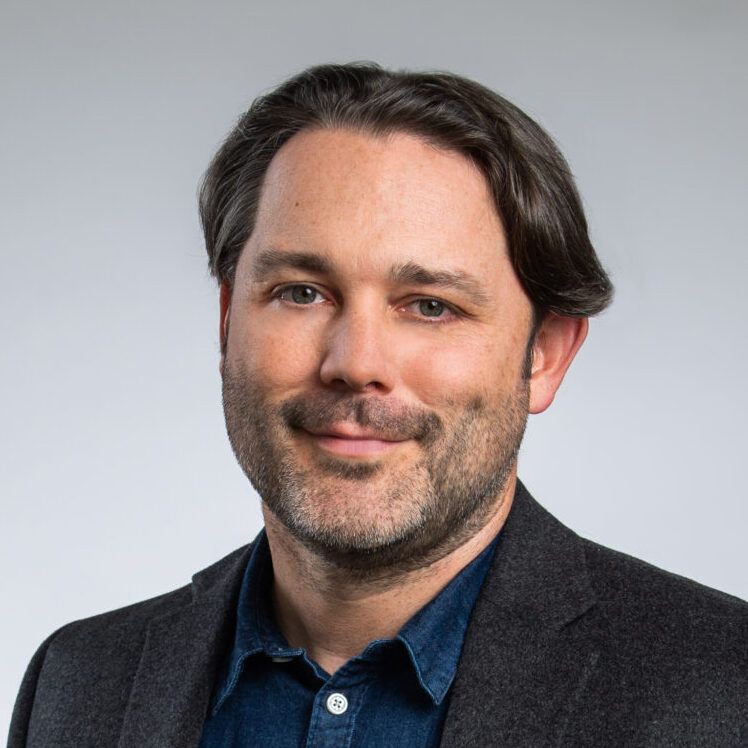
Gil Durán Maps the Rise of the 'Nerd Reich'
Justin Hendrix / Sep 27, 2026Audio of this conversation is available via your favorite podcast service.
On September 23, Tech Policy Press hosted an event at Betaworks in New York City with Gil Durán, the author of The Nerd Reich: Silicon Valley Fascism and the War on Democracy, the New York Times bestselling book published by Simon & Schuster. Alice Marwick, research director at Data & Society, joined the discussion.
What follows is a lightly edited transcript of the event.
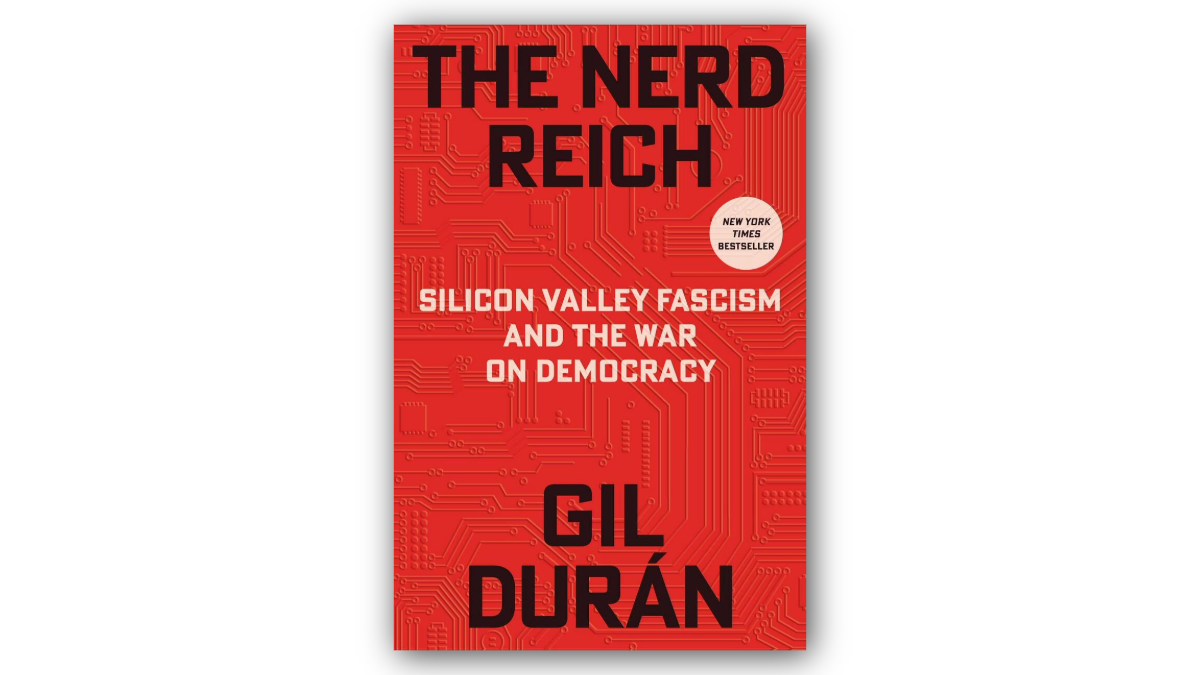
Simon & Schuster, 2026.
Justin Hendrix:
Welcome. And I'm very excited to be here tonight. Very excited that all of you have come. We put this together two weeks ago and I thought, oh, maybe 20 folks will show up or something like that. And it sold out. We ran out of seats very, very quickly. And I think that was for more than one reason, but chief among them, I think is just the amount of enthusiasm for this topic and the amount of reception that this book has had.
A bestseller on the New York Times, I think notched up a couple of spots again today. Sometimes things briefly appear on the Times bestseller list and then quickly fall off. This is not doing that. It's bouncing around, still fighting it out with others who are trying to take up that mantle. I had the luck of meeting Gil, I guess about a year and a half ago at something that Alice and Alice's team at Data & Society helped to coordinate. We put together a kind of writer's salon, I think it's fair to say, on issues at the intersection of tech and democracy, a lot of concern about techno fascism. And we ended up having a series of essays that we published at Tech Policy Press on that topic. And Gil's was one among them, wrote at the time about ‘Network State’ and Próspera and these kinds of wild ideas for cities that some of the tech oligarchs have.
And at the time, this book was a sort of, I think, glimmer in your eye. You were still working on it. You were still kind of deep in it.
Gil Durán:
We were in talks.
Justin Hendrix:
In talks and you didn't know if it was going to work out. Before we get going, I think I just want to ask you to explain the journey from that moment, not only 18 months ago or so. You felt you needed to do this, you were willing to settle back, put in the work, but did you think this would happen, that you'd be here in New York City with a raft of events to attend and on the New York Times bestseller list?
Gil Durán:
I thought I was going to be at a bookstore with five people, half of them my friends, if they even showed up. I know a lot of writers. I've grown up around writers, book writers, and I know how hard it is. You're out there crusading on your little book. And even if it's a great book, oftentimes there's not enough of an audience. And so that was my vision for myself. But the book really came about because my readers of my newsletter kept bugging me and saying, you got to write a book, you got to write a book. And I thought, well, I appreciate your faith, but if you know anything about the publishing industry and about book writing, it's not that easy and it's a real uphill battle. But because of them, I started reaching out to agents and trying to at least get someone to tell me no.
And that's what ended up leading to the book. So it really came from the demand from my readers that I do something deeper. And without them, it wouldn't have crossed my mind because obviously I have a very cynical view of how easy it is to write a book. And so that's really why I'm here is because of them.
Justin Hendrix:
Great. And I believe that both that agent and the publisher or some representatives from the publisher are here tonight. So good on you for taking that risk on Gil and good on you for getting it done. So we're going to talk about a bunch of things tonight. We're going to kind of try to contextualize the book a little bit, but I wanted to just start by kind of taking the temperature. There is a lot going on in the world right now. And if you're someone who follows issues at this sort of intersection of tech and society, it's been an absolute avalanche of a few weeks of news. It's very, very difficult to keep up. So just to kind of contextualize how we're feeling and what you think is going on, I'm going to ask both of you, just give us one word that you think may contextualize what the mood is right now.
And maybe Alice, I'll start with you and come back to Gil on this one. One word.
Alice Marwick:
Exhausted. I'm sure a lot of you saw this study the CDC put out this week showing that 71% of American adults are exhausted and experiencing serious fatigue. And unsurprisingly, this is higher for women and younger people, right? Everything is exhausting. Politics are exhausting and horrifying. Tech is exhausting and all the tools that I used to really like are now really unpleasant to use. Navigating it all is exhausting. And when we have these few bright spots in New York City, like the Knicks and Mamdani, it reminds me that it didn't used to be like this and that everything doesn't have to be this draining and terrible all the time. So that's what I would like for us all to get to again. But yeah, exhausting.
Justin Hendrix:
Gil, one word.
Gil Durán:
Angry. Yeah. I think we see in the polls, people are getting really, really sick of this TV show. The sequel is even worse than the first one. And it's got an AI apocalypse theme to it and a bunch of open corruption. Prices are going up on people, gas prices, food prices, electricity prices. Even some people in the MAGA base who were previously unmovable are starting to realize he's a con man. Why? Because he stole billions of dollars from a lot of them in his crypto scam. So I think there's a public mood shift that's happening right now and hopefully the Democratic Party can get on top of it before Steve Bannon does.
Justin Hendrix:
Okay. So that's the context, how we're feeling exhausted, angry. Is anybody out there sort of feel that? Anybody out there? I see a few heads nodding. Okay. Well, let's step back then and let's talk about the book. Let's talk about the basics of the argument, maybe some of the people at its center. You kind of take us through a telling of various characters. You start off by kind of almost de-centering Elon Musk a little bit, which I think is interesting, but the basics of the argument. If we had you on a five minute radio interview right now, what would you tell folks out there this book is meant to be about?
Gil Durán:
My book is about a cult of apocalyptic billionaires who believe it is their destiny to end democracy and to end countries like the United States of America in the 21st century. They believe that their weapons for bringing about this death of democracy in the nation state system are technology, specifically crypto and AI. And when you look at what's happening right now in Washington, that's what it is. Crypto and AI becoming this powerful juggernaut force, especially in the money side crypto, though the AI industry is following the same playbook to capture unprecedented power and influence in the hands of a small group of interconnected oligarchs. And I tell a lot of the story in their own words because they have very big mouths and they love to hear themselves talk and they love to write long manifestos. These people do six hour podcasts. I've been doing a lot of one hour podcasts and I'm like, you know what?
My podcast is now 30 minutes because this is torture to make people speak for a whole hour and some people want to do 90 minutes. These guys love six hour podcasts, three hour podcasts. And when people first hear about this stuff, my experience in the past few years was it sounds crazy at first. It sounds conspiratorial, but a lot of crimes in history can be described as conspiracies. A lot of crimes today are conspiracy to this, conspiracy to that, but it's not a theory if it's in their own words. And so it was really important to me to tell the story in their own words because it seems to me that what this group of billionaires has been talking about for decades now, some of them, is also what they're now doing. And it wasn't clear to me why no one else is really talking about this, why the mainstream media isn't explaining this to people.
And that's what I set out to do with my five part series in The New Republic and my little newsletter, which at one point I was writing for 12 people, but they're the OGs. So that's what I tried to do with the book was make this conversation happen, make people talk about what it is they've been saying and to ask the question, is this what they're doing? I think the answer is clearly yes, but I think a logical rational reader can draw their own conclusion.
Justin Hendrix:
Alice, I want to bring you in because you've been studying the kind of tech right and the right generally for quite some time. Why do you assess that Gil's book has done so well just in this last bit? What's he captured?
Alice Marwick:
Yeah. So I think what Gil's book has done, if you haven't read it, many of you got free copies, you really should. It's really readable. It manages to go through an incredibly dense set of people, places and things and brings them together in this sort of roughly chronological narrative that really conveys how batshit crazy these people are and how much they've been able to get away with, with virtually no scrutiny from outside their subcultures. There is everything in this book from gold bugs to Ron Paul, to obscure investment newsletters, to cryogenics. It is all there. The greatest hits of Silicon Valley hyper-libertarianism over the last like 30, 40 years. As Justin said, I started studying what was then called the alt-right in 2016 because I was super interested in why was the mainstream media suddenly covering all these white supremacists and deeply misogynist ideas. And unfortunately, over the last decade, what I've seen is a lot of these ideas, which when I started studying them were like weird fringe things that dudes on the internet argued about are now part of mainstream American political thought.
Racist and virulent ideas that I never thought would get traction on mainstream media on television in the New York Times are now things that people talk about totally openly. They don't feel like they have to be behind closed doors. And I think what Gil's able to do is he's able to show the genesis of this stuff and how it's not just like. When we think about white supremacists or violent misogynists, you think of these dudes alone in their basement, you think of people with very little social power, right? You often think of poor people or people who don't have access to wealth. That's not who these people are. These are people who are the most powerful people in the world, the richest people in the world and the people who control the technology and the media through which many of our, not even just our media, but our communication with each other and our thoughts about ourselves flow through.
So there's a linkage here between the technology, the ideology, the politics and the money that I think is done really effectively.
Justin Hendrix:
So I want to just get you for a moment, Gil, to help our audience, help the listener think a little bit about Peter Thiel in particular. You spent a lot of the book on Peter Thiel and I mentioned you decenter Musk in a way at the beginning almost to just sort of say, listen, a lot of folks focused on Musk, especially early on in the Trump administration as being this sort of powerful character, as Svengali by Donald Trump's side. But your point was that this slightly quieter character perhaps had more influence in the White House just in the sheer number of individuals with very close ties, including the vice president himself. But I don't know, how do you explain Peter Thiel again in just a handful of minutes?
Gil Durán:
Well, Elon Musk gets a lot of the attention because he's an attention hog. He loves to be out there all day tweeting and getting in the story, jumping in front of the camera. We saw the results of that with DOGE where he ended up burning out because you can't really outshine the president. So you had two people vying for attention. But I see Musk mostly as a follower rather than a leader. Not that he doesn't have a lot of power, but he's not the ideological or intellectual originator of this stuff. I think authoritarianism and oligarchy and dictatorship naturally appeal to him because of who he is, but other people, it appeals to them also on an intellectual level. They thought this through. And Musk was part of the PayPal Mafia with Peter Thiel and Joe Lonsdale and other people, but it's Thiel who's considered the godfather of the PayPal Mafia.
So he's really the boss of the group and he actually played a role in ousting Musk early on from PayPal. So while they have a relationship that's been fruitful, it's also been troubled. Well, first of all, he was born in Germany, came here as a child after living in South Africa and Namibia where his father was involved in trying to mine uranium for South Africa's secretive nuclear program. And Thiel for a very long time has been a right wing zealot. All the way back in the mid 1990s, he wrote a book called The Diversity Myth that was an attack on diversity in colleges that largely mirrors the current attacks on DEI that have been so successful. And if you look at his history for the past 30 years, Thiel has been openly preaching against democracy and crowing about the fact that in the 21st century, democracy will die, that technology will be the end of it.
In 1999, he gave a speech in which he said, this is a very popular speech on YouTube now for reasons that'll be obvious, that there was going to be this new currency in the future, a new digital currency, and it would completely undermine government authority and power and the government would be totally powerless to stop it and it would reshape everything in the 21st century. And of course people call this the speech that predicted crypto, which is not exactly true. Crypto had been talked about and imagined in science fiction, but for a lot of people, they look at that and say, "Here he is in 1999." Not only that, he said that the main vehicle for this new world was going to be smartphones, which in 99, few people had. I remember we had this big fold up phones with the antenna you could pull up that we could check out of the newspaper where I worked.
But in 2009, he went on to write that he no longer believed freedom and democracy were compatible. In 2010, he gave a speech to a group of libertarians that was probably smaller than this room where he said that government is fundamentally evil and that technology was an incredible alternative to politics. And this is the guy who since 2003 had been the co-founder of Palantir, a surveillance software technology company that was founded with $2 million from the CIA's venture capital arm In-Q-Tel. So he's since then gone on to become very ingrained in our government through Palantir. He was an early supporter of Donald Trump. He essentially created JD Vance. And I just think it's really strange. We've been in the middle of this media cycle of everyone having to focus on Hasan [Piker]'s stuff, things he said, but no one ever asks why we have a government contractor and major political donor with all of his network throughout the Trump administration who's been preaching against American democracy for 30 years.
That question never seems to come up. So I focused on Thiel because I think that he's really the root of a lot of our problems today and that it's his ideas that through his money, through his investment in various people like Curtis Yarvin, who I know we'll talk about, and JD Vance has become one of the most powerful men in the world. And if JD Vance somehow becomes president, it'll actually be, in my opinion, Peter Thiel who is president of the United States.
Justin Hendrix:
Okay. So I want to ask kind of one more question in this way and then also open up to Alice to pelch you with a few questions too. But one of the things that I think about a lot and probably most of the folks in this room are thinking about on occasion is the kind of divide right now on the right around tech because you have this sort of MAGA populist side, possibly embodied in the likes of Steve Bannon who was on stage last week. Didn't quite share the stage, but certainly shared the same stage as Bernie Sanders [I-Vt.] decrying the possible existential risk of artificial intelligence, very against the AI oligarchs and the elites, et cetera. But then you have what appears to be happening in the White House, right? Donald Trump all in, spending his weekend trying to poll his Truth Social followers about what we should rename artificial intelligence.
I think we've settled on super intelligence according to the last poll, but certainly staunch defender of the data centers, staunch defender of full speed ahead on artificial intelligence, clearly has a lot of his own personal money invested, his family's money invested in these things. But there is this divide and right now it feels like at least with regard to Trump and the White House, the Thiel side of things is winning out. Do you think that will continue?
Gil Durán:
It depends on how much money they pour on the Trump family, I think. The White House is for sale. The Trump family has raked in up to, depending on the day, $5 billion in new wealth on paper through various crypto schemes and other venture capital investments. Some put it down closer to 1.2 billion. The problem with crypto is that you can have $5 billion one year and a billion the next because it's just so volatile. That's the anti-deflationary and inflationary nature of crypto. But I think they're getting paid and to me that's the most important aspect of it. It's not just Trump anymore. I think there's been a lot of focus from the democratic establishment on Trump, Trump, but this is a regime now. It's not just one person, it's about a group of people. And the amount of money pouring openly into the Trump family's coffers, basically they're trying to buy the MAGA movement, but the impediment to that is the MAGA movement.
And I think one of the major parts of the divide that's very fertile for exploitation, I used to be a political consultant, so I think about things too in terms of campaigns and how you'd play it. At the heart of the MAGA base is the evangelical movement. And these are people who, whether we agree with them or not, they believe in God, strongly believe in some version of God. It may not be our God. We may not think it's quite Christian in the sense of following the teachings of Christ, but they are Christians, they believe in God. On the other hand, you have these tech guys who believe they are creating God in the form of AI, in the form of super intelligence. This is the tech religion that I write about in the seventh chapter of my book. And I think that some people on the evangelical right see very clearly that these people are not like us, that they are not Christians.
They don't believe in God. And the first thing you have to do to really get the trust of those people is be on the same page religiously. So I do think there's a bit of a divide growing, especially since Donald Trump is clearly not going to keep his promises to bring down prices and to make things. People realize it's not going to be great again. In fact, it's maybe going to be no jobs because of the AI God or now they're hearing a lot about this extinction mythology coming out of Silicon Valley, which I don't really buy into. But again, as somebody familiar with political communications, there is a certain joy in realizing that they are marketing the key to their power and their wealth AI as a terrifying extermination apocalypse tool that is radicalizing people on the right and the left against billionaire power at the exact moment that we need it.
The problem is billionaires think they're good at everything, so they came up with their own messaging and it's a fricking disaster because this sounds good to venture capital firms maybe. We're going to create the tool that destroys all the jobs and maybe wipes out humanity, but it sounds terrifying to most people who are trying to pay their bills and raise their families. In politics, you're supposed to promise more jobs, more security and safety for your family and a brighter future. Silicon Valley's doing the exact opposite. So it may be our saving grace that they were still too incompetent at this point, but you do see some schism forming. I dislike Steve Bannon very much. I think he's been a cancer on our democracy, but unlike the New York Times, he's been clearly calling this stuff out for years and that's why I quote him in the introduction of my book.
The people on the right see this very clearly. They know what these guys are. While they want a version of fascism too, it's not the godless AI fascism they want. They want old school fascism.
Justin Hendrix:
Alice, what's your view on this question?
Alice Marwick:
Yeah, they want Christian nationalism. That's what they want and there is not quite as much money behind that right now, although there's a decent amount. So the thing that really struck me reading this book is these are people who are incredibly wealthy, have been extremely successful within a democratic regime, right? They're at the top of the heap. They've made all this money. Why are they so hostile to a system that has worked for them? Why are they so hostile to democracy?
Gil Durán:
Because it gives everyone a say theoretically and because of I think their greed. They can't be satisfied. They can't be satisfied with the money. I mean, if I was a billionaire, I would just shut up and stay under the radar. That's what the smart rich people do. You don't even know their names. There's all kinds of rich people you never even hear of because it's kind of scary to have everybody know that you're rich and that you're a target or that you're the root of their problems or whatever. And they just can't get enough. I think that's part of it. When I was in politics, I met a lot of rich people and I met a lot of powerful people. I came up with this motto, this must have been 15 years ago, that's become more important to me lately. When you have money, you want power.
When you have power, you want money. When you have both, you want to live forever and then you're really screwed. And that's where they are now, right? They're into this whole idea that they're on the cusp of this massive technological breakthrough. They're going to create a God who gives them eternal life, who allows them to become multiplanetary beings and travel into the heavens and creates this super abundant paradise in which they will live forever as these transhuman creatures who transcend even humanity itself. That's the Christian eschatology remade for a completely mentally. I mean, it's kind of like an AI psychosis billionaire class that has emerged to seize power. So I think that's a part of it. You can't get away from that weird dysfunction where they're not psychologically normal anymore. It's like if instead of being a barefoot hippie, Charles Manson was a billionaire and could get Washington to do what he wanted, to bring down the Helter Skelter via policy and corruption.
And I feel like that's pretty much where we are with these guys.
Alice Marwick:
So another thing I've thought about a lot over the years is the way that as technologies are developed, they often reflect the political ideologies of their creators. So you cite Fred Turner's book From Counterculture to Cyberculture where he talks about the ideology behind sort of early Silicon Valley as being this sort of freewheeling, hippie, democratic, not democratic, but decentralized ethos. And then in the book we see this again with Bitcoin and AI, right? Bitcoin is a technology that instantiates this anti-status principle because it replaces a state-backed currency with one that is entirely speculative and that is decoupled from the state. And I would also argue that I think AI is an anti-democratic technology because it requires so much compute and resources to work effectively that you can't distribute it outside of the handful of a small number of people. So my question to you is what comes first?
Is it the technology or the ideology with some of these guys?
Gil Durán:
I'd say the ideology. It's white supremacy innovating and male supremacy. I mean, the Nazis also had technology. They also liked rockets in cars and war, and that's sort of where we are with these guys as well. It seems like technology, fascism always coincides with these technological breakthroughs because suddenly people see a way to gain dominance over everyone else. You have this thing, whether it's using air power in a war or rocket power or the race to get the nukes, you see this accelerationist tendency. In Italy, there was this group called the Futurists who saw technology and violence and speed as the key to the future of civilization. And the writer of the Futurist Manifesto ends up writing a few years later something called the Fascist Manifesto and was a collaborator with Mussolini in developing this idea of fascism. So I write about that a little in my book, not enough for my academic critics, but that's their job is to write that longer book about that particular interchange.
I think that it's a way to gain power and dominance and it comes out of an ideology where that more than anything is the goal. There's a whole other way to do technology where we could actually be making life better. I mean, if the billionaires were trying to solve climate change and poverty, it'd be hard to speak against them and we could be working on things that do that, but instead all we see are technologies whose main innovation is to concentrate all of the wealth into fewer and fewer hands. I think that it's going to reach a breaking point sooner rather than later.
Alice Marwick:
So this is my last question before I hand it back to Justin. So another thing I've thought about a lot over the last 10 years is the lack of trust that Americans have in their institutions. If you look at the polls, like the Pew Research does a bunch on this, people don't trust politicians, they don't trust the news media, they don't trust academia, they don't trust science. All of these traditional knowledge producing institutions are now seen as disreputable. And obviously the Trump administration has really capitalized on that, right? They've portrayed academia and science as enemies of the average person when in fact that's not what we do. But I am really interested in how this sort of institutional distrust has been both fueled by and taken advantage of by tech. I feel like sometimes these billionaires, they see this lack of institutional trust as a sort of wedge that they can get into.
If we had a country where everybody really liked the government, Elon Musk wouldn't have been able to do what he did with DOGE. What's your take on that?
Gil Durán:
Peter Thiel's really obsessed with the concept of scapegoating, this idea he studied under a guy at Stanford named René Girard. It's not totally wrong that societies tend to blame all their problems on a certain scapegoat and then we push the blame onto that person, persecute them, torture them, and that's how we sort of cleanse the sins of our society. We saw that story play out in the crucifixion of Jesus Christ, for instance. I think a lot of what happens is they are able to use these tensions to scapegoat some group. Obviously immigrants have been bearing the brunt of it under this regime, followed by federal workers who've been demonized and purged. Some of my critics are like, "Well, is it really fascism though?" One of the key characteristics of fascism is purging your demonized opponents from power and influence, and that's one of the key things that they have done.
But the problem is that they've convinced everybody they're creating the destruction machine, the narrative is starting to crumble. If you look at the polls, the anger is now rising at them. The problem playing with these concepts like scapegoating and demonizing is that they tend to bounce back on you. I think in a way they're so obsessed with scapegoating because they know that if people figured out what was really going on, who's really responsible for most of our problems, they would be in very, very grave danger, which is why they're trying to build these weird ass network state cities all over the world so they can go hide out if this doesn't work out for them. Things are going so well on the Trump administration that Peter Thiel just bought a mansion in Argentina.
I think that's the key there is they've been able to scapegoat, but not to the degree. The problem is this, I think. When this first started, my fear is it would be a lot more popular. I thought they must have some kind of propaganda algorithm plan to make people really love this stuff, to make people very supportive of it, but they didn't have that part of it figured out and it's collapsing because they have no understanding of how normal people think, feel, or experience reality. And they're learning the hard way what it feels like to be in power and everybody starts to hate you.
Justin Hendrix:
I want to bring it back to the current moment in just a moment, but I'm just going to ask one question that I feel like comes into my mind, both reading this book, but every time someone brings it up, which is what's up with the antichrist?
Gil Durán:
Peter Thiel knows about the Antichrist. He's actually giving more antichrist lectures in Nashville starting next week. I actually got a ticket. I can't make the first one, but I'm going to try to go after that and connect with some people in Nashville. Peter Thiel gets obsessed with some esoteric ideas and for the past 30 years, the Antichrist has popped up in some of his stuff, but now he's really honing in on his final subject. In the book, I say that having attained the heights of wealth, power, and influence with his cronies and company and power in Washington at the most critical moment in history, Peter Thiel decided the time was right to warn the world about the Antichrist. And the strange thing is that when Peter Thiel describes the antichrist, because he got a hold of the transcripts. When he was giving these speeches last year in San Francisco, I got an anonymous email.
I'm recording them. Do you want them? I was like, yes. We should give them to everybody because how do I know they're real unless the Washington Post or someone with a bigger budget can verify these things? So they went out to everybody, but I've read them all multiple times. I don't recommend it. It's very disordered, convoluted thinking. But Peter Thiel, a very influential billionaire, the guy who created the vice president is giving four part. On four different days for four hours, he speaks about the Antichrist. And basically his warning is that the Antichrist is here among us and he's creating his own theological.
I mean, the Vatican and the bishops in Austria were like, "This is BS, failed grade." They literally gave him a failed grade when he delivered the lectures to a group of theologians in Austria, Innsbruck University. This high level Catholic stuff. But basically his main argument is that anyone who stands in the way of technological acceleration to the maximum is the antichrist, is against the future of humanity. At the same time, Peter Thiel describes the antichrist as this figure, which is by the way, not biblical, the antichrist were people who were faked features of Christianity, not a specific figure from a future apocalypse. That's the Omen movie from 1976. That's where this version of the antichrist is coming from. But that the antichrist will be someone who is constantly preaching about apocalypse and doom and scaring people in order to seize power with technology, promising peace and safety, which sounds a lot like the co-founder of Palantir to me, because Peter Thiel has become the world's foremost lecturer on antichrist and apocalypse themes in the past few years.
And it's so obvious that I figure it must be some kind of inside joke that he's telling because the number one suspect, if you listen to it, would be him. But he's obviously pointing the fingers at others. But it's this idea that we're in the middle of an existential battle between good and evil. And at the end of this battle, one side will be gone and one side will be completely victorious. And so that's how he sees the world right now. If you know anything about apocalyptic movements, they never end well and the apocalypse never arrives. It's a delusional mindset and there's no reason for such a powerful man to be imposing this narrative on everybody else. But I think that, I mean, if I were working PR for Thiel, I would say do not mention the antichrist ever. You're a gay billionaire who created J.D.
Vance. This is going to make people think that it's you or it's him. But there's an old Yiddish saying that's been going through my head a lot lately, which is if you're rich, you're also smart, handsome and can sing. And nobody tells billionaires to shut the fuck up.
Justin Hendrix:
Okay. So I want to kind of bring it back to this sort of mood of the country or even maybe beyond the US on these issues. We're seeing of course the data center resistance and opposition and we could have an entire another hour on that. In fact, Data & Society is doing some excellent work on that and may invite you to that hour online at some point. There's also the resistance to the Flock cameras and surveillance systems that are being installed all over the country. We're seeing kind of a rising up against those. In different parts of the country, also some popular activity against AI in schools that happened right here in New York where the kind of committed group of parents and teachers and others came together in this AI coalition and were able to secure a moratorium. Again, I'm not suggesting that we all endorse every position held by every one of these groups, but there is a popular kind of thing happening.
It is anti-AI. It is concerned about extractivism and concerned about the economic impact. It is obviously in opposition to some of these ideas. Whether everyone has a kind of clear idea in their head or not about what exactly Elon Musk wants for the world and what Peter Thiel wants for the world, clearly folks have kind of cottoned on, as you say, that it may not work out. It may not be in their best interests. I don't know. When you get to the end of this book, where does it lead you to think we're headed on that popular resistance? Is it going to continue to grow? Where can you see it coming together? And maybe here I'm asking you to kind of go back a little bit to your political organizing mentality.
Gil Durán:
One of the things that gives me hope, because my work is very bleak, my job as a journalist is to tell you the truth and if that scares the hell out of you, so be it. I felt like I needed to tell a story that activated people that helped them understand exactly where we are and that it's much worse than you think. This is not a fairy tale about how everything's going to be fine in the end. It's a map of where we are and how we got here. There are a lot of people actually doing a lot of important work, organizing communities, thinking of solutions, and I'm sure more of that's going to increase because one thing we're really missing is an alternative vision of the future. Say what you will about these guys. They have a vision of the future. It doesn't involve us.
It involves them being robot antichrists eating entire stars and other galaxies in order to replicate themselves eternally, but it's a vision of the future. And what we're getting right now from our political leaders is oh, percentage this, percentage that, a slight policy change so that only 20 million of you don't have health insurance. I mean, we're getting these incremental. The Democrats don't realize that the whole game has changed. And it strikes me that only the billionaires are allowed to have these big ideas for the future. For instance, this is my favorite new thing to talk about. Sam Altman, if you listen to him carefully, when he talks about the future, the future's going to be one AI company that's also the government and it rules the entire world. There won't be jobs, but everyone will get some kind of check from this government and that'll be the future.
The one AI company government that rules the whole world and everybody gets a check. Why is he allowed to basically offer up fully automated luxury communism? But everyone's getting upset because democratic socialists and left are winning elections talking about healthcare, childcare, housing, food. So the billionaires are allowed. Apparently the future is totally socialist or communist no matter what, but only the billionaires are allowed to say that, not anybody else. So I think we have to stop allowing them to monopolize our imagination. And I think that what we're seeing now is this naturally forming pincer movement of people on the right and the left sort of figuring out that the billionaires and the tech billionaires in particular are the problem. And that's mostly because the tech billionaires are scaring the crap out of them with all this boogeyman apocalypse stuff. I don't think we have to be against technology, but the way it's being done is worth fully opposing.
There's nothing good about the way it's being done. People are often like, "Well, I don't use AI." I'm like, "Well, yes, you do if you have a smartphone. If you're not using it, it's using you because it's all in your phone, one version or another machine learning. We can't real fully escape that. But who voted for surveillance big brother society? Who voted for a world with no jobs and no meaning and no work? No one was asked these questions, so in a way, they're already making an end run around democracy with this vision of the future. And I think what we need to conclude here is leaders in the democratic establishment who speak to the anger and the hopes of those people. We need a party that decides whether it's going to serve the billionaires or serve the people because we've reached a point in our history where you can't do both.
Someone should explain that to Gavin Newsom.
Justin Hendrix:
I want to come to Alice on this question too, but I will say I literally had open to make sure that I refer to it in your book. At the end in this chapter on the future, you write," While I fear the destruction Trump and his oligarch co-conspirators will impose over the next few years, the greater threat is that our dissent and detect fascism will be spearheaded by liberal politicians who co-opted and corrupted by Silicon Valley money will abandon democracy without much of a fight. "So maybe I'll turn it to you, Alice, on this question, but do you also fear that?
Alice Marwick:
Yeah. So as Justin said, we've been doing research on data center activism at Data & Society. We had a big report come out yesterday, The AI Factory, which is based on an 18 month ethnography in Pennsylvania. And we went there because we wanted to know what is fueling this kind of opposition because most people do not care about big tech infrastructure. Most people don't care about industrial policy. That's not something that you usually see a popular uprising against. And what we found is that people see things like data centers and Flock cameras as the Achilles heel of big tech because they're physical infrastructures that you can disrupt and you can use civic tools that we already have to get them out of commission. So when people look at these things around them and they look at AI being pushed on them, even people who use AI feel guilty about it.
They feel ashamed to tell other people about it. Nobody asked for this technology. All of a sudden people pick up their phone and every app they open is like, "Oh, well, do you like to use our new AI tool?" We're all like, "No, we didn't want this." It's like that U2 album that they all put on our iPods back in the day.
But these things exist in our homes and our towns, which makes them a potential point of attack. I think what's been so amazing to see is all these people around the country who are not political activists. The panel we had last night was a mom and a retired guy, but in two different states who saw that places they lived were having huge data centers come by shadowy companies that use NDAs to prevent anyone from knowing who they are. They promise jobs, they promise prosperity, and these people are not stupid. They know that these things are not going to come to pass because in Pennsylvania specifically, these are communities that have already seen aluminum, steel, coal, fracking, the same industries come to town and promise them good jobs in a bright future only to roll up and head out of town as soon as that boom is over.
And that's exactly what would happen again with these data centers. I think that people see a lot of frustration around big tech in general. It's not even just AI, right? It's surveillance. It's the idea that your kids are on Chromebooks. It's the worries about screen time. It's all of the things going on, this kind of miasma of unease around tech. And they're like, "Well, there's not much I can do." I think a lot of people in the US feel very politically unempowered that all we can do is vote and we've seen how well that's going for us so far. So this gives people something concrete to focus on. But I think there's other stuff going on there too. There's all these sort of small interactions. I'm sure you've all interacted with some Gen Zs or Gen Alphas that are like, "I have an old school flip phone.
My kid has something called a Tin Can, which is basically a landline and half the kids in his school have it because they want to be able to call each other and have these conversations." People are using tools like zoning, permitting, school board meetings to go and advocate for themselves and their families and their kids and say, "This is not what we want." The thing is that nobody is listening to average people talk about the future that they want, but they do have visions for what they want. They want a place where they have clean air, safe homes, good jobs, good education, a future for their kids, and when they're not just constantly worried about the end of the world, which is something most of us don't want to think about at all because we're not Peter Thiel. I think that we need people to look up to.
We need visions of the future to look towards, just like Gil said, I completely agree. I think a lot of these can come from the ground up rather than the top down. I
Justin Hendrix:
Think it's a good place for us to maybe open it up to a few questions from the audience. I think we have a fourth mic, a couple mics that might come around and I've got one here to maybe start, but if you put your hands up, we'll try to get it in. I would ask if you want to be identified on the podcast version of this, please state your name and any relevant affiliation. I have a question right here from this gentleman.
Audience Question:
Ali from Clean Titans. My question is that about 80% of American public, it seems, are against AI and AI data centers, but almost the opposite in China. What is different about China that they are mostly in favor of AI and most of the public in America is against AI?
Justin Hendrix:
Maybe I'll just also broaden that question. I read an article, I think in the Times today about polling from elsewhere in the world suggesting that it's really the US and in Europe where the kind of pessimism around artificial intelligence is most salient. Much of the rest of the world see opportunities, are enthusiastic about the technology.
Alice Marwick:
Well, in China specifically, people trust their government to govern it responsibly. Obviously China is a very different environment than the United States, but you can't say they don't have regulation, right? A lot of Chinese AI companies have tried to first come up with things that would improve people's day-to-day lives, get consent for that and then move on with them. But I think it's really about trust, right? Do you trust that the people behind this technology who are putting it in place have human flourishing as their highest priority? I think as Gil shows so ably, not only do they not have that as their fullest priority, that's kind of like the opposite of their priority.
Gil Durán:
A good friend of mine is a professor of AI in Hong Kong, and we met recently and he told me that here in the US, the students he teaches because he teaches in US and Hong Kong, they hate AI, they fear AI, it's loathed. In East Asia, it's a very different attitude and they see it as something that's going to be on your phone. It's going to have amazing application narrows in different apps. It's not being marketed as this godlike super intelligent apocalyptic machine. It's seen as we often see technologies as something very specific that's going to open up new opportunities. I think part of that comes from. It's really Western tradition, this apocalyptic idea out of the Bible that we're inherently headed toward some in time scenario. And I think that's been imposed on the narrative. That's the marketing of the whole thing from people from Sam Altman, from all of these guys.
And by the way, Sam Altman, if you didn't know, is another protege of drum roll, please, Peter Thiel. Everywhere you throw a rock in this discourse about the apocalypse, you're going to find one of Peter Thiel's students. Sam Altman actually met his husband in Peter Thiel's hot tub at three in the morning in 2015, so they're really close. I think that's part of it is that China is regulating it strongly. Look, I'm not a fan of authoritarianism in any form, but we're getting this idea now we can't do a slowdown because of China, but when you look under the hood of what these guys are proposing, they basically want what China has except with a capitalist party dictating everything instead of the Communist Party. I think there's just different cultures guiding this. Also, it's a pursuit of profit, of endless profit.
Justin Hendrix:
I've got one question in the back there from that gentleman and then we'll come back up here. There are a couple in the front.
Audience Question:
Thanks very much. Good evening. My name's Thomas Lingard. I'm the CEO of a European think tank called the Centre for Future Generations. Europe's kind of a little bit behind where the US is in terms of the political trajectory, but we see everything happening here coming towards Europe and a lot of the money that you've talked about now starting to seep into European think tanks, European political groups and so on. Do you have any advice for Europe with your kind of political strategist hat on in terms of where if you were sort of five years ago, 10 years ago in the US, where would we go to kind of resist some of what's happening now? Thank you.
Gil Durán:
Politics work a bit differently in Europe, but we still see some of the same issues. I'd say you got to put the billionaires on a tight leash immediately. They are the problem, right? They're the ones behind all this, making it all possible. So we already see what Elon Musk is able to do from thousands of miles away via X, radicalizing people in Germany and England, and they really do see this as if the USA doesn't work, they're going to try to pick another country somewhere smaller and more manipulable. Lately, actually Peter Thiel threw a Christmas party last year and the theme was all things England. So they've got their eye on a few different places and I'd say that's the key problem. Get the hell away from the US. I think people are already figuring that part of it out because even if Trump's out of the way, I think one of the sad things we're going to have to grapple with is the degree to which Trump has destroyed our standing in the world.
We are a crypto banana republic run by a clown and an antichrist. I think this is the beginning of the end for us. Not that the country has to be totally bad, but I think we have lost our status as a trustworthy ally of democracy, as a country that should be a superpower. This was a very poor decision we'd made. So I think you've got to plan for a world in which the United States is no longer trustworthy and certainly none of these people who are behind this regime should be considered trustworthy because they do have their hand prints over a lot of things over there as well. Axel Springer this week is giving Peter Thiel, that's the company that owns Politico and Business Insider. They're giving Peter Thiel a big award for his humanity and his great services, et cetera. Of course, Peter Thiel gave $50 million to the CEO of Axel Springer's son for his venture capital firm last year, so that may have something to do with it.
So you're already seeing this creep onto Europe and I say learn from our mistakes and push hard and radically to go in the opposite direction.
Justin Hendrix:
And of course the Trump administration's strategy to rescue Europe from itself and to aid its civilization and improving itself is also now paying dividends, I assume. So good luck. We've got one question I think up here and then we'll come here next, this gentleman with the hat.
Audience Question:
Howdy, thanks everyone. Jerry Weinstein, the two affiliations are Media and Democracy project, on their board, and very locally Community Board 6 here in Manhattan. I'm going to ask you to keep talking what you were just saying and one of the revelations in my reading of the book was how deterministic Y Combinator was. I'm actually writing a play in Aaron Swartz and he was in the same cohort as Sam Altman. I know that much, but I've always effed with the side of Blue Ridge and worked in Civic Tech, helped start up Civic Hall, which Data & Society was part of. And honestly, what are thoughts about how we're training the startups and funding and how can we course correct that because that's the talent pipeline for money.
Gil Durán:
A lot of what's happening in our country is a product of venture capital and venture capitalism and venture capitalists bet on disruption. They bet on disruptive technologies and products that have the potential to return a massive outsized return. And right now I think they're betting against democracy and they're also betting on crypto and AI and defense technology and surveillance. And that is in my book. I describe all of this convergence of bets on powerful technologies and on political power as the techno-fascist bundle. The important part about how this ideology has grown is that the venture capitalists have used the carrot of their money to get all these young people to have to come and listen to the antichrist lectures and go along with the neo-reactionary thing. They've tried to really create a whole scene and a culture, a cult of people who aren't just the old billionaires, but young people who are open to the idea that maybe we do need a dictator instead of democracy and maybe the future is going to be AI God and transhumanism and gang bangs, which is a thing that's a thing in San Francisco right now.
They've used that as a recruitment mechanism to get people to come, to listen, to be a part of it. I've often wondered by writing the book, why do they say all this stuff out loud? Because I was taught in politics, don't say the whole strategy to anybody until after we win, maybe, but then you might want to save some of it for the next time we have to do the same thing. These guys lay it all out. They look at the camera like a cartoon villain and be like, "And now we're going to destroy democracy." But it's the part of the recruitment mechanism and they realize that most of the press will think they're eccentric or weird and won't really report on it that much. And so they're able to say all these crazy things. Now, if these venture capitalist billionaires were Muslim or black or women, we would be hearing about it nonstop.
The nation would be in a full panic right now, right? But because they're wealthy white men, they almost have this cloak of invisibility where they can literally say that England should have won the Revolutionary War and nobody bats an eye and nobody reports on it. JD Vance actually said that Trump should purge the federal government and defy the law. This was in 2021 before he ran for Senate, before he became vice president. I don't think anyone has ever asked him about those statements. I can remember when we had a talk for a year about Obama's preacher saying some pretty hot things after 9/11, right? The media, in case you haven't noticed, is a right wing bias problem, and so that's part of the problem. The venture capital is the recruiting mechanism, the funding mechanism, and we're in the middle of a big venture capital experiment right now.
Justin Hendrix:
Got a question here with a white hat, or gray hat perhaps.
Audience Question:
Hello, I'm Vinny. The hat is white. Dr. Marwick mentioned the pitiable social reject narrative that is the common narrative or was the common narrative when it came to the digital alt-right space, but it seems like Thiel has kind of bought into this self-victimizing narrative with all of the antichrist and apocalyptic stuff. I'm a little curious why you think that is and whether or not that kind of self-victimization is authentic or whether it's kind of part of the apocalypse strategy.
Alice Marwick:
Yeah, so while Gil ponders your great question. I've studied far-right online cultures for a long time, and a lot of them do really appeal to young disaffected men specifically. They recruit in gaming spaces, crypto, meme stocks, prediction markets. These are all places that are predominantly. This is a place where young men hang out. And there's a disconnect between a lot of young men's experience and what the main narratives that used to exist around them. So young people have a real raw deal when it comes to their economic future. Entry level jobs are down really considerably. There is a huge gap between college educated people who have enormous loans and non-college educated people. This last year was the first time that the job market for college educated people actually had dropped precipitously in 10 years or something like that. I think a lot of young men, whether or not they hear these narratives around male privilege and white privilege and they react really negatively to it because they look at their own lives and they're like, "I don't have any privilege.
I have a crappy job. I work at Walmart. I work in an Amazon warehouse." They don't get it. And that kind of victimization or that idea then plays into the scapegoating because it's like, "Well, if I'm not successful, why am I not successful?" And then they have someone to blame. And so they can blame women, they can blame people of color, they can blame immigrants, they can blame trans people, they can blame queer people, and all of a sudden it's not their fault. And the stuff that's so interesting about Silicon Valley is it tends to be populated, and my first book is about Silicon Valley. It's an ethnography, and these are people who are super, super smart, but not necessarily the most socially apt people in the world. No offense, I'm married to a software developer. This is not a diss on all of Silicon Valley or software in any way, but these are people who I think grew up seeing themselves as the underdog.
So when you have these victimization and scapegoating narratives that are being sold to them or being pushed at them, it's really easy for people to backlash against DEI to buy into these larger narratives that play a larger part in these anti-democratic discourses.
Gil Durán:
I was trying to remember where on the list it lands, but in How Fascism Works by Dr. Jason Stanley, I think it's number two or three. Number one is you promise a return to a mythical past of some kind that's been stolen from you. I think number two is you're a victim of the ones that stole it, right? The ones who are stealing your money, the ones who are stealing your job, the ones who are stealing your birthright, your legacy, your future. So this cult of grievance and self-victimization is a hallmark of fascism because as you were saying, it justifies what you must then do against your demonized scapegoated enemy to remove them from power. It's us or them, and we are good. We are deserving. We are disinherited. They are evil. They are lazy. They are stealing from us. We must destroy them. If you look right now, there's this book Unhumans that Trump and others have been pushing, and that's the argument of this book Unhumans is that Democrats and liberals are these unhuman demonic bloodsucking beings who must be purged from society or else they're going to do it to us.
So that grievance is an important part of a fascist movement. The idea that your glorious past has been stolen from you and will be restored once we purge these people, whoever it is they're going after, trans people, immigrants, Muslims, you name it. Once we get rid of them, everything will be great again. So yeah, that's a big part of it. I'd also say it's so weird that they're so focused on masculinity. A lot of these guys don't come off as masculine, and then when they do, it's this cartoonish, is Clavicular supposed to be masculine? Wanting to be pretty. I don't know. But I will say I'm a man, I'm 50 years old. I was never taught to worry about that. Just be who you are. You can shoot a gun, you can throw a punch, you can change a diaper, you can bake a pie.
There's not one definition. And so they also find a way of narrowing these definitions to make these people feel even more disaffected and lost by giving them an unattainable version of what masculinity is because there's no reason for it to do that except to make them feel like, "Oh, this has been taken away from you from all those women who did Me Too, and now you can't be a man anymore," which we all know what that means.
Justin Hendrix:
I'm going to try to leave a little time for us to mingle and for folks to meet Gil and ask him questions directly. So with this last question round, I want to take three at once and let's see if there might be a couple of things together. I've got this gentleman here with the beard, and then I've got a question in the front and I'll come to you over there, you over there after actually at the end. So you first, sir.
Audience Question:
Okay. Thank you very much. Eric Manson, Adversarial Analysis. I've been spending a lot of time inside the federal government, around the federal government and trying to understand basically how these four different factions are working together as a coalition government. In your research, how well have you seen or where did you discover where the actual collusion happens between the MAGA, the Christian nationalists, the dystopian tech bros, the corporate oligarchs? Where are they actually doing the coordination? Have you been able to get a glimpse of that?
Justin Hendrix:
Okay, so we've got a question on, we'll call it the coordination question, and then let's come here to the front. Hold on one second for the mic, if you don't mind. It's going to come around to you.
Audience Question:
My name is Hans Sandberg. I write the Substack called the Nordic Link. My question is, when did Silicon Valley flip or did it flip? There used to be don't do evil, although there was noise and other racist that they talked, but basically for a long time, Silicon Valley was considered more maybe libertarian, maybe progressive, and now it looks all dark. Is it all dark? Did it split what happened?
Justin Hendrix:
Okay. The don't be evil question, the coordination question, the don't be evil question. We got one more from the person who was sitting over there. Yeah.
Audience Question:
Hello, my name is Othman. I'm the founder of OCC Research and a member of Metagov. And my question, I want to begin with a little bit of context, but in the beginning of my experience engaging with crypto and AI, I thought that these tools could be used to easily oppress us rather than fighting oppression, especially in regards to the crowds usually developing them. You mentioned the venture capitalists and they use them as a means to enrich themselves rather than tools to achieve means to better society. And now my question is more towards what the everyday person can do because yes, there's awareness, but I also think it's our responsibility to understand how these tools work, but what are ways that we can engage with this technology to fight back or should we even be engaging with this technology?
Justin Hendrix:
Okay, so we've got the coordination question first, then we've got the don't be evil question, and then we've got the what can we do about it and can we use technology to do some of it?
Gil Durán:
Coordination. Well, there are a variety of think tanks that all interlink. You've got the Heritage Foundation, you've got the Foundation for American Innovation, you've got various companies that are more political in nature than business in nature, things like Founders Fund where it's not really possible to distinguish whether they're a political organization or just a venture capital firm. They have made a point in the past few years of being both. In my book, there's a chapter, chapter four called The New Reality, and it's named after a conference that was held in San Francisco at Fort Mason in 2024 called the New Reboot, The New Reality. And the whole point of that was to show this new alliance between San Francisco venture capitalists and the Heritage Foundation and MAGA and the secret speaker whose identity wasn't revealed till the last minute, and this is a month before the election in 24 by the way, was Kevin Roberts of the Heritage Foundation, the architect of Project 2025.
Very few people wrote about it at the time. There were like three of us and were like, they just unveiled this alliance, but it's clearly happening partly through these think tanks. The right wing has built up a massive infrastructure of groups that bring people together, that pay people just to write op-eds and blog posts and spread ideas. You don't see anything like that really on the left or from the Democratic Center for American Progress, but they're not as aggressive or as effective. I think a lot of this networking has been happening for a long time on the right, but the tech guys brought new money to it, and so there's a lot of that going on. On the don't be evil question, if you have to remind yourself don't be evil, then it says you're thinking about evil, right? I think it was always there to some degree.
It was smaller. It was a subculture in Silicon Valley, this right-wing libertarian zeitgeist. There was a writer named Paulina Borsook whose book Cyberselfish in 2000 warned people, these people are anti-government zealots and radicals and really explained what we now know as Elon Musk and Peter Thiel. Before these became household names, her book just got republished last week with a new introduction by me, and I encourage you all to take a look at that one as well. But what happened is that this subculture bloomed into the dominant culture in the past few years. And I think they were radicalized by a few things. One, by the massive outsized wealth. We now see very clearly wealth causes psychosis. It drives people crazy. It doesn't make them happy. It makes them apocalyptic, at least in the United States. And two, things like the Great Recession, the Me Too movement, the Black Lives Matter movement, Occupy Wall Street.
They saw this rising anger out of society, people wanting to change the hierarchy to challenge the status quo. And then we had the pandemic locked and all these guys were locked away just like all of us were. And they were in these Signal chats and they were radicalizing even further. I think a lot of them thought this is it. This is the big apocalyptic event we've been waiting for. Everything changes now. It's all going to fall apart. Instead, we pretty much held together. We did the best we could. People stayed home for a long time. We got the vaccines going. Here we are again, life trying to return to normal except for them and what they're doing to the country and to the world. And so those are, I think, the main things that happened that made this subculture become dominant. The other thing, and this is more speculative, but some of these guys have had access to early versions of chatbots since 2019.
And I think a lot of this is also billionaire psychosis plus AI psychosis. And we all know how that can make people crazier and lock them into a sycophantic loop and make them more megalomaniacal with their thoughts. And probably someone else will have to do that book, but I really have a suspicion that part of this radicalization is their earlier access to some of these things than most of us had.
Justin Hendrix:
And is technology part of the solution?
Alice Marwick:
Would I have to answer that one? So I do think that to be a good critic of tech, you have to at least understand how it works. This is not a popular opinion among my peers, but I think that if you are going out and you're criticizing AI and the things that you're saying about it are not technically accurate, then you're not a credible critic. With that being said, I think that there are. Crypto I think is garbage. I totally agree with Gil. Maybe some of you guys got rich off crypto, good for you. But I think it's mostly used for fraud, scams, human trafficking and drugs, and let's just say no good. But with AI, there are so many things this technology could do if the political economy of it wasn't so terrible. We could think about small models. We can think about public AI.
We can think about investing in language models that librarians could use, that they could help their patrons use. There are other visions of AI. The technology itself is not the problem. It's the people who own the technology, the way the technology is being developed and the way the technology is being controlled by a tiny group of people. AI itself could be a lot of different things and we're only being sold one version of it. So I think that understanding how AI works, if you want to, I think that can make you a better critic. And I think learning more about other visions of AI that have been crowded out by the big AI companies and big tech are ways that we can participate in technology without having to refuse it and still look towards a positive future.
Justin Hendrix:
I'm going to let Gil give us a last word. Something you're watching over the next few months that will tell you kind of which way we're headed with this kind of techno-fascist trajectory we're on. Clearly we've got elections in the United States. There's many other things that might happen over the near term. What are you watching? What feel like pivotal events in the next few weeks or months?
Gil Durán:
The main thing I'm watching is how much money the crypto, AI and venture capitalists pour into these elections and where that money goes, particularly how much they put toward Republicans and how much they put toward Democrats. The Wall Street Journal reported two weeks ago that they're now starting to cozy back up to Democrats because they feel like Trump doesn't have the energy to steal the election and then the Democrats are going to retake power. And so that to me is going to be the biggest indicator because although I came up in the Democratic establishment and certainly nobody's idea of a Republican, I really feel that there's a grave danger. These guys have enough money to buy both sides and that's what they're doing. In the San Francisco gubernatorial race this year, we had one crypto billionaire, Chris Larsen, who was funding Katie Porter, this former progressive firebrand from Congress and simultaneously funding Steve Hilton, this Republican Fox News host who demonizes immigrants.
He was openly betting on both sides and that shows you their mentality, that's what they're doing. And the only people who love billionaire money more than Republicans are Democrats. And so that's the main thing I'm watching because my fear is that even if the Republicans fail, we're going to get these establishment Democrats, if they're allowed to, will launder the reputations of these guys. They'll say, let's look forward, not backward, and the future will be much, much worse and the fascism will be much, much more competent. So I think we have to put a lot of pressure on Democratic leaders if we have an election and if they take power to hold people accountable and make it clear that this kind of betrayal is going to be very, very, very regrettable.
Justin Hendrix:
I want to thank Alice Marwick for joining me on stage tonight to have this conversation. Thank Data & Society. It's a pleasure. Gil, I want to congratulate you on this book and thank you. Let's give him a round of applause. And then I also want to thank the folks at Betaworks and the team who've helped us put this event on tonight. Thank you so much.

Authors