Hype, Paranoia, and the Fascist Propensity in Tech
Fabian Muniesa / May 19, 2026This post is part of a series on Hype Studies appearing on Tech Policy Press in 2026. More from the series is here.
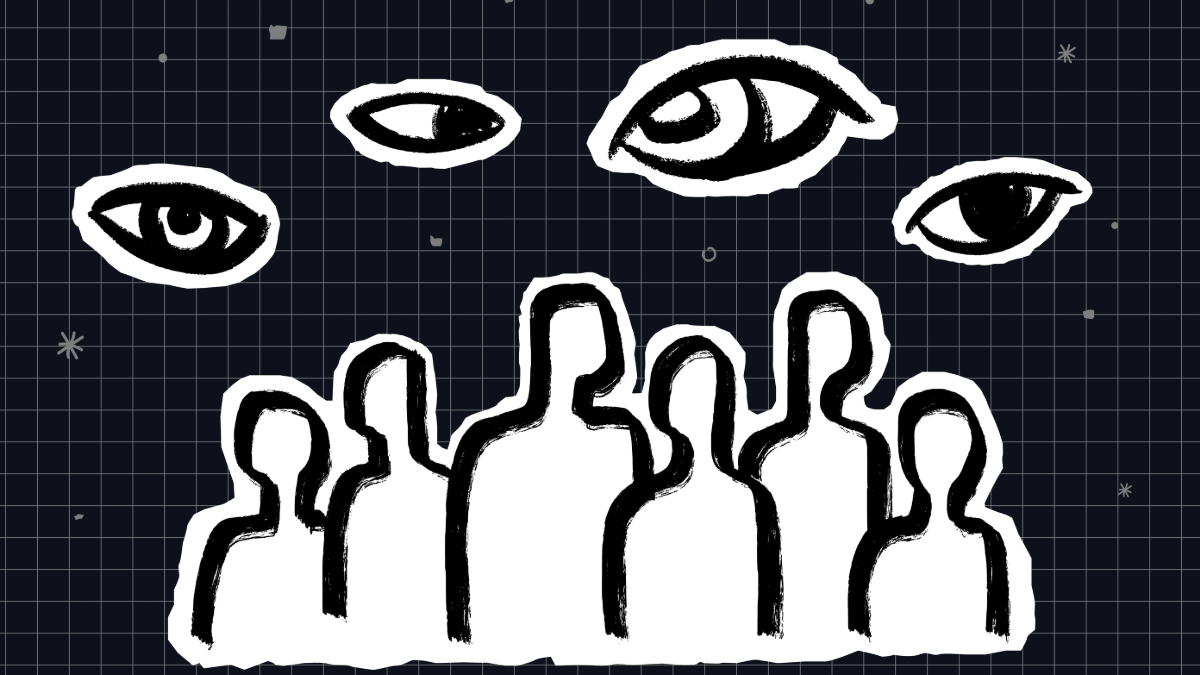
“Hype” can mean a few different, related things when you consider it as a sociological phenomenon. It refers quite obviously to an element of thrill and excitement. Hype is indeed about magnification and exaggeration, about the fantasy of overpowering something, about an exciting dream of transcendence, direction, mastery, and revolutionary transformation. Yet it can also denote alarm and anxiety.
As a previous article in this series shows, hype is really about the fear of missing out and being left behind—and we can add: the fear of being devalued, disqualified, weakened, or turned into a liability in a game the rules of which can’t actually be found. And it means publicity and propaganda, too. Hype is definitely about the inducement to invest, to purchase, and to consume, and it is also about luring the public into a trap of spiraling symbols, a contraption that is specifically carved out of a simplistic, stereotypical delineation of what is good and what is bad, what is up and what is down.
With such perspective, then, hype quite visibly matches the traits once identified by Theodore W. Adorno and Max Horkheimer in their assessment of the disease of modern reason and its collapse into fascist madness. Modernity’s demand that we overcome all natural limits, they argue, produces anxiety and frustration—a crisis of failed symbolization. This is made worse by an ideological machine that invents enemies, fueling a state of mass paranoia.
Is Adorno and Horkheimer’s use of psychoanalytic categories in the examination of social phenomena only metaphorical, if not merely provocative? Agnès Grivaux convincingly shows that this is not the case. Fascism serves as a laboratory for the elaboration of a concept of madness that ought to be methodically and essentially sociological: in other words, fascism works as a test case for a sociology of unreason, rather than just a psychology thereof. The intention of this critical breakthrough is of urgent relevance today.
Fascism and paranoia
The links between hype and fascism today are considered, explicitly or implicitly, in a number of important investigations. In these very pages, to start with, Elke Schwarz signaled the direct links that form between the value fantasies at work in technological venture capital, on the one hand, and the obsessive desire for warfare found in fascist politics today, on the other hand. Work by Gil Durán, Becca Lewis, Quinn Slobodian and Ben Tarnoff, Adrian Daub, Moira Weigel, Carolin Amlinger and Oliver Nachtwey, Carla Ibled, Dirk Matten, Alberto Toscano, Dagmar Herzog, or Yuk Hui, among many others, consistently contributes to the clarification of these and comparable connections between fascism and many different things. These include financial interests, political positions, technological infrastructures, ideological configurations, emancipatory desires, spiritual doctrines, and so forth.
But one connection that should not be neglected is paranoia. I mean here paranoia understood not as a mental, clinical condition, but as a social syndrome: that is, a state of paranoia understood as a culture cluttered with stereotypes that in turn leads to the disinhibition of latent obsessional fears, and to the spiraling over-interpretation of menaces and hopes—and also, as Adorno and Horkheimer would argue, a culture grown from the limits and tensions of an ultimately fragile modern reason.
Value panic
As I have suggested elsewhere, following-up on my book Paranoid Finance, the traction that ‘conspiracy theory’ has in the present juncture—and which can be certainly read in terms of present-day fascist propensity, as the QAnon syndrome attests—links directly to the radicalization of the notions of ‘value creation’ that haunt dominant financial imagination. I argue that value stands indeed as a crucial—albeit fragile—concept in the tradition of modern reason, and that extremist, fundamentalist interpretations of value creation (e.g. value creation as the ultimate compass for the organization of everything) precipitate the state of mass paranoia that today’s fascist syndrome represents. The ‘agency panic’ that Timothy Melley identified in contemporary conspiracy culture (e.g., panic about the loss of human agency) takes the shape, I suggest, of a ‘value panic’ that hastens the sanctification of value creators and the demonization of value destructors—both fantasized, but effectively enrolled in all kinds of radicalizing rage.
Extremist, fundamentalist interpretations of value creation are not a marginal phenomenon anymore. They are becoming mainstream. Much attention is being drawn in that respect, pertinently (again, for example, by Elke Schwarz), to notable cases of fascist orientations in technology investment milieus—e.g. 2025 Palantir’s “We Own Value Creation,” a fascistic, paranoid show. These may seem exceptional, anecdotal, unusual, and specifically bound to Silicon Valley elite hype and the United States of America under Donald Trump’s second presidency. They correspond instead, I believe, to a vast phenomenon of global proportions, expressed in multiple manners all over the world, through a variety of media—from investment tutorials to spiritual guidelines, and from policy campaigns to educational programs (see, for example, the amazing work by Gala Hernández López). Today, recognizing the ‘enemies of value’ so as to chase and eliminate them becomes the key to the redemptive access to the restoration of one’s rightful claim to one’s own value, eventually accepting, at once, the mission of becoming oneself a soldier in that battle.
In this context, it is important to develop a critical angle on ‘value hype’ that would interpret as seriously as possible the lead signaled by Adorno and Horkheimer (a lead that, as Moira Weigel again shows, is in the crosshairs of the fascists today). Paranoia is not a clinical concept whose use for the assessment of social phenomena would be misguided, or metaphorical at best. It is, at least in part, the key to the understanding of the radicalization of the troubles inherent in our modern, economic reason, and to the fascist propensity of such radicalization.
Read other aticles in this series
Authors