Inside ex-Amazon Exec’s Appointment to UK Competition Watchdog
Jade-Ruyu Yan / Mar 31, 2026Jade-Ruyu Yan is a UK Reporting Fellow at Tech Policy Press and openDemocracy. This story was produced in partnership with openDemocracy.
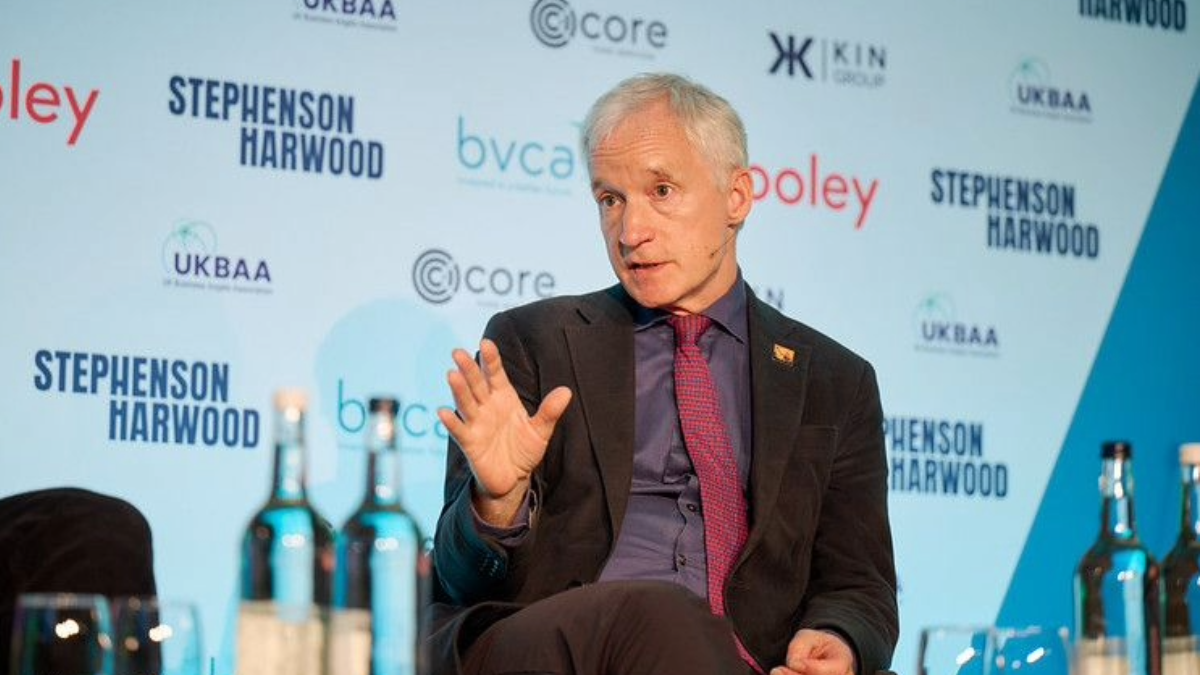
United Kingdom Competition and Markets Authority chair Doug Gurr. Source: Doug Gurr/LinkedIn
When Doug Gurr was named chair of the United Kingdom’s Competition and Markets Authority last month — having already led the watchdog on an interim basis since January last year — one major case in his docket was a high-stakes decision on how to regulate two major cloud service providers. One of these was the web services arm of his former employer, Amazon.
“During the pre-appointment hearing, we discussed perceptions arising from my previous role at Amazon,” Gurr subsequently said in a letter sent to the chair of the Business and Trade Committee in early March. As a result, Gurr continued, he would be recusing himself from the case, which also involved Amazon’s competitor Microsoft, even as he claimed that, “it is clear that no actual conflict of interest is capable of arising.”
But Gurr’s “recusal addresses narrow conflicts, not broader influence,” Tommaso Valletti, an economics professor at Imperial College Business School, told openDemocracy. “The real concern is the shaping of priorities, framing, and appetite for intervention. That kind of influence persists even when formal rules are followed.”
Concerns around Gurr’s appointment are not about whether he will act for personal benefit (in his letter, Gurr noted that he does not hold any shares in Amazon). Rather, experts are worried about how someone who spent a significant part of his career helping Amazon become a dominant player in retail and technology thinks the CMA should regulate dominant mega-corporations such as Amazon.
“The question is less whether he’s going to do specific favors for his former employer,” said NYU adjunct professor of law Paul M. Barrett, pointing out that this can be monitored and dealt with through recusals. Rather, he said, it’s whether Gurr will bring “the mindset of someone who is doing the business of the people” or “the mindset of his former colleagues in industry, which is ‘we’re here to maximize profits’.”
These fears may already be playing out. Last week, the watchdog announced its three-year strategy, which says that while enforcing competition is one of its key objectives, “effective competition does not preclude business collaboration. So, we are also stepping up action to enable legitimate, pro-growth collaboration.”
And earlier this month, the head of the CMA’s cloud inquiry case, Kip Meek, confirmed to The Morning Intelligence newsletter that he left the CMA in January, one year before his term was due to end, over fears about the watchdog’s independence and the lack of progress since last July, when his inquiry’s investigation found that the CMA should take action to stem Microsoft Azure and Amazon Web Services’ dominance of the cloud market.
Amazon’s expansion of its cloud services in the UK coincided with Gurr’s tenure as the head of Amazon UK. The press release announcing his appointment in April 2016 referenced the rollout of “heavy investments in our infrastructure,” including the “new Amazon Web Services (AWS) UK data center region”, while a glowing profile of Gurr in the Evening Standard said his mandate at Amazon was “to knit together its three main products — shopping and entertainment; devices and business services (like cloud computing) — in the UK.”
Now, five years since he left Amazon, NYU law school professor of trade regulation Eleanor Fox believes that putting Gurr in charge of the body tasked with deciding how to regulate Big Tech in the UK is akin to “the fox guarding the chicken coop.”
The revolving door
Since leaving Amazon in 2020, Gurr has taken on a string of high-profile director and chair roles — many of which are tied to UK government departments and publicly funded institutes and foundations, suggesting a clear draw toward the public sector.
At the same time, he has sought to distance himself from his former employer. Gurr makes no mention of his nine-year tenure at Amazon on his LinkedIn and told MPs at last month’s pre-appointment hearing that he has “no formal connection [to the company] whatsoever.”
Yet openDemocracy’s findings tell a more complicated story: Gurr has crossed paths with Amazon or his former colleagues at the company in several roles he’s held since leaving.
Gurr’s ongoing links to Amazon are perhaps most notable in his role as director of the Natural History Museum, which he has held since December 2020. The museum is publicly funded and sponsored by the UK government, which has confirmed Gurr will continue his directorship alongside leading the CMA.
Under Gurr’s leadership, the museum appointed Tanuja Randery, VP and managing director of Amazon Web Services for Europe, the Middle East and Africa, to its board of trustees and established its first and only partnership with AWS, which its website names as the “lead sponsor of our Urban Nature Project.”
That project, a reimagining of the museum’s five-acre London gardens, announced in October 2022, relies on a “Data Ecosystem being developed in collaboration with Amazon Web Services and built using their technologies” to monitor change in urban environments.
A spokesperson from the Natural History Museum told openDemocracy that “Gurr was not involved in securing the Museum’s partnership with AWS.” Yet Gurr appeared to suggest otherwise in his application to be the CMA chair.
Gurr lists “raising over £400m to support the museum’s scientific and public engagement programs, including [...] the Urban Nature Project” among his “achievements” as the museum’s director on his CV, which was published by the Business and Trade Committee last month.
The museum’s spokesperson added, “Tanuja Randery was appointed Trustee by the prime minister. All of these processes were properly followed and have long been a matter of public record.” Randery did not respond to requests for comment.
Gurr is also the chair of the troubled Alan Turing Institute, the UK’s national institute for data science and AI, which receives core funding from the government. In July 2023, the year after his appointment, the institute hired a new chief executive: Jean Innes, who previously worked at Amazon for two years, overlapping with Gurr’s time at the company.
Innes did not respond to requests for comment via LinkedIn and the institute.
Over the past ten years, Gurr has also held various non-executive directorships at the UK government’s Department for Health and Social Care, the Department for Work and Pensions and the Land Registry — several of which have raised questions over his ties to Amazon.
In 2020, the government was forced to deny that Gurr, then the Amazon UK boss, had used his position as a board member at the Land Registry, which registers the ownership of land and property in England and Wales, to influence a decision to award its first contract to Amazon Web Services, worth £4.8m.
Approached for comment by openDemocracy, a spokesperson for the Land Registry denied Gurr’s involvement in the decision, saying: “Our non-executive board members are not — and never have been — able to input into procurement activities and decisions.”
The government was also criticized for appointing Gurr to a selection panel tasked with choosing the Cabinet Office’s chief digital officer in August 2020, when he was still the Amazon UK lead. Two months earlier, the Cabinet Office’s Government Digital Service had awarded Amazon Web Services a one-year, £6.6m hosting contract.
When asked about Gurr’s links to the company, representatives of Amazon and Amazon Web Services declined to comment.
Gurr is, of course, far from the only Amazon exec to benefit from the revolving door between the company and the government.
Another former Amazon UK CEO, Brian McBride, went on to become the lead non-executive director at the Ministry of Defence, while Sachin Jogia, who left Amazon the year after Gurr, having overseen the global development of the Alexa smart home device, holds roles at HM Revenue and Customs and the Department for Environment, Food and Rural Affairs, and was previously chief technology officer at Ofcom, the UK’s communications watchdog.
Others have gone the other way, moving into senior roles at Amazon after leaving government. These include the UK’s former chief technology officer and national technology adviser, Liam Maxwell, and the Home Office’s former chief digital officer, Norman Driskell, who came under fire in 2017 for taking a job at Amazon without approval after overseeing lucrative government contracts with the company — a breach of rules intended to prevent civil servants exploiting public sector work for personal gain.
None of this is inherently problematic, according to NYU law professor Barrett. It’s “fine for people to spend 20 or 30 years involved in business, and then say, now I’ve reached a stage in my career where I want to be in public service,” he said. “That can be a wonderful story, that’s all good.”
But crucially, Barrett said, this doesn’t appear to be the case with Gurr’s appointment at the CMA. “The Labor government has brought him in to ‘promote growth’,” Barrett said. “That’s code language for letting business do what it wants to do.”
Implications overseas
“[Gurr’s] appointment to me alone is nothing much,” said Alexandre de Streel, the former chair of the expert group on the online platform economy advising at the European Commission. What’s more troubling, he added, is “the whole story behind” his appointment, including the firing of the previous CMA chair Marcus Bokkerink.
The Labor government ousted Bokkerink in January 2025 over what critics described as his overly heavy-handed regulation of business, particularly the tech sector. Gurr’s subsequent appointment as the watchdog’s interim head was widely seen as a green light for Big Tech, indicative of Keir Starmer’s push to make the UK more “business-friendly.” In the year after Gurr took office, the CMA didn’t block any mergers – a first since 2017, according to reporting from The Financial Times.
After Gurr’s pre-appointment hearing earlier this year, MPs on the Business and Trade Committee expressed concerns about the process by which he was chosen to lead the CMA permanently.
In a follow-up report, MPs noted that the Advisory Assessment Panel, which was responsible for vetting and interviewing applicants, found that Gurr was the only “appointable” candidate for the role. This, they said, is “not the hallmark of a robust recruitment process.”
The four-person assessment panel had 27 applicants to sift through, according to a Freedom of Information request by Jon Menon at MLex, a legal and regulatory news publication. Of these, it shortlisted five or fewer for interviews. One of the panel’s members was Justin Basini, a fintech company CEO and the CMA’s senior independent director.
While it could be seen as standard for someone in Basini’s position to be on the panel, it would have been a boon for Gurr to be interviewed by one of his colleagues at the CMA, according to a former CMA employee who spoke to openDemocracy on the condition of anonymity. “When you’ve been the interim, you’ve got a huge inside track,” they said.
Gurr has consistently emphasized the importance of growth and business investment and the need to create a “predictable” regulatory environment for businesses, including as interim chair. Many experts have interpreted this as meaning that under his leadership, the CMA will be less likely to use its powers to protect the public from monopolies.
This will not only affect UK consumers but could have implications for competition regulation elsewhere, too, according to de Streel, who is also a law professor and the academic director at Brussels-based think tank Centre on Regulation in Europe.
“This weakness of the UK enforcement will not only have a consequence in the UK, but could then be used by Big Tech to try to weaken the enforcement” elsewhere, said de Streel, including in the EU.
The CMA declined to respond to a request for comment.
“We do not accept these criticisms,” said a spokesperson for the Department for Business and Trade, which oversaw Gurr’s appointment. “Doug Gurr brings a wealth of experience from multiple sectors, and over the past 12 months has worked in lockstep with CMA leadership to reform the organization. The Government has reaffirmed the CMA’s independence while ensuring it defends consumers, supports fair competition and helps to grow the economy.”
Authors