Less Apocalyptic Rhetoric Can Help Mitigate Anti-Tech Violence
Jordyn Abrams / Jul 6, 2026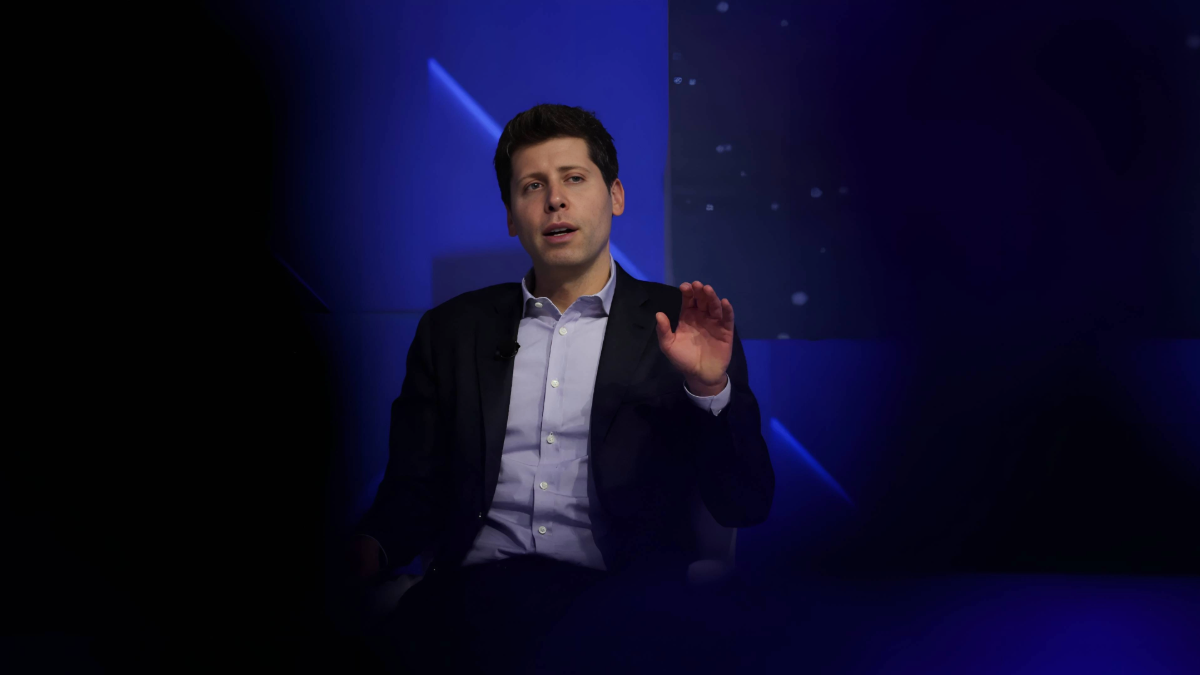
Sam Altman, CEO of OpenAI. Shutterstock
A series of tech industry luminaries flash across the screen, the subtitles spelling out statements like “I know people who work on AI risk who don’t expect their children to make it to high school,” “Am I confident that it’ll go right? Absolutely not,” and “This is the last mistake [humanity] will ever get to make.”
This is the trailer for a new documentary titled “The AI Doc: Or How I Became An Apocaloptimist,” which describes the possibilities—and potential disasters—that artificial intelligence (AI) might introduce to the world.
The rhetoric around AI often paints an apocalyptic picture. Hysterical or not, this rhetoric may be worsening a real trend of political violence motivated by opposition to the tech industry advances or industrial society as a whole.
Apocalypticism is not unusual in the American psyche; a 2022 poll found that nearly 40 percent of all Americans believed “we are living in the end times.” The perception of a looming apocalypse can encourage a higher tolerance for risk, in turn generating greater support for and willingness to commit extreme actions in order to address perceived threats.
While apocalyptic thinking has often stemmed from theological beliefs, doomsday perceptions have also surrounded conversations on AI—and industry leaders have often been at the head of creating these apocalyptic narratives.
In a recent blog post, Anthropic called for slowing the development of AI globally, to avoid “humans losing control over AI systems.” In 2025, tech investor and Palantir founder Peter Thiel gave a series of lectures in San Francisco in which he warned about the coming of a luddite antichrist and potential Armageddon. Similarly, OpenAI CEO Sam Altman testified at a Senate Judiciary subcommittee hearing that his “worst fears” revolve around the technology industry “caus[ing] significant harm to the world” and warning that “if this technology goes wrong, it can go quite wrong.” Elon Musk, leader of Tesla and SpaceX, has also made loud statements about apocalyptic AI risks, including the claim that AI is a “fundamental existential risk for human civilization.” These are the leaders of the technology, sharing their worries about the risks it could pose.
While it is healthy for companies to be transparent about risks, the use of doomerism in language from top-level executives leads to an understandable concern for the average citizen. Whether the warnings are genuine or credible, using apocalyptic rhetoric about the future with AI should be backed by careful development and deployment so as to not stoke public concerns. However, the industry continues to be in an unending cycle of innovation, whereby caution is not possible given the marketplace competition.
Fear of the end times can cause people to take actions that they might not otherwise. Indeed, Theodore “Ted” Kaczynski, also known as the Unabomber, began his infamous manifesto with “The Industrial Revolution and its consequences have been a disaster for the human race.” An inspiration to many anti-tech extremists, Kaczynski justified his nearly 20-year bombing campaign by the need to destroy modern technology that props up society in order to avoid its eventual disaster for humanity.
Now, concerns about AI are leading a select few to resort to violence. In April, a man threw a Molotov cocktail at Sam Altman’s San Francisco home and then tried to break into the company’s headquarters. Before the attack occurred, the suspect, Daniel Moreno-Gama, was interviewed while reporters were creating an episode of the podcast “The Last Invention,” at which time he confessed to believing that AI “would likely lead to the end of the human race.” It is this mindset that later led him to attack the OpenAI CEO with a chilling manifesto that included a list of AI CEOs and leaders to kill and a description of how AI will lead to humanity’s impending destruction.
Before Moreno-Gama, there was the case of the Zizians, a cult-like group which was linked to six deaths. Ziz LaSota, the leader of the group, became an “ultraradical” within the Rationalist community—an online group focused on technology and philosophy in which concerns about AI are common (though LaSota is not representative of that community as a whole). Over the years, LaSota began drifting toward the belief that AI will become a threat to humanity and embraced the use of violence to stop it.
An important parallel is that apocalypticism has been present in other extremist movements. The Islamic State (ISIS) has utilized an apocalyptic vision to justify its brutality and create a sense of urgency that mobilizes followers to the cause. In the end of days, traditional ethical rules no longer apply; extreme actions in furtherance of one’s goals are allowed.
Similarly, far-right groups are often motivated by accelerationism, which blends elements of apocalypticism with violence by attempting to bring forward the end of the current system. White supremacist accelerationists have attacked perceived enemies, as well as critical infrastructure as a means of undermining the foundations of society. While anti-tech sentiments have previously played a flexible role within other extremist attack ideologies, the rapid evolution of AI—and the increasingly dangerous narrative around the technology—has led to anti-tech extremist violence.
It is absolutely necessary for AI leaders to be transparent about the risks their technology poses. However, it is also necessary to avoid doomerism. Dario Amodei, co-founder and CEO of Anthropic, wrote in part about this risk at the beginning of 2026, stating there is a “need to discuss and address risks in a realistic, pragmatic manner: sober, fact-based, and well equipped to survive changing tides.” In order to avoid escalation to further violence, the narrative around AI must be based on facts and not fear.
Authors