The 'Jenga Politics' Threatening the US Census
Justin Hendrix / Sep 27, 2026https://www.techpolicy.press/through-to-thriving-insights-from-the-field/
In the United States, the census touches tech policy at more points than you might realize. It's a massive data collection operation and a piece of democratic infrastructure all at once. My guest today is danah boyd, the author of Data Are Made, Not Found: A Story of Politics, Power, and the Civil Servants Who Saved the US Census, a new book from the University of Chicago Press that tells the story of the people who make the census, recounting how the 2020 census came together amid fractured politics and a raging pandemic. It's a complicated story and it has implications for the next census, which is already in planning and already a source of controversy and concern
What follows is a lightly edited transcript of the discussion.
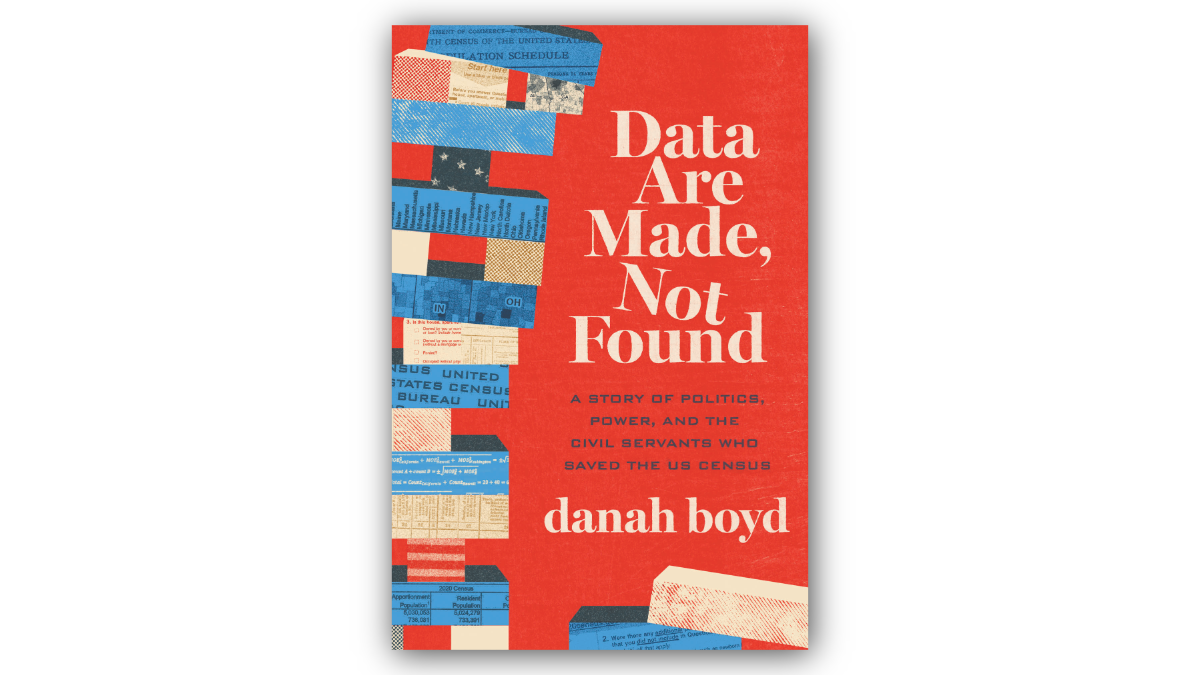
University of Chicago Press, 2026.
danah boyd:
My name is danah boyd and I'm the Geri Gay Professor of Communication at Cornell University and the author of Data Are Made, Not Found: A Story of Politics, Power, and the Civil Servants Who Saved the US Census.
Justin Hendrix:
danah, I'm so pleased to speak to you today about this book. This is not your first book. If folks go and look up the danah boyd bibliography, they're going to find quite a number of titles. And many of them, of course, co-authored with other folks that have been on the Tech Policy Press podcast in the past. You have been publishing, I guess for what, close to two decades at this point, and quite a trajectory on everything from social lives of networks, teens, on through to various issues around data and online questions in society, and now onto the census. I think just maybe to start, for anybody out there that's not familiar with you and your intellectual curiosities, maybe explain that trajectory a little bit. How do we start with teens and their behavior online and end up with the census?
danah boyd:
Yeah, no, so it is a funny trajectory because I started studying teenagers because I myself was a teenager who grew up on the internet and I loved the internet. And I was like, "Well, what's happened to the internet now that it's gone mainstream?" So I dove in and just in time for the rise of social media. So I ended up writing this first book about young people on social media. But amidst all of that, I'd always been fascinated about privacy and what it meant to control the flows of information. And I'd done all these projects on privacy even before the kids' work and afterwards, and that spiraled and led me to help found Data & Society, which is a research institute that I ran for a decade, where we were looking at all these different battles that were happening about data. And mostly I was thinking about social media and internet traces and all of those things.
And for various really weird reasons, I had gotten called in to help advise a Commerce Department data advisory committee. And then I got to learn that the Commerce Department in the US is basically the data agency. They have NOAA, which gives us the weather data and all these economic folks, and then of course our population data, which is the census. And so I'd slowly gotten to know folks there and I'd been helping out with different things on the census and I'd been getting more and more involved. And eventually I sort of put a big pause and I was like, "Hey guys, I'm glad to be helpful here, but I need to go back to doing research and there's this big AI battle that's brewing and I want to understand what makes data legitimate." And at the time the head of Census Bureau glares at me and goes, "You know the problem we've been working on for 230 years?" And I was like, "Point, that's a fair point." And he's like, "Well, why don't you just stay here and do your research from here?" And I'm like, "Well, I'm an ethnographer.
I want to understand all of the battles about data and what's going on with data and I need to have access and I need to be able to really dive deep into him." And he's like, "mm-hmm." And I'm like, "That means that you need to let me attend any meeting that I want to." And he's like, "Okay." And I'm like, "Wait, what? Are you serious?" He's like, "Yeah." So I thought this would be a really small project that would be a part of a bigger project on all these battles that were happening with data. And it turned out there's a lot that goes on inside the census. And the more that I kept looking and looking and turning over stones and being like, there's a lot there and there's a lot over there, and I just kept getting more and more enamored with it. And one of the census people, she warned me, she's like, "It's Hotel California around here.
You come in, you get a little bit curious, but you never leave." And I definitely ended up in a version of that, but I realized that the lessons that I was learning from the census were so applicable beyond the census. And to be clear, when I started this project, I couldn't have told you a darn thing about the census. I knew nothing. And so I learned so much and I want to be able to share the things that I've learned and to help people who care about democracy or care about data or both, understand that what is happening to the census is what's happening to many more things about our data world right now. And so it's a good canary, if you will.
Justin Hendrix:
I want to pick up obviously on where we're at today and the news even, I'm sure, since you turned this book into the publisher has taken quite a turn on these matters. But you say in the preface that you at first thought you needed to avoid politics. You were trying to skirt around partisan issues and you were told upfront pretty early that, listen, this data, this census data is inherently political, that this is an inherently political matter. How did that message come across?
danah boyd:
I think there's this duality and it's this question of what is politics? So as academics, we often are like, everything is political. These choices that are made are political. That's not the language that people in DC use when they think political. Political to them means partisan, which is the constant brawling fight between the Republicans and the Democrats and who's shaping political power, et cetera. And the very decision back in 1787 to anchor the allocation of political representation, the actual who gets to be a representative in the House, which states get reps, how many reps they get, and then of course the redrawing of those districts within each state. The desire to do this, to anchor that was really, really radical. And the reason why is that up until the US Constitution did this, the majority of the reasons that censuses were conducted, census comes from the same root as censor.
It was for kings to be able to determine how to conscript people and how to tax people. It was about abusing the population information for political power. And there were some places that had started actually trying to understand a population, but the idea of inverting and saying, no, we're going to empower the people through their population numbers, that was pretty radical and crazy. But at the same time, you've just decided to anchor this whole political mess to these numbers. And so even the 1790 Congress understood that the fight of how to do this, how to make sure that everybody was counted, that they were counted accurately, that they were counted in the right place. This was a huge set of debates for the first Congress. And of course they did it and they built the census for the 1790, and that has been done every decade since.
But each of those decades has been a different kind of political fight and they've tried to do this. When the Census Bureau became a full-time professional entity, which happens in 1902, the idea is that it becomes part of a bureaucracy because up until then it's like pop-up censuses. We're going to suddenly try to remember what we did the last decade and do it again. But there were various reasons at the end of the 19th century that that became a nightmare, one of which is a very good geek story that led to the creation of IBM. But there's this moment of like, okay, we're going to professionalize. And one of the things you see with the professional Census Bureau is this deep commitment to get the best data possible. Now that doesn't mean that they're oblivious to the political dynamics. They're very aware of the partisan layers of all of this, but their commitment is that North Star is to get a perfect count of the population.
And they know they can never reach it. It is the North Star, but it's the thing that they're always aiming for. And so one of the things that I deal with as a tension in this book is that tension between being determined to get the best count possible and be able to be devoid of the partisan politics and the constant reaching in more and more of partisan politics, not just the redistricting and gerrymandering fights of the using of the data, but really going deep into how the data are made. And that felt very challenging for a lot of those bureaucrats, and it's even worse now. The amount of pressure they're on, the things that they're being told to do are so partisan in nature that it's very hard for them to operate. And we're struggling not just with whether or not they can succeed, but whether or not whatever they produce is legitimate to the country on the other end.
And it's reaching a new set or a new level of challenge for those bureaucrats right now. And so I'll just sort of conclude this remark by saying part of why I wrote this book is it's a love letter to civil servants. It's like saying, actually, we see you. What you're doing is awesome. It is hard work. It's challenging and we thank you and I want the American public to thank them. I keep joking that we need to adopt a civil servant in order to come back and love them. But at the same time, it's this moment where we have to actually address the partisan nature of what has happened to this. And that's where we have to deal with the fact that Congress absconded with its responsibility in 1929, and it's time that Congress actually takes this responsibility back.
Justin Hendrix:
I want to just go back to that phrase data are made because you used it again just now, and of course it's in the title of the book. But maybe before we move on, let's just explain exactly what you mean by that, about the idea that data are made, not found. I mean, everyone thinks about the Bible and they think about King Herod and go and count the people, count the livestock, et cetera, et cetera. This is not a head count. This is an act of manufacturing a statistical product. Explain this sort of manufacturing process effectively.
danah boyd:
Well, to be clear, it was manufactured even in ancient biblical times. This is the whole reason that Mary and Joseph are going to Nazareth in order to be counted because they are required by that time's rules to be counted at the place of birth and they needed to travel to be there. So the choices of who we count, how we count them and what we ask them in that process of counting really do matter. So we have that very basic version, but there's also just the raw realities of what it means to count everybody once and only once and in the right location. So we have to unpack that. How do you count everybody? People don't stay put. They're not magically just there because you've knocked on the door or you've asked them to fill out a form. They have all sorts of complicated reasons for not being there.
And let's talk about one that's not particularly controversial, but makes everybody scratch their head when they think about it. When you have children who move between their divorced parents' houses and they split even time all year long, where should they be counted? That's not obvious. That's not obvious. And how do you make it so that you don't double count them or make it so that don't count them not at all, which is truly consequential. So this process of how you go about and figuring out where people are and where to count them and how to make that work really matters. The other thing is that this is a system that relies on people. People are supposed to respond with information. It turns out people are really unreliable. They're unreliable as individuals and they're unreliable as employees, which is to say that, let's start with the latter.
There's a longstanding discussion of what's called curbstoning. Curbstoning is when people who work for the census go and rather than knock on a house, they sit on the curb and they try to guess how many people are there because they don't want to knock on the door. There's a scary dog in the middle of this. So they're just like, eh. And so there's any number of reasons why they do that. And so they're making that data and the choices that they make may be helpful, may not be, and that's a part of the problem. But then let's go to the individuals. So my favorite little example here has to do with what it means to think about age. Age is one of the variables we collect as part of the US census. And you would think that it would be something that would be very easy for people to answer and that they might be consistent about it.
And it turns out people are terrible about offering up their age. They like to round, but they like to round consistently. So they're not 72, they're 70, despite what they were a decade ago. And so people round so consistently that if you look back throughout history, and so I happen to look at the 1880 to 1950 data, which during that period we have what was the published data around age, but we also have all of the individual records because they're now part of the public for ancestry reasons and for all sorts of other historical records. Nothing later is available to the public. And if you actually compare them, what you would find is that the Census Bureau, since at least 1880, has been smoothing the data because if they were publishing the data as collected in 1880, you would get spikes years ending in zero and years ending in five.
They lie about their own age. They lie about their roommate's age. They round in really weird ways about their neighbor's age. They do all sorts of things. And so this is a very small little example of how the Census Bureau has to take what they collect and they have to figure out how to make it into statistics that the public can believe in. And they have to make it into statistics with a bunch of different very realistic constraints, which is that some houses, they couldn't find the people, but they know that there's some number of people. So they have to go and they have to fill in the gaps. They have to publish the data down to a level of detail that if they were to publish it in an exact information, they would actually be revealing of people. And according to the law, they're not allowed to do that.
So in order to give both granular data and data that could be useful for statistics and also to protect the confidentiality of that data, they have introduced all of these noises since 1990. And we'll discuss that a little bit, I'm sure. But this is why it's important to realize that there's all these processes that go into this. And the goal at the end of this is that the Census Bureau is like, look, we are publishing data that is going to be used for apportionment, redistricting, federal funding formulas as the foundation for what it means to be nationally representative, for every marketing study and everything else, for research, for all of these different purposes. We need it to be statistically sensible, but that doesn't mean that each individual record needs to be accurate. And it's that tension in the making of statistics that is the cornerstone of what it means to do federal statistics.
Justin Hendrix:
So another concept I want to just grab out early on in the conversation, you keep coming back to this idea of Jenga politics. What is Jenga politics?
danah boyd:
Yeah. So I was trying to think about what's been happening to government in the administrative state. We pay attention to whoever is in power now and we blame them for all of the ills that we're facing. And depending on our own partisan proclivities, we blame the party that we don't associate with as all the problems that our party is the good one. These are the classic narratives. But when I was living and breathing and working with the civil servants, what I found is that both parties have been problematic in different ways. And all of these efforts to constantly micromanage and change things related to the census have been consequential. So I was trying to find a way to describe what has been happening. And if you think about the wooden tower of Jenga and the game you play, what happens is that both players or multiple players take out pieces from the wooden tower and they add pressure to the top and each player goes back and forth.
But the problem with this game is that one person is declared the loser, the person who finally made the whole tower fall, but everybody actually loses. The whole tower fell. And so what I kept thinking about is that we've been living with Jenga politics for decades now where the administrative state has been experiencing pillars taken out from it, pressure put on top, often in well-meaning legislation, but sometimes other egregious things, different kinds of winds blowing and whatnot. And the civil servants are running around being like, "Can I keep the tower intact? Can I keep the tower intact? How do I keep the tower intact?" And maybe they've got duct tape, maybe they're figuring out ways of putting things back, but they're really struggling with a very wobbly tower. And my point in making that metaphor is to say we've all been responsible in different ways, whether we know it or not, and we need to recognize that.
And we need to recognize that the answer to addressing the very wobbly tower is to not add more pressure to the top, but to find ways to really strengthen it at its core. And that's a lot of what I want people to be looking for is how do you not just think about the new micromanaging law, but really thinking about the foundations? And part of it is that the census is also the foundation for our democracy. It's the foundation for our ways of knowing certain kinds of things. And so I want us to take those infrastructures seriously and trying to provide a metaphor that people can actually see infrastructure because people don't like infrastructure. It's boring and uninteresting until it breaks. And I'd like this not to break. I think it's better off if we can actually repair things before they break.
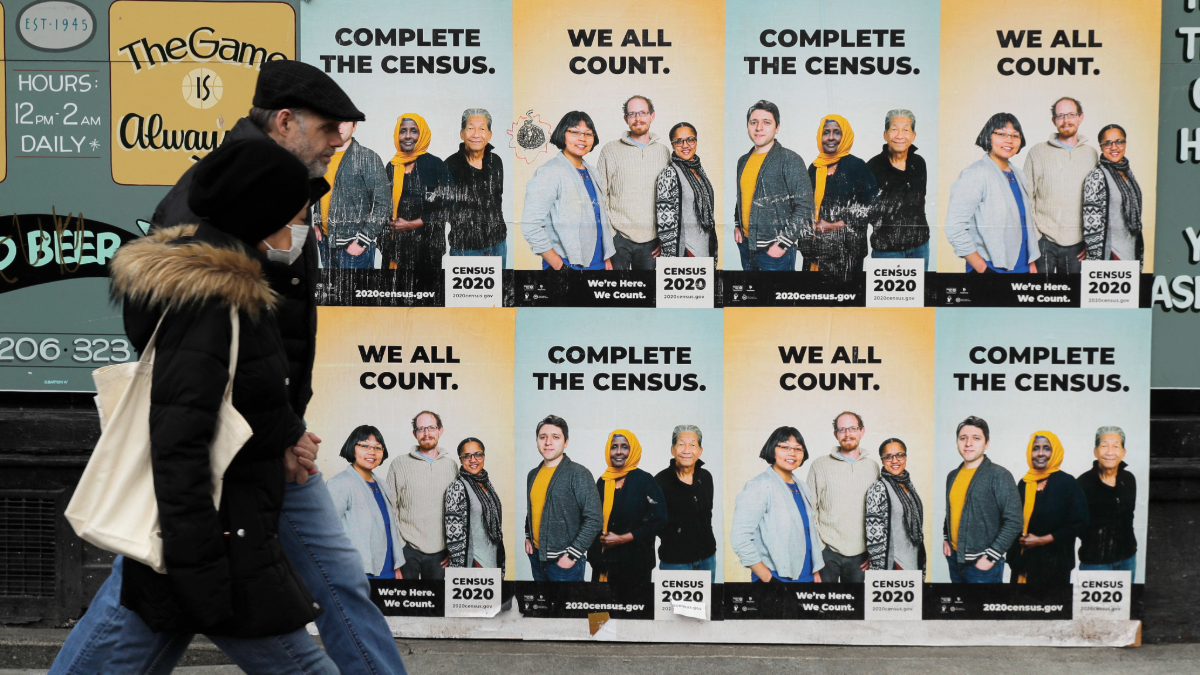
People walk past posters encouraging participation in the 2020 Census, Wednesday, April 1, 2020, in Seattle's Capitol Hill neighborhood. (AP Photo/Ted S. Warren)
Justin Hendrix:
The book is telling the story obviously of the 2020 census and how it came together or almost didn't in some ways. But you mentioned 1990. Of course, there are two other censuses in between there, the 2000, 2010 census. What can you tell us about that trajectory, that kind of 30-year trajectory that precedes the 2020 census? What is important for the listener to know?
danah boyd:
Yeah. So the thing that I'd first pull out that I think is important is that especially during the 1990 census, but really going into the 2000 census, the Census Bureau had gotten better and better at getting as much detail as they could get, but they set missing people. It's called the undercount. And there's especially a differential undercount, which is the idea that certain populations are notably undercounted compared to others. And we tend to look at this in terms of Black and Latino populations who tend to be undercounted, but there are also other subpopulations, renters, younger populations, kids. So there's all these different populations that are missing and it's often referred to as the last 1%. And one of the things that the Census Bureau though it could do is that it would involve lots of external stakeholders and get people really excited from the outside.
And if they got people excited from the outside, maybe they could turn it into more of a civic act and make it so that people knew about the census and they participated in the census. And so we had all these campaigns like get out the count. And this made it a lot more visible during that small window in the years ending in zero. And the result was that despite a continuously lowering of response rates, the 2000 census was unquestionably better by every scientific measure than the 1990 census. And the 2010 and the 2000 census, they both have strengths and weaknesses and their respective directors will argue with each other indefinitely about which one was better, but they were both really good and better than 1990. And so we go into 2020 with all of these people being like, okay, can we go further? Can we get even further out of that last 1%?
Can we find new methods? And everybody had different visions of what would be the better way of doing it. Some people were like, we've got to use better administrative data. Some people were like, we have to do better messaging. We have to be doing all this community engagement, all of these different kinds of approaches of how to make things better. And then a whole series of things start to fall apart. And that's a lot of where this book ends up telling us. First off, the 2000, 2010 census, they weren't really partisan censuses. Really, Republicans and Democrats around the country were like, yay, let's participate in the census. There was no feeling that it was whoever was in power census. It was just the census. Now, there were certain populations that still didn't like to participate, and there were certain people who did not like the respective administrations and were more frictionful, but it was not seen as a particularly partisan census.
2020 was different, and part of it was a big fight that happens before the census about whether or not to count citizens and whether or not to include a citizenship question in the census. That kick starts a partisan fight. And then there's all these other little battles that are emerging. Obama had not spent tremendous amount of money on things, so there was a massive lack of funding. The Trump administration came and fought it on a bunch of different methods. All of these things were happening. And the Census Bureau was pretty resilient towards it. They were chugging along. They had ideas, they had plans, they thought they could still make it through. And then we have this really weird, awful timing situation, which is the entire operation was ready to go into full speed on March 12, 2020. They launched the internet self-response really publicly, mass campaigns happened.
And on the next day, March 13, the government shuts down, and thus begins the COVID-19 pandemic as far as the census is concerned. And so this is this huge challenge because now the Census Bureau is having to upend every plan it could possibly make. People are massively moving. College students are leaving their dorms in droves. People are moving out of the cities. It's just man. And so the Census Bureau's like, "Okay, how do we do this? How do we do this? How do we do this?" And they do a phenomenal job, shockingly phenomenal. And this is also where, despite the partisan dynamics of the Trump administration with regard to the citizenship question, you actually have all hands on deck from the Commerce Department. So the secretary and the dep sec, they are both like, "Let's go." They are helping get PPE. They are helping solve problems.
I mean, it's just, "Let's go, let's go, let's go." But meanwhile, the partisan stuff gets louder and louder and louder. And this book looks at a lot of how that continues to escalate as they're trying their best to do the impossible and get these data. And there's a lot of detail in the book. The spoiler alert is that the census pulled off the 2020 census, and those data by almost every metric are better than 1990s data. And we could again argue about whether they're as good as or worse than the 2000 and 2010, but those data are better than all data in the 20th century. All data in the 19th century is certainly the first census. That's pretty phenomenal during a major pandemic. However, because we have so many people now paying attention to the census, people don't believe that the data are any good.
They don't trust it. They question the legitimacy. And that is where we have to deal with this painful duality of what it means to actually produce data and what it means to believe in the data we produce. And the Census Bureau is good at producing data. That is their job. They are not good at convincing the public of the legitimacy of those data or the legitimacy of their processes. That is not what they do. And the heads of communication for those agencies, for the Census Bureau, the person who's the director, these are partisan roles. And so the result is depending on who's in power, we end up with these fights. And when this data are delivered under the Biden administration, you have tons of Republicans saying Biden falsified the data, he messed them all up. And meanwhile, then you're now in a new situation where the Dems are like, ‘Trump is destroying everything, Trump is the reason that this is all flawed.’ And so this is this can't win situation where both parties and the academic community and the data community are doubting the data, and there is nothing more powerful to destroy the legitimacy of data than doubt.
Justin Hendrix:
I mean, there are a lot of personalities in this book and some of them are the sorts of people you've just been talking about. And I feel like you kind of complicated at least my sort of lay understanding of these things, just having more or less followed the news and been around these things. But there are people like Wilbur Ross, you kind of, I think, tell a sort of slightly complicated account of his role. And then there's civil society, which I feel like I was aware of and around some of the civil society efforts to both advocate around the census and also to try to drive turnout. Here in New York, of course, we had a huge get out the census campaign that was led by Julie Menin, who is now the speaker of the city council. I don't know, but maybe just pick a couple of these personalities.
It could be Wilbur Ross, it could be someone from civil society. Explain what you observed and maybe why it to some extent does kind of complicate the maybe partisan picture that we have.
danah boyd:
It was an interesting and challenging part as a researcher because as a researcher, my commitment is trying to figure out how to tell a really complicated story and show it from different perspectives in different lights. And the center of my focus is from the perspective of the civil servants, which means that you end up with not a clean partisan narrative. And one of the things I am bracing for is I think that both Republicans and Democrats are going to challenge me on this book. I know that the community organizations and the academics, everybody's yelling. Every time I would share a section of the book, we'd have these big fights over, well, you've been too nice to them or too mean to them. And I'm like, well, I guess I'm doing my job because it's complex. So Wilbur Ross is a very good example of this, which is that he was the secretary of commerce under the first Trump administration, and he's very well known for his business acumen, and that's how he became very wealthy.
But he also happens to love the census. He was a census enumerator years and years and years before. He actually, his supervisor for the census when he was working as a college student, went on to run the 2000 census as a Democrat. So he ends up in this world of really almost this deep feelings of commitment to democracy that we don't normally associate with Wilbur Ross. Wilbur Ross comes into the Census Bureau, and there's a lot that I actually don't tell of his story just because the book's long enough. But one of the things he does when he first arrives is he's like, "I know how to read a budget and you guys have a problem." And so he sits down with the civil servants and is just like, "Okay, we need to figure this out. You're going to hit walls here and here and here." And he really dives deep into their budget and helps them resolve a bunch of problems.
Because like I mentioned, the [Obama] administration had actually really underfunded key things of the census, and so they were in deep financial trouble. And not only did he come in and he's like, "Okay, I know how to fix this budget and I know how to ask for Congress." He went to Congress and he got a bunch of money for the Census Bureau. And so the Census Bureau were like, "Who are you? You're a miracle worker. We adore you. Thank you for your business acumen." Meanwhile, he got into fights with the people at the partisan level who were still running the census. At the time, there was still an Obama-appointed director and they did not get along, which is perhaps not surprising given the dynamics with the Trump administration. And so they butt heads in all sorts of really messy ways. But then things sort of took a weird turn over the citizenship question because according to the law, it is the Census Bureau supposedly proposes the questions.
In reality, since Trump won, it's been the secretary who proposes the questions, but this process is then given to the publicly announced, Congress is supposed to take responsibility. They're allowed to take action. They can change things. They have not stepped in, and by and large, this process has been non-political up until the citizenship question. And there's a bunch of things that go weird with a citizenship question where Wilbur Ross is accused of lying under oath. And he avowedly says he absolutely did not. He wrote it in his memoir. He did not lie under oath, but a large number of people believe he lied under oath, including many civil servants, because a lot of what he lied under oath about is what his personal understandings were.
I'm not going to try to debug that. What we know for sure is that Wilbur Ross put the citizenship question on the table beginning the court cases. And this was something where all of a sudden civil servants are like, "Oh, you were this amazing rescuer of our financial crisis, and now you're going to help make this a really partisan thing. We don't like you." So there's a big about face, especially from a lot of junior civil servants who weren't with him for that process. But then fast-forward, and we're in the middle of a pandemic, and I guess there's other stories there where he earns the trust of other civil servants. But in the pandemic, he really earns the trust of a bunch of senior civil servants because they're sitting here going, "How are we going to do this?" And he's like, "We're going to ask for an extension.
We're going to get PPE in any way possible. We're going to do this. This is critical to our democracy. We're going to go, go, go, go." I mean, he doesn't just say this. He doesn't just say he's going to do it. He is sitting down with them virtually. And so you ask some of the civil servants, "How often did you meet with Ross and his team?" And they're like, "Hourly." It was that kind of a feel. They were really in there. They were going to pull this off. This was critical. But then things start to get really nasty within the Trump administration. And civil servants don't know whether or not Ross was pushed aside, but what they do know is that this new group of political appointees that the Trump administration first put into the White House or put into commerce and then put into the Census Bureau actively worked against Ross.
So that was where you get the separation. And that was what challenged a lot of them is how do I deal with the fact that I've got complicated relationships with these people, but they're more nuanced than it first appears?
Justin Hendrix:
This was over the citizenship question?
danah boyd:
So Ross, he went forward with the citizenship question, but he effectively lost it at the Supreme Court. And it's quite possible that Trump blamed him. I have no idea who blamed who for what. It's also quite possible that when Trump went and demanded this undocumented file and this whole fiasco, he felt as though Ross was too loyal to the Census Bureau and not loyal enough to him. That's our best guess, meaning my guess based on what I've been learning from the civil servants, that's what people guess. They're not quite sure, but what they know is that the incoming political appointees who were demanding unprecedented things, including releasing data before it was actually worked through and breaking a bunch of rules, all of these things that were just totally unprecedented, they weren't coming from Secretary Ross. They were coming from these political appointees who were clearly not coordinating with Ross.
And as far as the Census Bureau civil servants saw it, it's like Ross had completely lost power. And again, hard to tell what was happening. This book is not the story of the inner workings of the Trump administration and their internal dramas, but it's one of the things that I even see now from the civil servants. The civil servants right now are describing a group of political appointees who are petrified of someone somewhere and no one knows who. They assume someone in the White House, but all they know is that they're dealing with these political appointees that are not just operating on their own interests. They're clearly passing in a telephone game down orders that they don't fully understand and they're acting like goons.
Justin Hendrix:
You mentioned that this book, you're doing your best to tell the story and to recount what you heard across multiple perspectives. There are probably some of these stories that people don't want told in quite the way you've told them. I suspect this chapter on when help is not helpful in particular. Let's talk about that. I feel like I've just mentioned that there was enormous amounts of civil society effort to try to make sure that people got out the count, including what I witnessed in New York City. There was even a lot of local money gets spent on that. A lot of private money gets spent on it, trying to make sure that people do actually fill out the census. And I think certainly in New York, there was a real sense that people were potentially afraid of participating in the census for more than one reason.
COVID was one reason, but also fears over the Trump administration and what it might do with the information were another. But I mean the chapter title kind of supposes your thesis, this idea when help is not helpful. When is help not helpful?
danah boyd:
Yeah. So one of the challenges when I started watching the advocacy community do these get out the count campaigns is that they firmly believed that people's ability to self-respond was the most important thing. And if they did not self-respond, they would not be counted. And that's a misunderstanding of how the census works. And part of it is it's in part because it turned into such a civic thing. And so one of the things the Census Bureau has known for decades since 1960 when they started actually asking people to self-respond is that the people who are willing to self-respond provide better data. If they're willing to sit there at night and fill out the form or type it online about them and their household, that data tends to be of highest, highest quality versus when they knock on doors or when they have to drag out neighbors to talk about their neighbors.
So there's these ideas of what data quality is. But there's a mistake that happened on the outside, which is that the self-response mechanism is the only mechanism or that the self-response mechanism when done by other people is better. And the Census Bureau for 2020 had made a dashboard and it was like, let's show the communities how they're doing in terms of self-response numbers. And so you could go and you could see that your community had 32% self-response of everybody that is predicted to be in that area. And the idea was that this would be a moment of like, okay, now community go, cheerlead, tell people to fill it out. And one of the plans for the 2020 census was there was going to be a church day, for example, where on one Sunday, everybody who was at church was going to be encouraged to try to fill out the census, and this would be part of a civic act.
There was all of this kind of push, but there are places where it started to slip and where it started to slip to people being like, oh, I need to up those numbers. And so maybe I'll fill out my neighbor's census form and maybe I'll fill out all of these other folks. And then there were also places where the cities hired people to go knock on doors and they argued that they were better at collecting honest data from respondents because they were more trustworthy than the federal government. Turns out that's not always true. And that's not always true for a variety of reasons. Coming from the city when the city is managing Section 8 housing, for example, makes people not want to share the people who are living there in violation of that tenancy rule. And so they just don't include that extra member of the house and we've just seen an undercount.
Or if you look at the training that the Census Bureau does for its enumerators, they have all of these processes to try to get data about the people who are more complicated, the extra family that's been living in the same household for the last six months who should be counted there, but they're not part of your family or the crazy uncle who's sleeping on your couch or any number of complexities. And they also have all these processes by which they make commitments to you so that they try to draw out people who might be undocumented or in violation of lease or all of these other things. And so inside the Census Bureau, they've done a bunch of assessments of what happens when community-based organizers are like, fill out this data by knocking on doors versus the enumerators. And they consistently find that the enumerators get more people to be filled out than the communities.
The communities are not trying to undercount. They're absolutely not trying to undercount, but they don't necessarily have the mechanisms to get people to fill it out and they believe themselves to be the best community spokesman, but that isn't necessarily what all of the constituents believe. And so there's many versions of this, and I tell a particularly complicated story in Detroit where a series of incentives collide in really problematic ways where I actually firmly believe that it was not the Census Bureau's fault for undercounting Detroit. I firmly believe that this was a set of decisions made by the combination of the mayor and the community in how they went and tried to be helpful. And so that was why I tried to lay this out and complicate it because I also want people to understand these processes because if you understand these processes, you can engage differently.
But if you don't understand the processes, you don't realize all the repair work and the other things that happen long after the self-response phase.
Justin Hendrix:
Just quickly in Detroit, you’ve got the city running a competition, a lot of effort to go into making sure they get out the count. What went wrong there?
danah boyd:
It's not quick. That's why there's a whole chapter on it. One of the things that we suspect, that civil servants suspect, is that people used a particular mechanism to take voter roll data and use that to fill out census forms for people. And the reason why that's important is that there's a lot of people who are supposed to be counted as residents of a geography that are not on voter rolls. So citizens who don't vote, children, anybody under the age 18 who can't register to be a voter, immigrants of a variety of different categories who can't vote and are not on the voter rolls, people who don't live there anymore but are still on the voter rolls, which is a whole different kind of mess. So there's all sorts of reasons why the voter rolls do not work as the mechanism for filling this out, which is one of the reasons why the Trump administration's current proposals are deeply troubling.
But because of this, if you just use the voter rolls to fill out census forms, you would probably trip or fail to trip the data quality systems because these are legitimate people and they're probably right, but you would be missing critical populations and you would produce an undercount. And so this is folks' best guess as to what made the undercount in Detroit so notable because there was so much pressure on people to try to up that self-response. And they realized it because the Census Bureau has these data quality mechanisms and they send out people for recollect. And in Detroit, they ran into a lot of problems because they sent out a lot of people to recollect data. And every time they recollected data from a household, they picked up additional people and they were like, "This is a huge problem." But at the same time, every time they sent out people, the people would be really annoyed being like, "People already came here and they're like," We didn't.
Someone else did. "And so that's where you get this disconnect here because you want presumably whoever was knocking on their doors and filling it out for them was trying to be helpful for the city or who was ever working through the materials, but it's quite possible that that's what produced the undercount. So this is one of the hardest chapters to write because I came into a lot of this wanting to love all of these people who are so civically minded. I believe them and I believe wholeheartedly that they are trying to be helpful. And yet I think that there are critical places in which that participatory act undermined the Census Bureau's ability to actually do its data collection process and its repair work. And there are many people who are involved in that situation who was like," Well, it's the Census Bureau's job to repair it.
"And it's like," Actually, the Census Bureau has a set of rules, operational rules that Congress agrees to years ahead of time. It can't pivot on a dime. This is the largest operation that we produce in this country other than going to war. "So the idea that they can look at a mess being made in one location and find a way to repair it instantly during a pandemic, it's like no. And even the things that they did do, it was so clear that it was creating friction within the community. And it's also tricky because the mayor of Detroit had banked his entire campaign on the idea that he was going to prove that his policies were effective and that he'd significantly increased the population of the census in that town. And so the result is that you had this really awkward moment because he'd been threatening the Census Bureau since before the census started.
And so it's a weird one. Detroit has a long history as I go through in that chapter, but this is also what's a more general challenge, which is that we often think that local jurisdictions are trying their best to get a good count. They're usually trying their best to puff up the numbers as large as possible. And there's a long history of that. Tacoma, Washington is sort of a fun one because they went so egregiously over, but there's all these other reasons, in fact, in a previous census in Queens. So there's all of these different challenges here. And so the Census Bureau is dealing with political actors. It's just that one of the things that made Detroit so weird is they've never encountered a set of pressures that seem to undercount rather than over count a population. That's what made this so strange.
Justin Hendrix:
This book, in many ways, it kind of builds to the question of the undocumented and you spend another chapter specifically on that, but I'm going to cast our minds forward a little bit in the few minutes we have remaining. You effectively, I think, paint a picture of the 2020 censuses coming off. It's almost a miracle. In fact, I think you may call it a miracle at one point in the book that it came off ultimately. But you point to 2030, we're all the way more than halfway there. The planning is underway. The pieces are falling into place. That Jenga politics, a lot more pieces have perhaps been removed or placed in a more precarious place. You suggest that we're in a very difficult scenario looking ahead to this next census. Can you kind of lay that out for the listener? And not to remove all necessity of them going and picking up a copy of this and reading it themselves, but what exactly is your diagnosis of where we're at at this moment?
danah boyd:
No, it's been a summer of just bad news in different ways, in multiple directions. So first off, we are down large numbers of workers. The Census Bureau lost thousands of people through forced retirement. Normally at this time of the decade, they would be mass hiring to spike up towards 2030, but of course, hiring freezes have made things impossible. Contracts, really just dumb little things. Contracts are impossible to negotiate. Every contract has to get Lutnick's approval, who's the secretary right now who does not approve anything. So it's been this huge challenge just in this kind of preparation materials, preparation pieces. Meanwhile, there's certain things that happen in certain periods, certain years. So in years ending in six, the Census Bureau publishes out its planned operations, its operational plan, and as well as its residence rules, which is all the details of how it's going to learn from the previous decades and change details here.
Well, these things came down and they are extremely partisan inflected and they radically upend many things about the census. So if the proposal holds, we will no longer collect data about race or ethnicity in the 23 census. And the reason that matters is that we made a bunch of laws in the '60s and '70s that depend on those data, starting with the Voting Rights Act, Equal Employment Opportunity Act, the Civil Rights Act of '64 and '65. All of these are tethered to that data. So eradicating that data is a way of eradicating those laws. And so that's one of the things that's on the table right now. Rather than subtracting non-citizens after the data is collected, the current rules basically say that the Census Bureau is not allowed to collect data about certain categories of non-citizens. And the fear mongering around that is likely to produce a massive undercount.
And the question is whether or not the Census Bureau will be given permission to repair a lot of those things. There's really dumb rule changes in there. So for example, the standard residence is where you're living throughout the year. They changed the rules, so it's where you're living during the census period, which they count as January until April, which is another way of saying if you're a snowbird and you spend your winters in Florida, you get to be counted in Florida, not in Massachusetts, even though you spend the majority of the year in Massachusetts. So there's a lot of micro changes like that. So that comes right after a report that was mind-blowing for anybody who was a geek like this, because that report was trying to look at non-citizen voters in the 2020 census, and it was a partisan report produced by, or technically it had no names associated with it, although good reporting has shown who those people are, and they're all coming from external partisan organizations.
It also doesn't show that Trump would've lost or won the election, so it's very weird on that front. There's no methodological detail, there's no error metrics. So all of this stuff is really weird. So both Dems and Republicans who are statisticians and other watchers of the system are up in arms because it's a legitimacy challenge. There's a micromanaging of methodology that's going to make it hard for the Census Bureau to publish certain data, and they've already stopped publishing certain data, which has a lot of data users going, "Yikes, what's happening?" So all of this is happening just in this summer, and we are still four years away. Next year, Congress has the ability to respond to the questions, the general topics, as well as in year eight, the questions. Every aspect of the census is completely prepared and ready to go by the end of year eight, which is one of the reasons why the next Congress who was elected in November and seated in January is going to have final say.
They're going to get to decide the budgeting of the census, what the questions are, what the procedures are, all of this. And the Constitution makes it very clear that they're the ones responsible for it, but they have been kind of doing a big old not it for decades now and basically avoiding getting into the fight on it and trying to leave it out of the hands of Congress and giving it to the president. Well, so the big question on the table is, will this Congress finally take back responsibility and do something? And that to me is the pivotal question of whether or not the 2030 is possible. Because if the White House continues to erode the processes, erode the norms, erode the people, erode all of it, I don't know how you can pull it off. And that doesn't mean that the bureaucrats won't try to do the impossible.
They absolutely will, but can they do it under such duress? It's not clear, and that's worrying to me. But again, it is still possible to make a huge difference. But at this point, I think it requires Congress.
Justin Hendrix:
And I suppose either way in that scenario, the product would be something that many people would not trust.
danah boyd:
That's the big question, and that's the thing that the public has responsibility for. And this is the thing that for any data user that's listening to this, I know we've lived in a world where the data have been the givens, and you've just accepted that they've been given by a government and you can just trust them. And now you flip the script and are like, "Well, I don't trust them because I don't trust this government or I don't trust government generally." That is playing into this game. And so one of the things that I need data users out there to actually step up and also do is build relationships with the civil servants, understand what they're doing, understand the methods, understand that data are imperfect in all sorts of ways, but work with that uncertainty, work with those error bars, but help rebuild and re-legitimize the data.
And that is on data users and academics and the public, because if we spend all of our time automatically saying they're totally terrible before we've even seen them, we're doing the work of the partisan actors. We're playing Jenga politics.
Justin Hendrix:
I love it that your family came to regard the census as the ‘C-word.’ It suggests what an absolutely intense period this has been for you looking at this question. I wish we had another hour to keep talking about this, but we should probably direct the listener to go and pick up a copy of this book, which is called Data Are Made, Not Found: A Story of Politics, Power, and the Civil Servants Who Saved the US Census. danah boyd, thank you so much for joining me.
danah boyd:
Thank you so much for having me.
Authors