Trump Administration Locks Arms with Musk’s X Against EU Tech Enforcement
Cristiano Lima-Strong / Dec 5, 2025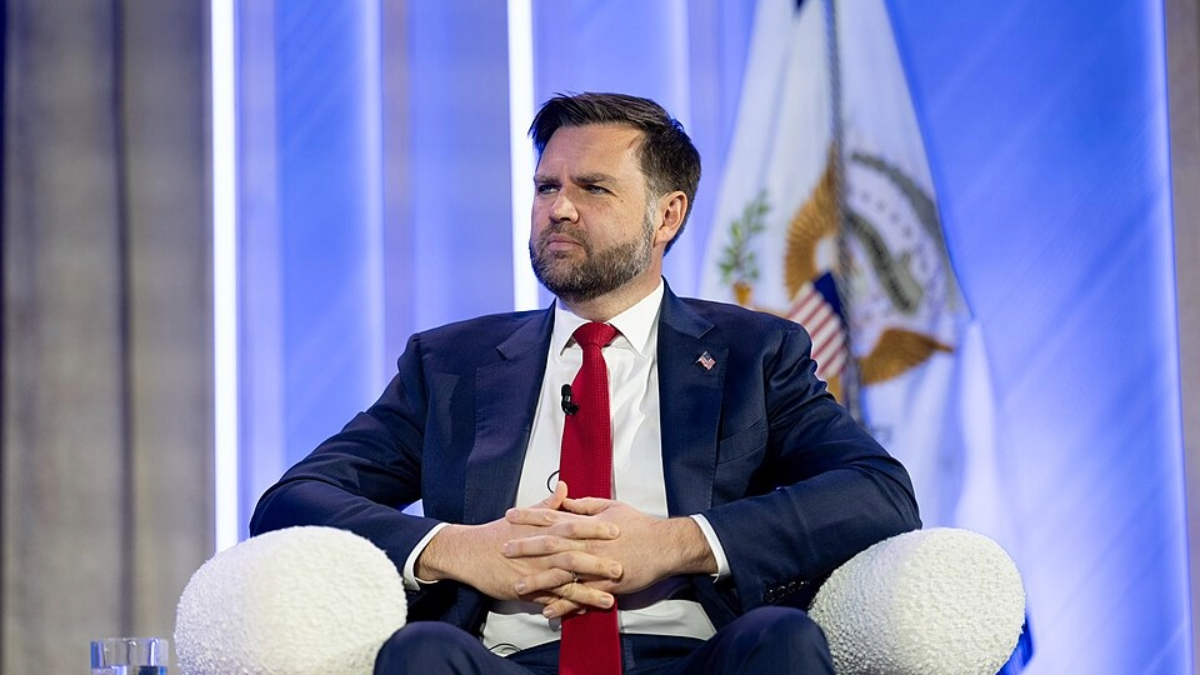
US Vice President Vance at the MAHA Summit on Nov. 12. (White House)
Top Trump administration officials banded together to denounce the European Union on Friday after the bloc fined Elon Musk’s X platform €120 million for breaching its landmark Digital Services Act regulation.
The move, the EU’s first non-compliance decision under the rules since they entered into force in 2022, faced withering criticism from senior members of the Trump administration, who in recent months have mounted an increasingly aggressive campaign targeting foreign rules on tech companies.
US officials struck a defiant tone, with some suggesting the country may consider a response.
Secretary of State Marco Rubio said the fine was not just an attack on X but “an attack on American tech platforms and the American people by foreign governments.” “The days of censoring Americans online are over,” he wrote in a post on the platform.
Rubio has been among the most outspoken administration officials in the Trump administration in denouncing foreign tech rules, with his department pushing to restrict immigration by those it considers complicit in “censorship” of Americans and enlisting its diplomatic corps to beat back regulations. First Amendment groups have denounced such restrictions themselves as an affront to free expression.
Andrew Puzder, the US ambassador to the EU, questioned during an interview on Bloomberg Television whether the bloc’s rules were “an effort to try and advantage European competitors over US companies.”
“If that’s the case,” he added, “it’s something that the United States needs to respond to.”
While the Digital Services Act covers a wide array of digital platforms, many of the companies subjected to its most stringent requirements are American due to their reach and large user bases.
The EU fine against X largely zeroed in on alleged violations of its transparency rules. The bloc accused the social media platform of deceiving users through its paid verification system, of not maintaining an adequate ad transparency repository and of restricting researcher access to platform data.
Brendan Carr, chairman of the Federal Communications Commission, said that Europe was yet again “fining a successful U.S. tech company for being a successful U.S. tech company.”
“Europe is taxing Americans to subsidize a continent held back by Europe’s own suffocating regulations,” he said in a post on X.
Carr’s remarks mirror nearly word-for-word a phrase featured in a new national security strategy released by the White House on Friday, which assails Europe’s global influence.
The document calls on Europe to “remain European, to regain its civilizational self-confidence, and to abandon its failed focus on regulatory suffocation.” It also blasts regulations and other actions by Europe that “undermine political liberty and sovereignty,” including the "censorship of free speech.”
The memo repeatedly emphasizes the importance of maintaining US superiority in tech, underburdened by foreign rules. “We want to ensure that U.S. technology and U.S. standards—particularly in AI, biotech, and quantum computing—drive the world forward,” the strategy states.
It echoes a message that Trump administration officials have repeated for months: that the US must maintain a technological edge against China, and that foreign regulations are a detriment to that goal.
Even before the fine was announced, US Vice President JD Vance on Thursday decried “rumors” that Musk’s platform would be targeted by the EU for “not engaging in censorship.” He added, “The EU should be supporting free speech not attacking American companies over garbage.”
Musk, who spent nearly $300 million to get US President Donald Trump and other Republicans elected during last year’s elections, personally welcomed Vance and Rubio’s remarks.
European officials have faced consistent pressure from the White House to dial back enforcement of its signature digital rulebooks, including during recent negotiations to stave off US tariffs. Lawmakers on Capitol Hill, led by House Judiciary Committee Chairman Jim Jordan (R-OH), have also led a major offensive against the rules, accusing the Biden administration of colluding with the EU.
The posture has been a boon for Silicon Valley giants, which saw the US government lessen its opposition to foreign rules that could hit US tech companies during the Biden administration. The US’s historical posture of defending American tech companies from regulation overseas had increasingly become a point of political strain in the US, with officials ranging from former Democratic House Speaker Nancy Pelosi and Republican Sen. Ted Cruz (TX) criticizing the stance.
While the fine against X and Musk, a prominent Trump ally, are likely to intensify tensions with Europe, it’s unclear if or how the Trump administration may look to retaliate. But the issue is already top of mind for some Republicans in Washington.
“What consequences should the EU face for censoring the free speech of Americans—even as Americans hold the EU’s security umbrella through NATO?” Sen. Mike Lee (R-UT) posted on Friday.
Authors