Trump Cannot Use Immigration Law to Silence Technology Researchers
Sunday Tagliasacchi, Elisabeth Snyder / Jul 27, 2026Sunday Tagliasacchi and Elisabeth Snyder are former legal externs at the Knight First Amendment Institute at Columbia University, where they worked on First Amendment-related cases.
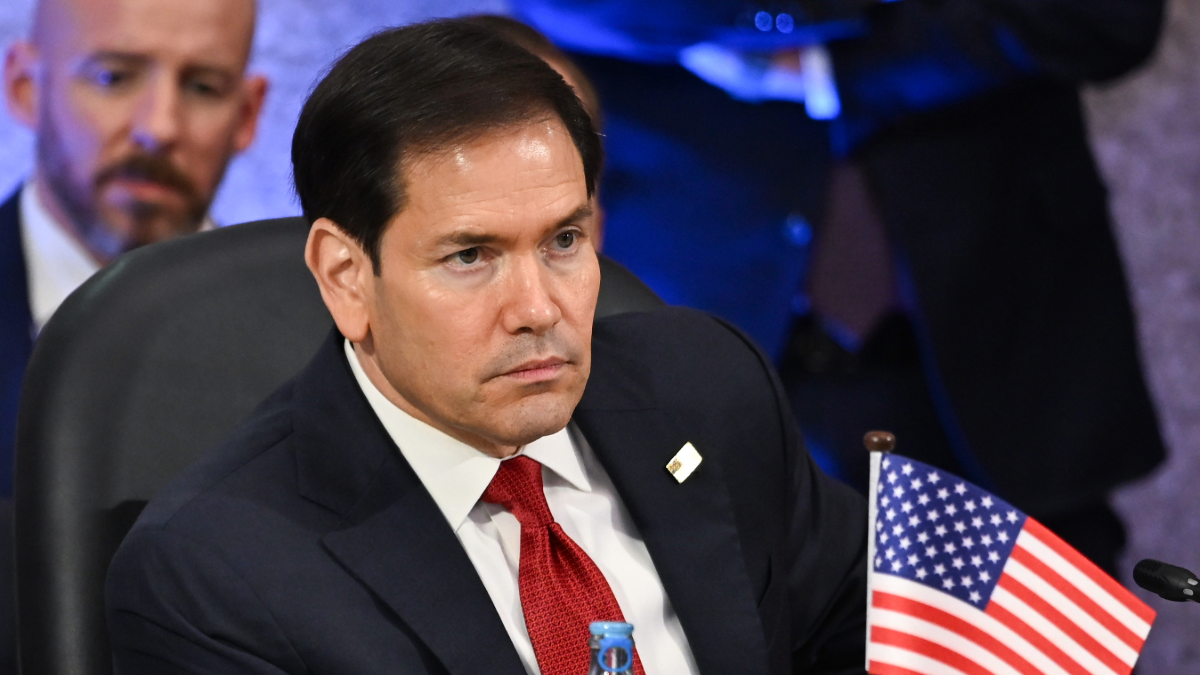
US Secretary of State Marco Rubio attends the East Asia Summit Foreign Ministers' Meeting, part of the Association of the Southeast Asian Nations (ASEAN) Foreign Ministers' Meeting in Pasay, Metro Manila, Philippines Thursday, July 23, 2026. (Brendan Smialowski/Pool Photo via AP)
Earlier this month, a federal court suspended a Trump administration policy that threatened noncitizen technology researchers and advocates with immigration consequences based on their work studying and reporting on social media platforms and their societal impacts. The ruling marks an initial victory for the Coalition for Independent Technology Research (CITR) and an important check on the government’s efforts to use immigration law against protected research and advocacy.
The policy is the latest front in a campaign that began during President Donald Trump’s first administration, when he and his allies began targeting platform researchers, fact-checkers, and advocates by recasting their work as “censorship.” The government’s campaign against the so-called “censorship-industrial complex” has included lawsuits, administrative actions, and congressional investigations. In Trump’s second term, his administration extended that campaign into the immigration system.
Chief Judge James E. Boasberg of the US District Court for the District of Columbia found that the policy likely discriminates on the basis of viewpoint in violation of the First Amendment.
Announced as “a new visa restriction policy” in May 2025, the policy directs consular officers to scrutinize visa applicants for content-moderation work or other work relating to social media platforms that the administration characterizes as censorship. As the court found, the policy sweeps broadly, instructing officers to pursue visa denials based on a wide range of such work. In December 2025, the government expanded the policy beyond visa applicants, using it to subject lawful permanent residents to potential deportation based on work related to disinformation. In announcing these and other enforcement actions in December, Secretary of State Marco Rubio declared that the State Department stood “ready and willing to expand” the list of targets.
The policy has disrupted the work of CITR and its members. CITR brings together academics, journalists, and civil society organizations working to advance, defend, and sustain independent research into technology’s effects on society. Researchers affiliated with CITR collect data, document disinformation and other online harms, and examine how technology companies enforce their rules and respond to risks on their platforms.
After the policy’s announcement, and especially after the government began enforcing it—against the leaders of two CITR member organizations, among others—noncitizen researchers began pulling back. Some halted or narrowed their work because they feared losing a visa or facing deportation. Others became reluctant to speak publicly about their research or about the policy’s effect on their work.
The result was a direct threat to a field that depends on researchers’ ability to scrutinize powerful companies and publish their findings openly. Work that had been reported in public was pushed toward anonymity and silence. The court found that these effects had caused CITR itself a concrete injury, allowing the organization to challenge the policy.
The court then concluded that the policy likely violates the First Amendment because it targets particular viewpoints. As the court explained, the policy calls for exclusion and deportation based solely on whether a noncitizen’s work is “pro-moderation.” The policy does not apply neutrally across the debate over platform governance. Instead, the government “presses its enforcement thumb against one side of the scale”: researchers and advocates who argue that platforms should do more to moderate content, label disinformation, restrict abuse, share data with researchers, or address harms amplified by their systems.
The government argued that the policy was necessary to protect Americans’ speech from coercion by foreign officials. The court acknowledged that the government may have a legitimate foreign policy interest in excluding foreign officials responsible for censoring Americans’ speech in the United States. But it concluded that the policy, as designed and applied, burdened the speech and association rights of researchers, academics, fact-checkers, and others who study content moderation or work in the field.
Because the policy discriminated against particular views, the court suspended it while the case proceeds.
This initial victory in CITR v. Rubio reflects a core constitutional principle: The government cannot punish people because it disfavors their speech, whether through immigration enforcement or other means.
That principle has also shaped other recent challenges to the administration’s treatment of noncitizen students, faculty members, and activists. In AAUP v. Rubio, a federal court likewise ruled that the Trump administration violated the First Amendment by seeking to arrest, detain, and deport noncitizen students and faculty engaged in pro-Palestinian advocacy. Together, the cases signal growing judicial resistance to the use of immigration authority to shape public discourse.
The stakes are especially high for independent technology research. Researchers help the public understand how platforms shape political discourse, enforce their rules, amplify harmful material, and exercise power over the information people see. The work of these researchers is increasingly important as rapidly developing AI systems give technology companies even greater influence over public discourse and access to information. The government is free to dispute their findings and oppose their recommendations. It may not threaten exclusion or deportation to determine which questions may be asked, which conclusions may be published, or which views may enter public debate.
The ruling marks an important limit on the administration’s anti-“censorship” campaign: The government cannot claim to defend free expression while using immigration law to punish researchers and advocates for the views they express.
Editors’s note: Tech Policy Press is a member of the Coalition for Independent Technology Research (CITR).
Authors