Unpacking the Public Health Turn in Internet Regulation
Ramiro Alvarez Ugarte / Oct 21, 2026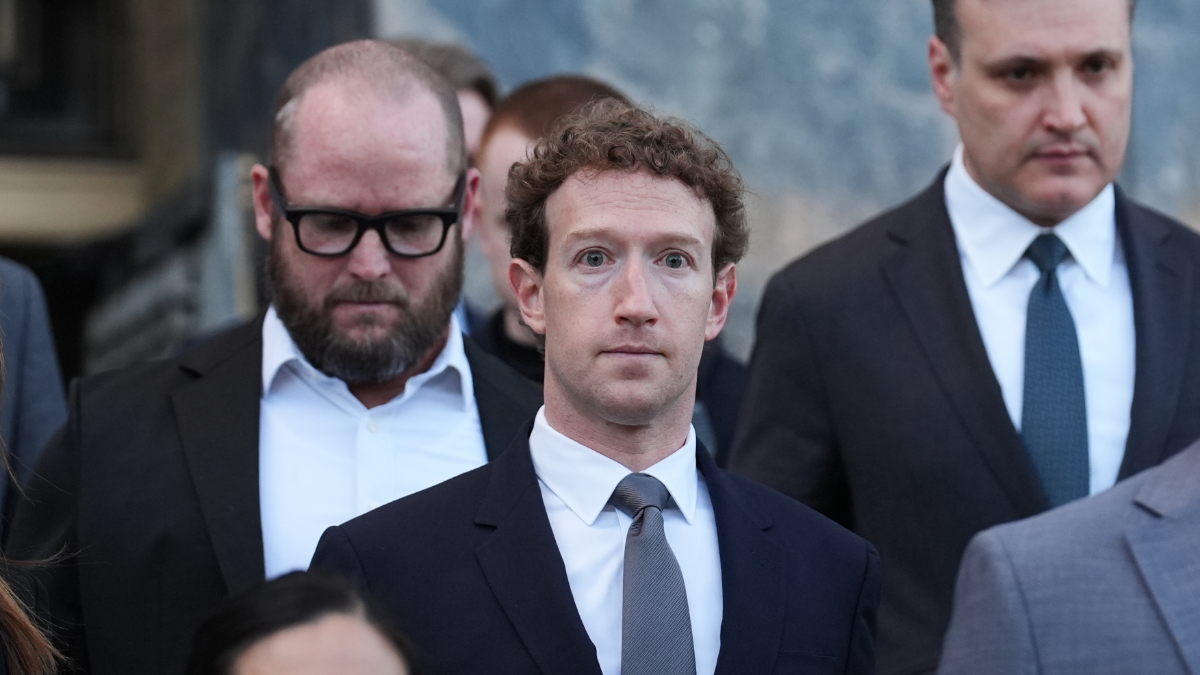
Meta CEO Mark Zuckerberg leaves after testifying in a landmark trial over whether social media platforms deliberately addict and harm children, Wednesday, Feb. 18, 2026, in Los Angeles. (AP Photo/Damian Dovarganes)
Meta’s settlement of the civil suit brought against it by a coalition of state attorneys general in the United States has been widely viewed as a potential turning point. Through the settlement, the social network with the biggest market share and operator of widely popular global services such as Facebook, Instagram, and WhatsApp has accepted a series of conditions demanded by concerned US public officials, concerns shared by officials elsewhere.
Aimed at protecting minors, the settlement reflects the view that technology can harm children and adolescents without adequate safeguards. Instead of relying exclusively on parents, the settlement commits Meta to design changes that would limit the platform’s engagement capabilities, restrict data harvesting when children are involved, and block the company from deploying a series of affordances that some researchers have linked to mental health harms.
The significance of this settlement extends beyond child safety. It reflects a broader shift toward treating digital technology as a public health issue, one that can justify restrictions on how services are designed and used. Although many of these measures currently focus on children and adolescents, the rationale behind them could eventually extend to adults. The history of tobacco regulation offers a useful, if imperfect, precedent. In 1998, the Tobacco Industry Master Settlement allowed several US states to arm-wrestle tobacco manufacturers into major concessions through litigation, including health-related warnings on packaging, advertising restrictions, and cash payments for a period of 25 years. Almost thirty years later, here we are again.
The agreement Meta has committed to could change a regulatory landscape that was clearly moving in this direction, in the United States and elsewhere. An ongoing research project at CELE has identified 77 bills and statutes, mostly in the US at the state level, but with similar proposed or adopted legislation in Europe, Latin America, and Asia. The overarching theme of this trend is treating technology as risky, potentially harmful, and in need of being restricted through strict age bans on certain services and affordances, mandatory design choices, and health-related warnings. While most legislative measures target children and adolescents, some suggest the possibility of broader efforts to nudge the population toward healthier relationships with technology. The key move is in the framing, which relies on health and safety concerns and resorts to medical metaphors to support itself in public debate, like when President Lula Da Silva of Brazil justified his decision to ban online bets by comparing these services to a form of cancer that needs to be “removed.”
The public health rationale does a lot of the work in the surrounding public conversation. First and foremost, it provides the State with a legitimate ground to impose restrictions on fundamental rights. It shapes the conversation about the kind of interests involved in the regulation of platforms. But because these services offer channels through which information flows, a legitimate ground is not enough to justify restrictions. Measures must also be necessary and proportional, so a balancing exercise should follow the acknowledgment of a public interest. These analyses, however, should be made at retail rather than wholesale, so they should be narrowly targeted to the specific mechanisms deployed and the extent to which less restrictive alternatives were available, on a case-by-case basis.
What governments are restricting — and how
In our research, most countries that have acted upon a public health rationale are seeking either to ban or heavily restrict access to certain online services for minors. Some of these bans are narrowly tailored to certain services and affordances, e.g., sites that regularly carry pornographic content. Others are broader in scope and define the restricted services as those affording social network services, online communications, access to third-party content, or those that deal in personal data.
Absolute bans work as traditional restrictions to access certain products or services, like alcohol or pornography. As the Supreme Court of the United States acknowledged in Paxton, we have traditionally found it legitimate to restrict children’s access to pornography, and we have relied, for the enforcement of that prohibition, on convenience store vendors. Similarly, we enforce the prohibition against selling alcohol to children or adolescents through liquor store clerks, who must ask for a valid ID to check the age of potential buyers.
From these old legal mechanisms come the mandatory age-verification schemes that some of these statutes now ask companies to deploy. These schemes pose technical difficulties related to the nature of cyberspace — uncertain identities, faceless communications, easily circumvented restrictions, and so on. But from a legal standpoint, states are used to establish these kinds of obligations in the service of aims generally deemed legitimate.
These bans target access to services as they currently operate. Other statutes are attempting to require companies to make specific design choices aimed at curbing problematic affordances, such as endless feeds, algorithmic recommendations that promote engagement, and presumably anxiety-inducing features such as popularity buttons and metrics.
Some bills and statutes seek to bring children and adolescents outside the commercial logic behind these services by heavily limiting how much companies can collect and exploit their personal data. The ECA Digital in Brazil, for instance, forces certain suppliers to “refrain from processing the personal data of children and adolescents in a way that causes, facilitates, or contributes to the violation of their privacy or any other rights guaranteed to them by law.” This approach of strengthening data protection guarantees is also followed by statutes in e.g. Colorado, Delaware, and Florida. Some of these statutes are trying to nudge teenagers into lighter usage of these services by forcing companies to issue periodic health warnings, time-based limits or notifications regarding excessive use, virtual curfews, and so on. Many of these laws also embrace a risk-based approach to the issue, by imposing broad duties of care on companies, thus creating potential causes of action if companies fail to comply.
These measures impose a heavy burden on the commercial interests and industrial freedom of targeted companies, but when dealing with things harmful to children we have — in the past — shown a high degree of deference towards such measures, such as regulating acceptable nicotine levels in cigarettes, prohibiting advertising of alcohol and cigarettes, restricting places where people can smoke in public, limiting vendors who can sell the problematic products, and so on. This approach was accepted by a majority of the US Supreme Court in Paxton, when it highlighted the “widespread practice of requiring proof of age to exercise age-restricted rights”.
Ambiguous evidence and constitutional limits
One of the most pressing challenges these statutes face is the lack of conclusive evidence regarding the harmful effects of the technology they are trying to ban or restrict. It is true that worried legislators are gaining momentum in their push for reform.
Jonathan Haidt’s campaign to recover screen-free childhoods has struck a chord with the public. However, the evidence regarding the use of technology is mixed, partially because communication services mounted over the internet are somewhat ambiguous: a child may be exposed to cruel forms of bullying in online fora or could develop unreal standards of beauty based on content pushed by social media companies seeking engagement; but she could also find true communities that give her meaning and a sense of belonging, especially when in her offline life she is surrounded by people who are not like her, or when she lives in hostile or repressive environments. It all depends on usage and context. For teenagers in this situation, all restrictions on their rights to communicate further erode their freedom and personal autonomy in ways that these laws should account for, but generally fail to.
The lack of clear evidence poses a challenge in terms of how we assess these laws from a legal standpoint, because evidence is essential to understand the extent to which a public interest justifies a restriction of a fundamental right, and the extent to which viable alternatives were — or were not — available to concerned legislators. Because the public interest involved is public health and its invocation is made in connection with children, we should expect to see some degree of deference from judges. Children enjoy rights differently than adults; their autonomy is somewhat restricted and is generally mediated by parental prerogatives. Furthermore, the fact that this public health turn towards technology relies on familiar legal mechanisms like age verification also warrants this prediction.
But some degree of pushback is slowly beginning to emerge. In the United States, many statutes have been blocked from entering into force on constitutional grounds. In France, the Conseil Constitutionnel has found a proposed bill in the National Assembly to be too broad in its reach to “any online platform that allows end users to connect and communicate with each other, share content, and discover other users and content”. For the Conseil, the proposed bill was insufficiently supported by evidence, insufficiently respectful of parental authority and dismissive of children’s and teenagers’ autonomy. Ultimately, the Court found the law was not “appropriate, necessary and proportionate to the objective pursued.”
Industry-wide changes and standards
These kinds of judicial checks will be necessary, but may ultimately prove insufficient. The Meta settlement suggests something else is going on, and that the public health turn towards technology regulation may produce lasting effects even beyond the fate of its legislative incarnations. Indeed, by accepting the demands made by the Attorneys General and a movement of concerned parents, Meta is taking the position of an industry leader capable of imposing industry-wide norms on others. Several of the clauses of the agreement will be triggered only if YouTube and TikTok agree to similar terms and conditions. And the position of industry leader is, of course, potentially advantageous in commercial terms.
Some have objected to how the settlement came to be. As The Future of Free Speech’s Jeff Kosseff has argued, many of the demands voluntarily accepted by Meta could not be imposed directly by legislators. Thus, the settlement itself could come under the scrutiny of the United States jawboning doctrine, which seeks to restrict the extent to which public officials can get indirectly — through pressure, persuasion, and coercion — what they cannot achieve directly. But it is dubious whether civil litigation could be framed as the kind of illicit forms of coercion US courts have tried to check.
Ultimately, the question comes down to the extent to which corporate decisions are voluntary or not, and corporations have the incentive to rationalize decisions made under pressure as voluntary. An obscure 1976 jawboning case sheds some light on this issue. In Writers Guild of America, West, Inc. v. FCC, the FCC officials who pressured TV networks to implement a Family Hour scheme restricting certain content deemed not appropriate for children claimed, on the record, to be simply sharing certain thoughts regarding what they thought was appropriate, even though veiled threats of regulation were issued in the process. And corporate officials on the record agreed with that recollection of events. It would take a courageous and imaginative judge to find coercion in a decision that is likely in the business interests of the companies, an outcome that seems unlikely.
Why restrictions on children may not stop there
Meta’s settlement seems to embrace many of the demands made by some legislators all over the world regarding limits on the use of technology by children and adolescents. New York, Florida, and the European Commission asked for non-algorithmic feeds, Idaho for parental supervision tools, Turkey for a night curfew before Meta’s settlement was delivered. By voluntarily accepting many of the measures legislators are asking for, Meta is both accepting the public health claim behind the trend here discussed and limiting its scope and reach.
Potentially, if legislators are satisfied with the effects of these measures, these laws will become unnecessary. It remains to be seen how far Meta’s settlement will extend beyond its original jurisdiction, but the global nature of both the company and the regulatory trend makes that possibility likely. It also remains to be seen how far other big players such as YouTube and TikTok will follow Meta’s lead. If they were to do so, a kind of industry-wide consensus would emerge, one that embraces the public health turn initiated by legislatures all over the world.
But we would like to finish this short essay with a prediction. Because if such a consensus were to emerge, it would be unlikely to stop at children. Again, the past is informative here: while alcohol and cigarette consumption limits were first limited to children and adolescents, since then the scope of bans and nudging devices employed by legislatures addressing these goods as a public health concern has grown significantly, impacting adults with full force.
The proposal of the EU Kids Act explicitly relies on this lifestyle-choices rationale. In that sense, we are not far from seeing similar public-health-based demands on companies, but with the purpose of protecting adults from uses of a technology deemed unhealthy and harmful. The past is, in that sense, a useful guide to the future we appear to be building.
Authors