Who’s Regulating Police Technology? It’s Not the Courts.
Hannah Bloch-Wehba / Jul 2, 2026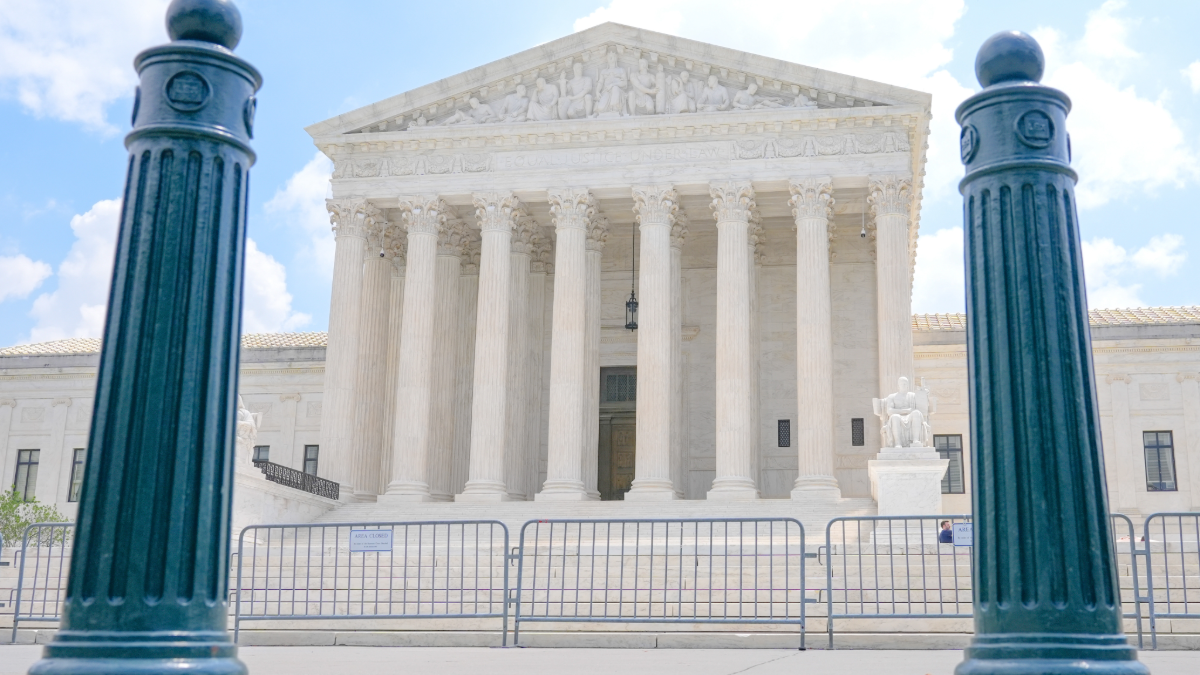
The U.S. Supreme Court is seen Monday, June 29, 2026, in Washington. (AP Photo/Mariam Zuhaib)
On Monday, the Supreme Court determined that when police demand a record of a user's location history from Google, they ordinarily need to get a warrant based on probable cause.
It’s an important decision. The Court recognized that Google’s practice of creating a “comprehensive catalog” of users’ locations is a boon to law enforcement. What’s more, the majority understood that, whether intentionally or not, Google had helped to create a “virtual panopticon” that the government can now exploit more easily than ever before.
But the case, Chatrie v. United States, also highlights an ongoing revolution in criminal procedure. For centuries, courts and lawmakers have been the primary regulators of law enforcement investigations, placing legal limits on how police can collect information. Now, companies like Google are becoming just as influential.
In the set of events that gave rise to the case decided this week, Virginia police investigating a bank robbery sought a “geofence warrant,” directing Google to give them access to the location history belonging to electronic devices that appeared within a 150 meter radius of the bank. But instead of simply getting the relevant information from Google, law enforcement enlisted Google to help, going back and forth with the company several times as police narrowed their list of users of interest. That data eventually led police to the defendant, Okello Chatrie, who was sentenced to serve over a decade in prison.
As the Court acknowledges, this is an “uncommon” type of search. In fact, Chatrie argued that the demand was so broad as to be unreasonable: In order to even begin to determine who the wrongdoer might be, Google had to sift through the millions of location data points generated by ordinary customers who had done nothing wrong. The Supreme Court’s decision kicks this crucial question back to the Fourth Circuit for further review.
Even as Chatrie appears to be a win for privacy, it underscores an ominous development: we have inadvertently yielded a startling degree of control over law enforcement investigations to corporations. The Court’s reasoning strongly suggests that law enforcement should get a warrant before getting location history information. But police in this very investigation had done that, not because the courts had required them to but rather because Google had forced their hand: since 2020, the company has had a corporate policy of objecting to any geofence demand that isn’t based on a search warrant.
Moreover, as the Supreme Court noted, other tech companies have also received geofence warrants. But Google is the most frequent target—perhaps because it is “the only one known to respond.” Other companies that you might expect to have similar information—Lyft, Uber, and Apple, to name a few—have shrugged off geofence demands.
Make no mistake, these tools have real potential to solve crime. After all, Google’s cooperation with Virginia police helped to pin down Chatrie. But the technique has also sparked a furious debate about the use of geofences to identify immigrants, protesters, and people seeking reproductive care.
And Google itself soon had second thoughts about cooperating. Facing thousands of geofence requests each year, in 2023, Google announced that it would change its default settings so that users’ location histories would be encrypted and stored locally on users’ devices. Since the company would no longer have access to users’ histories, it would no longer be able to comply with most geofence warrants. By a keystroke, the company closed the door on a contentious form of surveillance that—three years later—is still wending its way through the courts.
Google’s abrupt reversal calls attention to a surprising shift: today, many critical decisions about investigative techniques are made not in courtrooms or legislatures but in the boardrooms and conference rooms of private firms. Of course, it’s well known that modern technology and data practices have eroded privacy and made us more visible than ever. That makes it all the more shocking that the same companies that so often play fast and loose with our data are almost unilaterally determining how, when, and whether to comply with government demands.
The key question is who ought to govern these practices, and how. One option is legislation, but the likelihood of Congress enacting federal law appears slim. In the past several years, Congress has repeatedly failed to pass privacy legislation, and only one state—Utah—has enacted a law to limit police use of geofences and comparable procedures.
Traditionally, we have relied on the courts to regulate law enforcement’s ability to collect and use information. Constitutional provisions like the Fourth and Fifth Amendments create barriers to investigations—for good reason. They originated in the eighteenth century in response to the Crown’s crackdowns on dissent, both in England and in the colonies. Without rules limiting how law enforcement gathers information, the watchful eye of law enforcement might rove as far it wanted, destroying privacy and free expression in the process.
The Court seems to believe that the Fourth Amendment’s warrant and reasonableness requirements are the most important factors limiting how the government can scrutinize each and every one of us. But the Chatrie decision offers a glimpse of a past that is quickly fading from view. Increasingly, it is firms like Google—and not courts—that hold the keys to criminal procedure.
The transformation should worry us all. As the government enlists tech companies to share information in more complicated ways, public institutions are ceding to industry the power to regulate policing. The result allows company owners and investors to effectively govern significant aspects of law enforcement investigations by means that are neither predictable nor democratic.
Sometimes industry will make police investigations easier and cheaper. But—whether deliberate or not—firms may also create new obstacles for law enforcement. Either way, corporate whim is no way to govern something as important as policing.
Authors