Will a New Congress Ease the Pressure on Europe’s Digital Regulations?
Ramsha Jahangir, Dean Jackson / Nov 12, 2026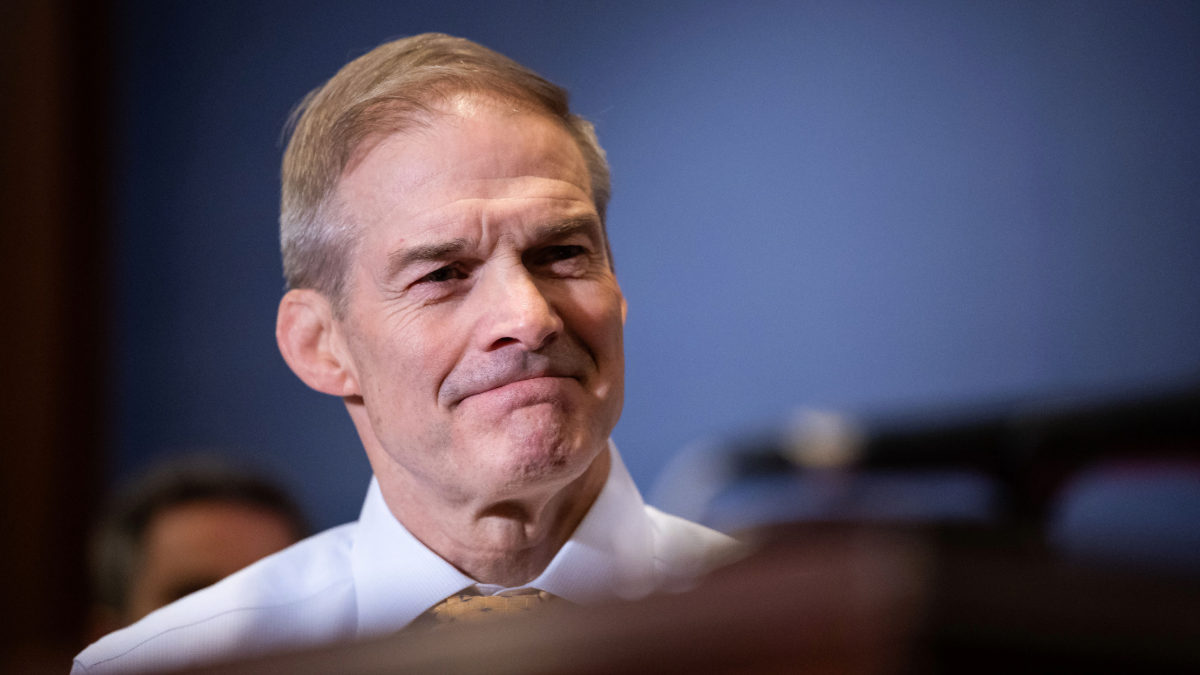
Rep. Jim Jordan (R-Ohio) looks on during a media availability after he was elected to be House Republican Leader for the upcoming 120th Congress on Capitol Hill on Nov. 10, 2026. (Francis Chung/POLITICO via AP Images)
If the House Judiciary Committee’s investigations into what Republicans call the “Censorship Industrial Complex” have been hell for digital watchdogs in the US and Europe, then its current chairman, Rep. Jim Jordan (R-Ohio), has been the metaphorical devil.
Will this month’s decisive midterm election results mark the end of his campaign, or will it carry on as he takes up leadership of a diminished Republican conference?
During Jordan’s chairmanship, the Judiciary Committee has been a dogged adversary of technology researchers and policy advocates on both sides of the Atlantic. He was one of the loudest voices behind the campaign against disinformation researchers, trust and safety professionals, and digital regulators over the past four years.
The Judiciary Committee did not respond to a request for comment before press time.
The hearings he orchestrated on the Twitter Files and, later, the Censorship Industrial Complex helped give political heft to conspiracy theories, including one that made it all the way to the Supreme Court before it was rejected. The Judiciary Committee issued lengthy reports, often untethered to facts and always unsparing in their criticism of Europe’s Digital Services Act, one of which included unredacted correspondence identifying nearly 30 EU officials and civil society representatives. The Committee also created spectacle through dramatic hearings and leaked a copy of the European Commission's rationale for fining X $140 million for DSA violations, twisting the document’s claims to fit a censorship narrative which the facts did not support. Its activities helped fuel a campaign that culminated in the State Department issuing sanctions and visa restrictions against foreign regulators, researchers, and advocates.
What will change — and what will stay the same
On Tuesday, Jordan was elected the minority leader of the incoming Republican conference in the House of Representatives. This may signal that the minority intends to be sharp-elbowed, but its power will still be limited in the majoritarian House.
David Kaye — a law professor at the University of California, Irvine, a previous expert witness before the Judiciary Committee, and a former UN special rapporteur on the promotion and protection of the right to freedom of opinion and expression — told Tech Policy Press that:
“Jim Jordan's departure from the chairmanship of the House Judiciary Committee means that he will no longer have control of the committee agenda. This is a very big deal, because that role will go to Rep. Jamie Raskin (D-Md.), who has been a persistent opponent of Jordan's use of the committee to promote the false narrative of a European regulatory environment censoring Americans.”
Other advocates who have been caught up in the committee’s investigations see the change in leadership through the lens of their own encounters with the campaign. Brandi Geurkink, executive director of the Coalition for Independent Technology Research, has been involved in litigation challenging the Trump administration’s visa restrictions against foreign researchers and advocates. Nina Jankowicz, CEO of the American Sunlight Project, was herself a prominent target of the committee’s scrutiny and has separately pursued legal action against Fox News over its coverage of her. Both expect a change in the committee’s approach, though neither sees it as the end of the broader political fight over online speech and content moderation.
“The shifts in Congress give me hope that digital policymaking will deliver what people want from tech, not what the billionaires want,” Geurkink said. “With Jim Jordan stripped of his power as chairman of House Judiciary, government oversight can finally focus on what it should have been all along: exposing how tech corporations and their allies in the US government are corrupting tech policymaking around the world to protect their profits and consolidate their power over us,” she told Tech Policy Press.
But the end of Jordan’s investigations will not be the end of the broader crusade. “While in the minority, Jordan will no longer have subpoena power,” Jankowicz told Tech Policy Press.
But Jankowicz also said that Congress is not the only concerning actor. "Europe will find friends in the new congressional leadership,” she said, “but there will certainly be a clash between them and the White House, and ultimately one has a bigger stick.”
Kenneth Haar, a researcher at the Corporate Europe Observatory and author of a recent report on “the MAGA coalition defending online hate speech in Europe,” raised similar concerns about the executive branch — as well as its allies outside of government.
“In Europe, one of the many negative outcomes of the second term with Trump is the aggressive campaign his administration, Big Tech corporations, and the ultraconservative Alliance Defending Freedom [are] mounting against EU tech regulation… With the midterm elections, the question is if we will now be hearing a different, less confrontational tone. Honestly, I would not put my money on it,” Haar said.
“In many ways, Trump will still control foreign policy and trade policy, and given that he is considerably weakened domestically, there is a risk he will play an even tougher game with the European Union. And that is likely to include continued coalition building with far-right organizations and ultraconservative Christian groups.”
But a new Congress does have some influence on trade issues; while it cannot dictate policy to the president, it may encourage restraint. “Democrats have long been divided on trade policy,” William Reinsch, a non-resident senior adviser at the Center for Strategic and International Studies, told Tech Policy Press.
“Democrats will likely seek to remove some tariffs — those on Canada will top the list — and try to rein in Trump's authority by repealing or amending existing laws. The latter will not survive a presidential veto, but the effort may make the president more cautious in his future actions, and it will likely force him to be more careful in making sure he follows the letter of the laws he is using,” Reinsch said.
What will Democrats do?
In January, when the new Congress is seated, Kaye expects the Judiciary Committee to adopt a new agenda. “I would expect that [likely Committee Chairman Jamie] Raskin will focus in particular on the Committee's oversight responsibilities, which practically means that we can expect the Committee to spend some time over the first part of 2027 holding hearings on the Trump administration's vast censorship operation.”
Kaye told Tech Policy Press that congressional inquiries into US-European relations will probably move elsewhere in the new Congress. “It is possible… [that] oversight of the State Department's sanctions policy against European regulators and civil society will fall under the purview of the House and Senate foreign relations committees,” he said, warning that “ultimately the policies may persist as long as the same personnel lead policy at the State Department and White House. But they will be subject to inquiry in a way that did not exist over the first two years of the administration.”
That inquiry could ask pointed questions about US taxpayer funding for far-right groups, Elon Musk’s influence on US foreign policy, hostility to some of the country's oldest allies, and the vulnerability of US elections to foreign interference. Only time will tell if these questions make the new Congress’s crowded list of priorities.
Tech Policy Press is a member of the Coalition for Independent Technology Research (CITR).
Authors