Could New York City Set a Standard for Influencer Disclosure in Public Messaging?
Justin Hendrix / Nov 15, 2026Audio of this conversation is available via your favorite podcast service.
Every government wants to reach people where they are, and right now that’s in their social media feed. Here in New York, where I live, agencies have been working with online creators for years to communicate information about vaccines, voting, composting, tenants’ rights and more.
This summer, Anya Schiffrin, a senior lecturer at the School of International and Public Affairs at Columbia University and the co-director of SIPA’s Technology Policy and Innovation concentration, released a report looking at what the New York City government is doing. One aspect of the report got the most attention—details around online creators getting talking points from City Hall through an encrypted group chat, alongside some agencies paying influencers through advertising intermediaries.
The report and the media coverage that followed it set off a real scramble. Within three weeks the City Council held an oversight hearing, disclosure bills were tabled, and a watchdog filed an ethics complaint. But many of the questions underneath the controversy haven’t been answered. To learn more, I spoke with Anya about her research.
What follows is a lightly edited transcript of the discussion.
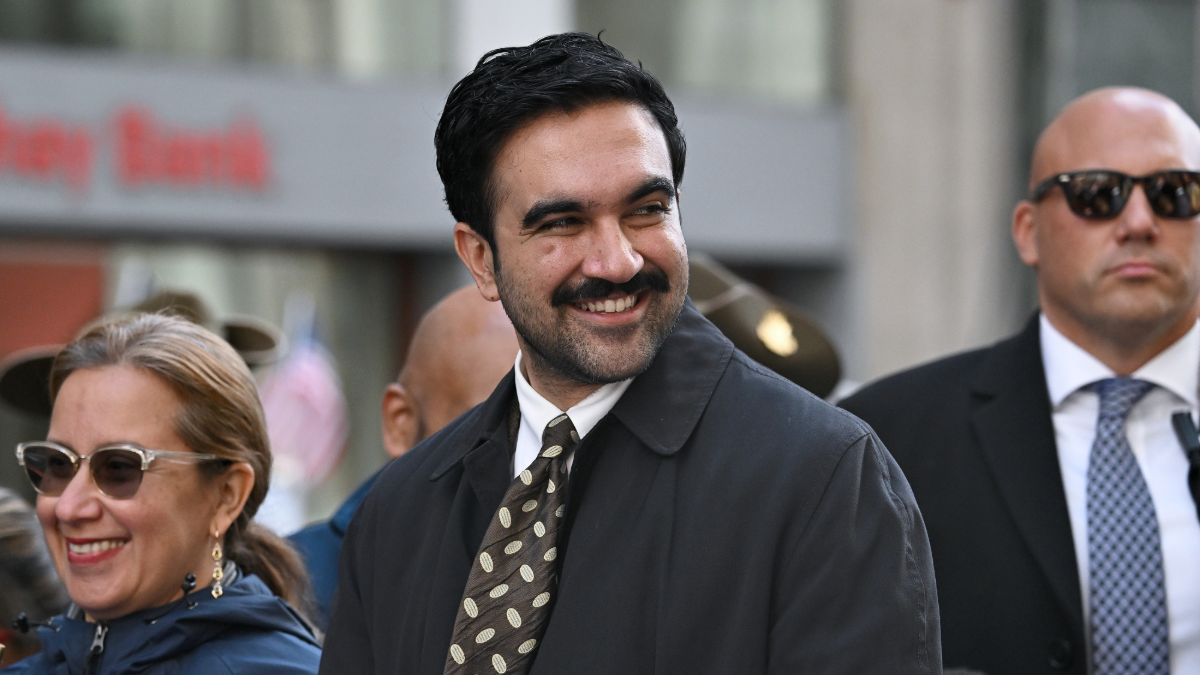
New York City Mayor Zohran Mamdani participates in the 107th Annual Veterans Day Parade, New York, NY, November 11, 2026. (Photo by Anthony Behar/Sipa USA via AP Images)
Justin Hendrix:
Every government wants to reach people where they are, and right now that's in their social media feeds. Here in New York where I live, agencies have been working with online creators for years to communicate information about vaccines, voting, composting, tenants’ rights, and more. This summer, Anya Schiffrin, a senior lecturer at the School of International and Public Affairs at Columbia University and the co-director of SIPA's tech policy and innovation concentration released a report looking at what the New York City government is doing. One aspect of the report got the most attention, details around online creators getting talking points from City Hall through an encrypted group chat, alongside details that some city agencies pay influencers through advertising intermediaries. The report set off a scramble.
News clip:
Mayor Mamdani is in the hot seat for using a secret encrypted messaging channel to equip an army of social media influencers with positive ammunition, touting his administration.
News clip:
“City Hall has never paid a content creator or an influencer.” Mayor Mamdani fielded questions today about his administration's close ties to social media influencers who often heap praise on the mayor's agenda.
News clip:
A bipartisan group of council members plan to introduce legislation that would require government officials to disclose if taxpayer dollars are being spent to hire influencers.
Justin Hendrix:
There was a ton of media coverage and the city council held an oversight hearing at which Anya spoke about the report. Disclosure bills were tabled and a watchdog filed an ethics complaint. But many of the questions underneath the controversy still haven't been answered. To learn more, I spoke with Anya about her research. Anya, it's good to see you again. And I'll just say for any listener who doesn't recall, we've had you, of course, on the podcast in the past to talk about prior work you've done. And you and I have had the opportunity to teach together and work together on a handful of projects over the years. So just putting that out there up front so folks know we are acquainted and have always appreciated the opportunity to talk to you about your work and to occasionally be involved in it. We're going to talk a little bit about some work you've been doing, I suppose, a sensitive question here where we both live in New York City, which is around the New York City government's use of influencers to promote some of its policies and activities and get into those findings.
But sort of want to step back for a second and just ask you about the context, how you came to this subject, how it fits into your broader set of concerns around tech and democracy.
Anya Schiffrin:
So I guess I've been working for years on this question of how can we create a healthy information ecosystem? What are the obstacles, whether it's capture or censorship or online violence and what are the solutions? So pretty much all of my work fits into what's the problem, what's the solution? And it's been that way for decades. And I have a conference every year called Saving Journalism where we sort of focus on policy solutions. And last year, one of my colleagues suggested that we do a panel on influencers. And then unfortunately she had a family emergency and she couldn't really organize it, so it was left to me. And so I started digging around and asking people for ideas. And then we had the panel and I thought it was so interesting because there was a bit of discussion about how New York City pays influencers to transmit messages about things that are important to citizens.
And I started digging and following the thread. And what I really wanted to do was sort of find out, have influencers had a bad name? Are they in fact helpful and a good part of the information ecosystem? And what I learned was that governments around the world hire influencers or use influence to get trusted and accurate information out. I mean, obviously they do other things as well, but in New York specifically, influencers sometimes get paid maybe $5,000 to do messaging on things like what are the rent regulations? What rights are there for immigrants? How can you get your SNAP if you need it? How can you enroll your kids in pre-K? And from what I understand, there was very little actually, there was really little written about this and even less written about New York. But from what I understand, it really took off after the pandemic.
Carmen Boon and a woman called Emily Golloub wrote a paper about New York City Health and Hospitals and how they got some federal money and they hired influencers to tell people about COVID testing and also about vaccines. So that seems to have been a turning point in New York. And then once Mayor Mamdani got elected, even more pilot programs got started.
Justin Hendrix:
So I want to just maybe just stay back in that history just for a moment, test and trace, trying to get out the word about COVID and the practices around that, around vaccines, as you say, encouraging people to get vaccinated. You point also to MTA campaign to try to get people to behave better on the subway. And of course, Mayor Bill de Blasio used different types of creators to promote vaccines and other things in past. I don't know, anything else notable about just that kind of pre-history?
Anya Schiffrin:
I mean, governments have always tried to convey information, of course. And now influencers use this term PSA, but clearly during the Spanish flu pandemic, there were posters saying don't cough on other people and things like that. We had a launch event for our paper this week and somebody was pointing out that politicians have gone to black churches. Laura Zommer has worked with sort of Instagram fact checking. So there's always that question. I mean a sort of crowded world with loads and loads of demands on attention. How do you actually get people the information that they need? So yeah, sanitation departments reminded people don't litter, make sure you compost. This is part of other efforts like handing out leaflets or TV adverts or canvassing, for example. So there's a lot of different ways that governments try to provide information to citizens.
Justin Hendrix:
I suppose that brings us to the current day. You think about Mayor Zohran Mamdani, kind of known as a sort of genius with social media himself, perhaps the influencer in chief here in New York City when it comes to his ability to use social media, especially short form video to communicate, pretty much seen as without peer, perhaps anywhere in the world really. But you find that the city's government is perhaps looking at this channel, which let's be honest, has replaced for a lot of people news consumption. It is the way that people find out about the world around them, scrolling through TikTok or Instagram or other social media that this is the way that the city increasingly wants to communicate or recognizes that it must. What can you tell us about what you learned about Mamdani and his administration's approach to using influencers?
Anya Schiffrin:
Well, so I think that they've taken this idea and really expanded it. So now there's been some pilot programs, for example, the People's Money, which was a participatory budgeting process that the city has had. Jorwell Perez, I think it was the, I can't remember now if it was the public engagement unit [Civic Engagement Commission], they've hired some content creators to promote that. So I think we're seeing even more programs now, even more pilot programs trying to involve creators in messaging. So I divided in the paper, academics love taxonomies, so I divided it into three categories. So the pre-existing programs using influencers, content creators to let people know about city services and policies, and then the new pilot programs that the jury is sort of slightly still out on. And then the third thing was I found out that there was a Signal group that had gotten started during the campaign and remained after the administration took office.
And that's run by Emilia Rowland and she has a bunch of people working with her and they push out information to influencers about what's happening in the city. So letting people know, for example, we're doing an event in the Bronx for small businesses or the mayor's going to be at this place, would you like to interview him? And so that's a third category of working with content creators, which is new and started with the mayor.
Justin Hendrix:
Yeah. I want to focus in a little on the Signal group because I think most of the discussion around your report has revolved around this. And for obvious reason, the point that you bring up and just to confirm, the group itself grew out of this Creators for Zohran group that backed the mayor's campaign, and I believe now it's called NYC Creators Announcements.
Anya Schiffrin:
Now it's called New York City Creators Announcements. And during the campaign it was Creators for Zohran.
Justin Hendrix:
Right. And so people are on this Signal group. There's a list perhaps. Are you aware of how many individuals are on the list?
Anya Schiffrin:
Yeah. So what we were told was that there were more than 200 people on the Signal group. And when I published the working paper on August 28th, the Signal group, you're absolutely right, got the most attention and ended up being on the cover of the New York Post. And the New York Post ran a bunch of articles and a lot of people ran a bunch of articles. And there were really a few things. Then there were hearings, three and a half hours of hearings. I think there's now four pieces of draft legislation. So a few things about the Signal group. One is that the New York Post sort of twisted it and said that the people on the Signal group were being paid, and that is not the case. And the second thing was that they hadn't been saving the messages. And of course, New York State record retention laws requires the retention of substantive messages.
Justin Hendrix:
That is one thing we should just focus in on because I think, as you say, it was a kind of a tabloid moment and the post effectively, I would say, use it as a kind of cudgel to suggest that perhaps there's something untoward here. I mean, Signal has that aura or potpourri of secrecy just because it's an encrypted app. But of course, something as large as a 200 person group that contains a lot of public figures and people who are communicating, et cetera, I suspect there's not much actual expectation of confidentiality in a group like that necessarily. But can you just speak a little bit more towards what you found out about the work of this group?
Anya Schiffrin:
Absolutely. And I just want to say from the outset that as I was doing the research, I sent dozens of emails to different parts of city hall asking for information and never got a reply. So we know more now about that Signal group than we did before, but there's still a lot of questions that remain. I had said in the original paper that the administration was providing talking points to members of the Signal group, and they took exception to that and said that they don't, that they provide links for information and press releases and summaries. And I do think they provide images and video. And they said it's really no different than a press list. So one of my questions is why is there a separate group? Why aren't the influencers on the press list? And to get a city press card, you have to show that you've covered New York City and you have to fill out an application form.
And apparently with the Signal group, there's an intake form where you say what your interests are and they send targeted bulletins about those particular things. So one question I have is why is there a separate list? I was also told after the article came out that they are now saving the information that they're disseminating, but not the replies. So I'm curious about that. Would the replies be considered substantive? Are there many replies? Should more information be saved? And then I think it's sort of a tough thing because journalists are, I think, probably more likely to really investigate and pursue. I think for journalists, accountability is really important. Whereas I would say for the folks on the Signal group that I spoke to, they really love the mayor and they feel like he's done incredible work for the city and that he is so transparent and they really, really want to reach underserved communities.
And we know from Pew Survey and others that the people that are looking at Instagram and TikTok tend to be younger. They may be less educated than people that are reading the New York Times. So it's a different audience and the creators really feel passionately about reaching those audiences, whether it's Black men or people that live in the Bronx. So I think that's terrific and I really admire their passion. On the other hand, I think journalists worry that it's too sort of rah-rah and cheerlead-y and why isn't it more out in the open? And then of course, a third thing that I heard over and over again is from people who are really experts in mis and disinformation is that this group could sort of go rogue in a way that right now they love Mayor Mamdani, but what's to stop them later from saying some creator saying, "I have loads of followers, pay me and I'll put out some other kind of message." And the creators that I've talked to really say they would just never, never do that, that would be a horrible abuse.
But that's obviously something that people worry about. So those were some of the kind of concerns and things that came up. I mean, obviously I have a lot more to say on this subject.
Justin Hendrix:
I'm interested a little more in the official reaction. In particular, you mentioned a city council looking at this, folks proposing rules perhaps to clarify how this kind of thing works in city government. Can you kind of characterize a little bit of that type of activity after the fact?
Anya Schiffrin:
Absolutely. And maybe I could just say one more thing about what I think is sort of worrisome based on my long history of studying media in difficult situations, low income. I think what worries me is that influencers have a life of precarity. It's economic precarity. So there's some that make a lot of money, but there's a lot that are sort of cobbling together a living. And so I do worry about when their different projects may come into conflict with each other. So on one hand, you're putting out Mamdani messages for free, but maybe you're getting paid to do something else. And so how much should we sort of be worried about that? In Columbia University, we have to fill out a conflict of interest policy. We have to declare if we're doing other consulting. Yeah. So after the paper came out, I included maybe the most helpful part of my paper is actually I included a whole lot of tables and some information at the end about how other countries are approaching this question.
And what I found is that there are governments, Canada, across the US, in Europe that are also working with influencers and content creators to do public messaging. And so they're really just starting to think about how do you regulate and what kind of disclosure should you mandate? So Justin, you published work on the fact that the FTC has requirements if you're say selling a refrigerator or a watch or something. But in political messaging, we really don't have those kinds of disclosure guidelines at the moment. And so I spoke to somebody from the UK Election Commission, from the Irish Election Commission. I have a quote from him in the report. And what other countries have done, Spain, Italy, France have regulations, the EU has regulations, is they're really mandating consistent disclosure. So Spain has standards if you published X number of videos or you have this many followers or you've made X amount of money, then you have to be regulated.
And they have rules that are things like you can't say collab or partnership. You have to say paid and it has to be at the top of the video and it has to stay there the whole time. So some of the draft legislation that was proposed after my paper came out made points like that. We already have regulations. There's a lot of countries around the world have regulations about the images of the politicians and the period up to elections because for example, it's one thing to say, "Hey, everybody sign up for pre-K," but it could easily veer into the territory of, "Hey, the mayor's doing a really great job. He's giving you free education, vote for him." So there's a lot of guidelines in different countries about that as well. So that would be a question also. Should we take some of those sort of election advert guidelines and transfer them into the content creator influencer space?
So in the report, we have tables about how much this new proposed legislation's actually new and how much of it is already covered by existing regulation. So I'm hoping that this will be helpful as we think about this. And in general, I really kind of approached it from the attitude of California's just passed some new, toughened up their laws a couple, I think it was September. So I'm a proud New Yorker. I'm a native New Yorker, lived here nearly all of my life. And so I'm approaching it from the view that this is a great chance for New York to learn from people that have been thinking about this for a while and really have some good regulations and disclosure guidelines. I think we can do it. I think that's who we are and who we should be. What I found with a lot of the people that I interviewed is two things.
One is people aren't really necessarily aware of what the rules are and certainly not aware of what other countries are doing. And I think in Europe there's a couple countries that have training, self-certification. So I think it would be really good if the mayor's office or the governor's office could right away put together a really clear website with, "Hey, these are our laws." The FTC has some great pages, so I think that would be good. I think when you have a new administration, people don't have institutional knowledge, so I think a little bit of training and sort of onboarding would be really good. The people I talked to mostly were very enthusiastic. And when I asked them, folks said, "Yeah, we should do this. Sari Beth Rosenberg said it's the wild west out there." So I think people do feel like disclosure and mandating and sort of public education would be a great first step.
The other thing that came up all the time is let's be real, right? Here's Hegseth hiring influencers for Pentagon messaging. Trump is tearing up documents and putting them in his toilet. So there's a little bit of the democratic and progressive people are saying, wait a minute, why is this just us that are supposed to do this? The other side's not doing it. There's all this disinformation floating around, all these people pedaling disinformation. Why are we supposed to be the ones with the higher standards? So obviously I do want to acknowledge that. And City Hall, as I mentioned, did not answer any email at all in July and August when I was emailing them, but afterwards I did get answers from them. So in September and October, they sent me some long documents and I still have loads of questions, but some of the things they said, I would love it if they were here to speak for themselves, but since not, I'll do my best to paraphrase.
So they pointed out that the amount spent on influencers compared to advertising, other outreach activities is very small. They pointed out that the people on the Signal group do not get paid. When I asked, why can't we just have a list of who's on the Signal group? I mean, they're already out there promoting Mamdani policies, they pointed out that the people on the Signal group, it could be very dangerous for them. They could get a lot of threats. They are regular people, nurses, engineers, school teachers, and why would you want to put them at risk? So those were some of the points that they made and they very much feel, Emilia Rowland, I think gave an interview to the New York Times. I think they really feel that traditional media has failed many parts of New York and it's elite and that they are more democratic and they're reaching people that really need to be reached and they're finding them where they are.
Justin Hendrix:
One thing Rowland suggested is that some of the discourse around this appears aimed at preserving the idea of gatekeepers who control access to public information. There is that tension here, I suppose. It's never been completely clean and clear exactly always how different politicians or people in power maintain their relationships with the press or use the press as a tool in particular instances. I mean, certainly not every press communication in past was disclosed nor lists of every journalist that a mayor would talk to necessarily kept. I'm certain that people often met in some coffee shop or bar near city hall to talk to journalists off the record or otherwise share information with people that they felt was useful to them to get that information out in ways that weren't necessarily through a press release. I don't know. Is this a difference in form rather than function more than anything else?
I mean, I hear you kind of arguing for updating rules, bringing things closer to some standard or some ideal of transparency. Certainly I think we would expect that around anything that has to do with the exchange of money. But in this case, if there isn't an exchange of money, is it that? Is it more about form rather than function?
Anya Schiffrin:
That's such an interesting question. And I'm thinking about all the countries where the president or prime minister's schedule has to be open to everybody. So if a lobbyist comes into their version of the White House, that's jotted down on an agenda and it's public for everybody. And I remember one time we were in Namibia and God, I should remember if it's the president or the Prime Minister talked about, I think some company, some business interest wanted to meet with him. And so he said sure, but he invited the local media there as well so that nothing untoward would happen. And I thought that was such a beautiful recognition of journalism at its best, shining light and promoting transparency. So that I think obviously that doesn't always happen, of course, but I do think that viewing the press as a helper really for the government, as an arm that can provide information, alert to problems and help the government know what it should be doing and what it should be tackling and what people are thinking.
So I think that's a really important role for the fourth estate. And I'm not saying that creators can't help play that role, but maybe that would be a constructive way to think about journalism despite, obviously, as you know, because you've been very involved, I've edited three volumes on media capture. I'm not one to say that the media's perfect, but I also think it's a time when there's a lot of attacks on journalism and attacks on journalists. And so I would not really be ready to pilot. I think there's lots of things that we can learn about those standards and how they can help. So I do think when people are virtual and it's undisclosed, I think that is probably different. It's not just form. I think it is different function actually. Yeah. And in the paper, I talk a little bit about Tom Friedman and Flora Lewis and Karen Elliott House and how they would sit down and do these chummy interviews with big names.
And they were slightly ridiculed for that, even though they were very important people in the profession of journalism.
Justin Hendrix:
Last question. I don't know, are you surprised, ultimately, by the reaction to this? I mean, I know that I posted the New York Times article that got into some of the details on this on Bluesky myself, and I often will post an article that is relevant to my area of curiosity around tech and media and democracy. And I was actually surprised at the number of quote tweets effectively either attacking the premise of the story, that this was a story at all, or that anything untoward had happened here, or that effectively kind of taking that line that you suggested earlier, which is that it's a kind of double standard to look at this type of behavior and to hold it out for criticism, perhaps if that's what you want to call it, the reporting, as opposed to behaviors that are clearly much more problematic by certain politicians in this country.
But were you surprised at all about the nature of it, the degree to which it got spun on both sides of things?
Anya Schiffrin:
Yeah, I should have seen it coming and I really didn't. And it was that classic thing where I put out the... I knew that the New York Times was working on this and Emma Goldberg, I sent her an advance draft and I've been in touch with Ken Bensinger, although I didn't know what he was working on. I think they both done a terrific job. I mean, there's so many good journalists working on this and very interesting. So I put out the working paper and then it was the classic thing where I got on a plane and pretty much the next day it had gone viral. So I was surprised. I wasn't expecting it. I think that I should have maybe, I don't know if I should have seen it coming, but the way the New York Post twisted it, no, I never expected this kind of reaction to be so intense.
And I really hope that people will go back to look at the original paper and see what I've written and what my ideas are. I don't think they're that controversial. I was at a conference organized by Columbia World Projects and the Yale University American Studies Program, and the first panelist, she was a creator and she showed an Instagram video of herself attacking the New York Post article. So it was funny to kind of walk into a room and see that. And then I asked her, "Did you read the original paper that it was based on?" Said, "No, it's too long. I skimmed it." So I hope people go back and look at the original paper. And again, if you don't have time to read the whole thing, look at the policy charts, just look at the last chapter. The other thing I did, which I thought would be a public service, is that the New York City websites are so confusing.
Actually figuring out what are the different agencies that communicate with New Yorkers, who hires influencers, how much are they spending, even basic information like how many people work at these agencies, what is their annual budget, what street are they on? A lot of this is kind of impossible to find. I have a whole chapter that's just basically like, here are the marketing agencies that hire the influencers, here are the people that work with them. This is what New York City Health and Hospitals did. So I hope that is a contribution as well as the policy suggestions is just some sort of basic info. And I obviously would love to see more basic info, budget spending out there.
Justin Hendrix:
Well, the underlying report and some of the coverage I will include in the show notes for this, and I expect folks may take a closer look after hearing you, Anya. I hope so. And we of course would welcome commentary analysis perspective on this at Tech Policy Press, but I thank you very much for taking the time to walk me through it.
Anya Schiffrin:
Justin, it's always a pleasure.
Authors