Does the EU's Special Panel Succeed in Charting a Third Path for Child Safety?
Christian Cirhigiri, Marie Seck / Aug 4, 2026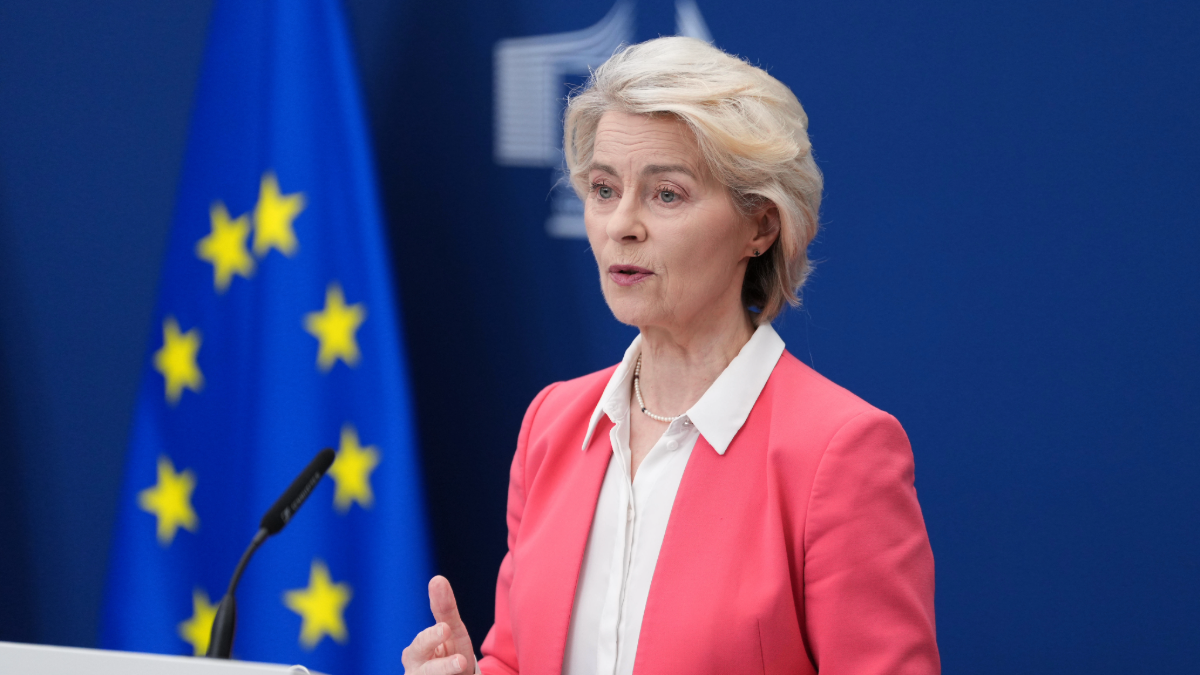
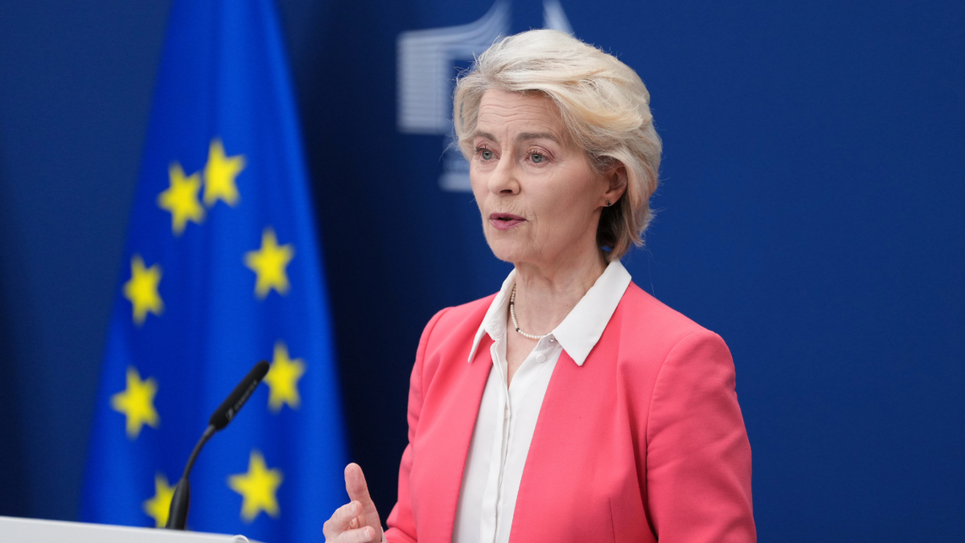
European Commission President Ursula von der Leyen speaks during a report on children's safety online at EU headquarters in Brussels, Monday, July 13, 2026. (AP Photo/Marius Burgelman)
The European Commission is the latest political institution to tackle the growing global trend of lawmakers looking to put in place bans or restrictions on access to online platforms for young people. As individual member states such as France, Austria, Greece and Spain all debate establishing bans of varying kinds, the pressure is on the Commission to put forward a unified vision for how the Union will address this highly political issue.
At CDT Europe, like many of our civil society partners, we have been following the developments closely, publishing research and interviewing young people and their families on what they really want from their online experiences. The co-chairs report therefore made for enthusiastic summer reading.
We welcome the commitment of the authors to present a nuanced conclusion on how the EU could move forward. The emphasis on centering children's rights, safety by design and placing the onus of platforms to make their services inherently safer are recommendations we strongly support. However, the report's conclusions have some blind spots, or more worryingly, make recommendations that may undermine the rights of all users.
Safety by design must be defined and operationalized to be effective
First, safety by design is an approach that the authors place at the centre of their recommendations. The report stresses that safety by design and age-appropriate safeguards (for example, potential limits on infinite scrolling, autoplay, push notifications, and problematic personalized recommendation engines) should be embedded into social media and other digital services before children may access them, in a "reversal of proof”, with the responsibility placed on the platforms. In theory, this may be a laudable approach — focusing on company responsibility rather than on individuals. But while EU Commission President Ursula von der Leyen stated that "this is not about whether children can access social media, it is about whether and when social media can access our children", it remains to be seen who will decide how and when platforms have met the benchmark of “safety.” Indeed, the report doesn't specify which stakeholders should be setting the bar on whether a platform or service is considered safe, or even what exactly “safety” entails in this context. Unilaterally empowering a regulator to determine if a platform is safe means relying on these authorities to make decisions on technical standards that will differ widely between the social media platforms and will need constant updating. Beyond the fact that this process should happen transparently and be informed by public interest expertise, this raises concerns of broad restrictions on young people's access in the meantime, to the detriment of their fundamental rights.
Age-based access restrictions remain problematic—especially where the scope of application is unclear
The headline recommendation refers to “a harmonised EU-wide access restriction to social media and other digital services” for children under 13 (unless parental guidance or education purposes are provided), complemented by feature-specific restrictions for minors older than 13. We understand that this is designed as an agile approach that doesn’t fully imply a hard ban, but the technical specifications of its enforcement, its scope, and the services it encompasses aren’t clearly defined – which may result in a much broader and more rights-limiting application of such a restriction. Indeed, while the authors of the report provide a broad working definition of “social media+” as “services that may be available to minors and contain age-inappropriate and/or risky features [...] and/or content” (P.5), this definition is not agreed upon, nor is it established in existing legislation. Given that this may eventually define whether or not a service is accessible for minors, the lack of clarity will impact the enforcement of future policies on child online safety and presents significant concerns for freedom of expression, access to information, right to privacy, and right to data protection.
Age-specific restrictions de facto mandate age verification at scale
The recommendation of age-specific restrictions on access de facto mandates age verification at scale, which will have an impact on the fundamental rights of all users. The fact that the EU Digital Identity Wallet is depicted as the optimal solution to this issue is highly problematic, as civil society has consistently been raising concerns regarding accessibility, security of users, and the robustness of privacy protections of the solution’s blueprint. An age-gating approach, coupled with a broad and loosely-defined scope of application poses significant privacy, security, accessibility, non-discrimination and freedom of expression risks for all users, children and adults alike.
Existing frameworks should be enforced and harmonized before new rules are drafted
Lastly, the report acknowledges the evolving digital laws and regulations put in place in the EU since the turn of the century, which include additional protections for children and parameters on parental consent. It also mentions the potential of the most recent of these laws, the Digital Services Act (DSA), in tackling online harms.
However, it fails to recognize the need to allow for these existing, fairly recent laws to reach their full potential as a first approach. Significant consultation went into the development of the DSA’s Article 28 guidelines, and they strike a useful balance in providing additional measures to protect minors whilst also steering clear of bans or mandated age verification. The European Commission has been stepping up its DSA enforcement activities with a series of investigations and decisions against platforms for their failure to better protect minors using their services. We are also expecting the Digital Fairness Act, which the European Commission describes as having two primary aims: strengthen consumer protection rules by challenging issues such as deceptive design, and protecting children online. Therefore, it makes sense to allow this framework to come together in practice and avoid introducing new legislation prematurely.
Given that the Co-chairs’s recommendations are supposed to inform future policy developments on child online safety across Europe, the critical question ahead of the institutional return in September remains: How will an EU-wide approach on child online safety strike the delicate, but necessary balance between protecting the fundamental rights of children online and safeguarding the rights of all users?
As the legislators explore possible answers, it is absolutely crucial that processes are inclusive, transparent and democratic. Recent actions by EU institutions, namely the European Parliament, in bypassing rules of procedure to reintroduce contested legal frameworks under the umbrella of child protection, leaves us concerned for how the next steps will be formulated. Our concerns are all the more relevant in a policy area such as child protection, which must centre the rights and voices of children to be successful.
We go into more details on these and other issues we have identified in our most recent brief, which you can read here.
Authors