Unpacking Greenland’s Looming Technology Metals Crisis
Laura Scherling / Jan 20, 2026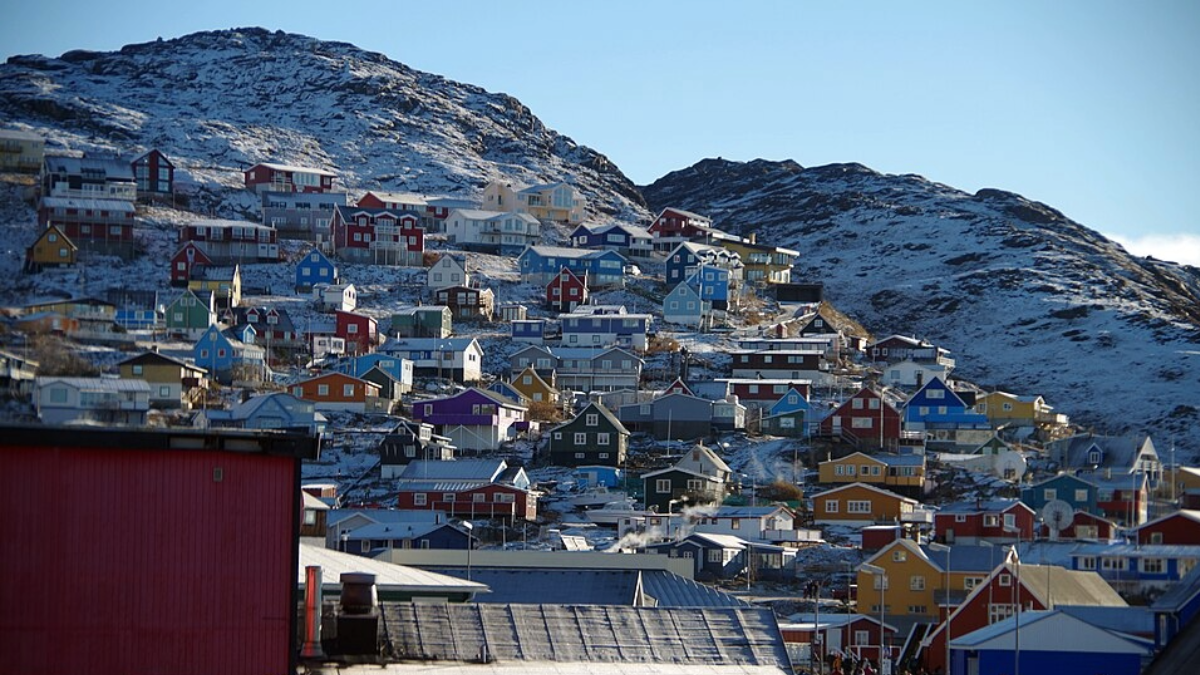
The town of Qaqortoq in south Greenland. Many new mining projects in Greenland are located it its southern region. (Source)
On January 4, President Donald Trump claimed that the United States needs Greenland “from the standpoint of national security.” This quickly unfolding situation has surfaced new questions about Greenland’s strategic military and trade location.
Its “minable concentrations” of rare earths, often referred to as “technology metals” due to their necessity for advanced electronics and other gadgetry, have been a subject of discussion since the first Trump administration. European leaders have pushed back against Trump’s intensifying calls to take over Greenland, and Greenlandic politician Aaja Chemnitz Larsen has reiterated that “Greenland has never been for sale and never will be for sale.”
Nevertheless, as The New York Times pointed out, the US “already enjoys sweeping military access in Greenland” and economic partnerships have long existed.
On December 8, the governments of the US and Greenland (with participation from Denmark) met for their 20th annual Joint Committee meeting in Nuuk, Greenland. The Joint Committee Meeting was hailed as “reaffirm[ing] … a strong and forward-looking relationship based on mutual respect and grounded in shared interests and practical cooperation,” an important statement in light of recent tensions over Vice President JD Vance’s scaled back trip to the autonomous territory of the Kingdom of Denmark.
Greenland has an important strategic location, one which was even more elevated during the Cold War, a time during which the US presence on the island was much larger. Under the agreements of 1941 and 1951, the US has had a military presence in Greenland for over 85 years, committed to the defense of the territory. Part of the 1941 commitment included the US defense of cryolite mines in Ivittuut, Greenland essential to manufacturing of fighter planes in World War II. Abandoned buildings and a hole in the ground of Ivittuut are what remain of decades of cryolite mining. In 1942, at its peak, 86,000 tons were shipped to the US and Canada for the production of aluminum.
Greenland recognizes the potential importance of its reserves of critical mineral wealth.
Greenland’s own defense policy now explicitly links national resilience to opportunities in mining and infrastructure. The US has reciprocated this stance through the Joint Committee Statement and the 2020 Common Plan, creating a bilateral mechanism to accelerate “natural resource extraction” alongside standard trade. This policy alignment has cleared the path for major US investment, most notably the Tanbreez Rare Earth Project. Led by Critical Metals Corp, this initiative is the practical realization of those diplomatic goals, aiming to turn raw policy potential into 85,000 tonnes of annual rare earth production by 2027. Tanbreez stands out as a potentially high value strategic asset with resources that can power “military-grade systems, advanced magnets, and precision electronics.”
Rare earths are a group of 17 chemically similar elements that are used in magnets, catalysts, polishing and alloys. Powerful rare earth magnets are used in the production of hard disk drives, electric motors, medical applications like diagnostics equipment, medical implants, and life sciences tools like microscopes. High performance magnets are also vital components in electric vehicles, solar panels and wind turbines, therefore fundamental to sustainable tech applications.
China “accounts for about 61% of rare earth production and 92% of their processing,” according to the BBC. Compared to China’s nearly two thirds of global rare earth mining, the US comes in a distant second with an around 11.6% share, followed by Myanmar, Australia and Thailand.
Greenland possesses vast potential for critical mineral wealth, though the full extent is still being proven. For instance, the pilot facility in Qaqortoq, Greenland, currently being developed by Critical Metals Corp, is estimated to hold “at least 45 million tonnes in resources,” which could eventually deliver much-needed supply to North America and Europe. According to the 2020 Common Plan, this could promote greater investments and build out Greenland’s technical and vocational training in mining operations.
Mining could also lead to a reduction in the block grant that Greenland receives from Denmark, which could be a positive outcome. Despite environmental concerns, Javier L. Arnaut, an Associate Professor at the University of Greenland, described the disputed Kvanefjeld mining development project as “the country's first serious steps towards economic self-sufficiency.” However, the Kvanefjeld mineral deposit is mixed with uranium and currently blocked as a result of a 2021 Uranium Ban in Greenland to stop potential mining pollution.
This potential for a new critical mineral supply chain provides a high-stakes backdrop to escalating US assertiveness.
Against the prospect of developing these resources, threats to buy or even “utilize the US military” to take Greenland have rattled Western alliances. The fallout has been stark: French President Emmanuel Macron criticized the US for “breaking free from international rules” and Danish Prime Minister Mette Frederiksen cautioned that such actions could end NATO. Consequently, what might have been a resource boom is now entangled with what Anna Wieslander calls NATO's potential “worst crisis.”
Greenland’s 2024 foreign, security and defense policy, titled “Greenland in the World - Nothing about us without us,” emphasizes the importance of self-determination and improving the “lives and livelihoods” of Greenlandic people. It argues that Greenland must have a “leading role in the Kingdom of Denmark’s delegation” and called the US one of their “closest allies” with their shared NATO defense alliance.
The rare earth exploration race in Greenland continues, not only seizing outsize attention from the US, but also drawing interest from the United Kingdom, Canada, Australia, the Czech Republic and India. The situation also speaks to a major ethical dilemma that technology products as varied as military tech and climate tech and data storage pose. These new technologies rely on important, contested physical spaces.
New manufacturing capabilities and more research and investment into alternatives like rare-earth-free magnets could reduce dependency on rare earth elements that carry with them serious geopolitical and sustainability risks. For now rare earth elements remain an integral part of technology products everywhere.
Authors