Von der Leyen Moves to Lock Down Social Media for Under-15s Across Europe
Mark Scott / Sep 15, 2026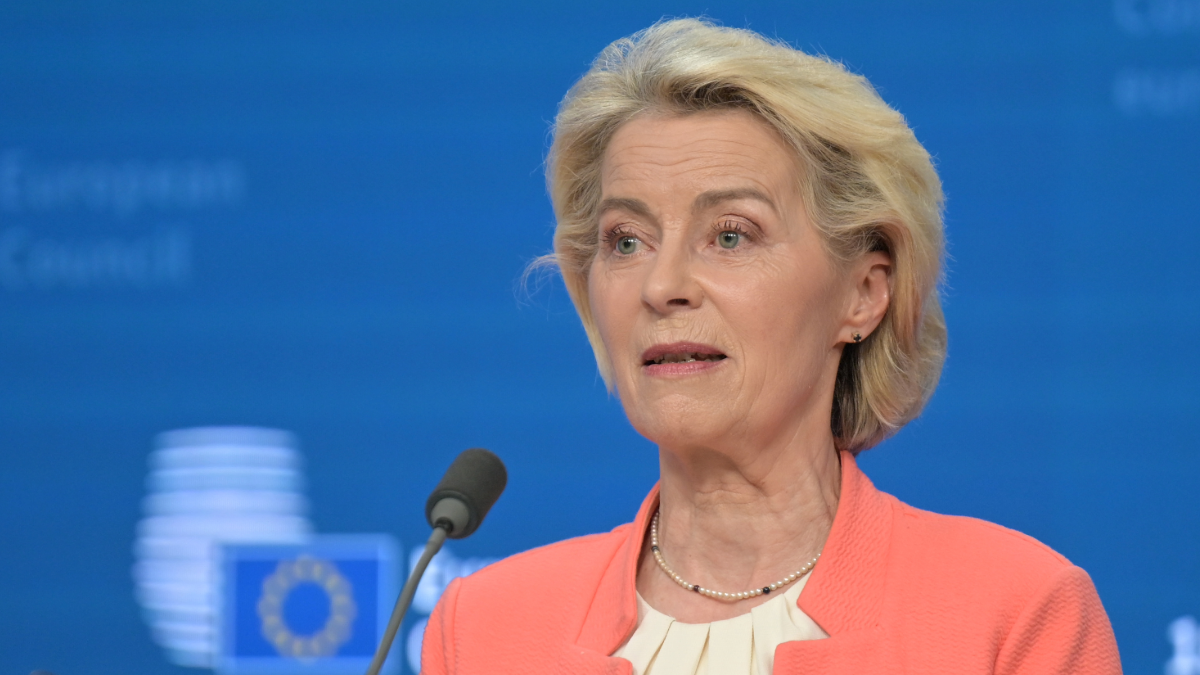
Ursula von der Leyen, President of the European Commission. Photo by: Malin Wunderlich/picture-alliance/dpa/AP Images
When Ursula von der Leyen, the European Commission President, takes the stage in the European Parliament on Wednesday for her annual State of the European Union speech, the German politician will finally get what she has longed for: a Continent-wide social media ban for kids.
Alongside broader themes around Ukraine, Europe’s sovereignty and the 27-country bloc’s stalling economy, von der Leyen is expected to give more details on the EU Kids Act that will be officially announced on Sept 17.
As part of the proposals, Brussels is expected to follow other jurisdictions in imposing restrictions on how children under the age of 15 can access social media, AI chatbots and online gaming services. The move follows recommendations from a panel created by the European Commission, as well as attempts across the bloc by national governments to create similar social media bans aimed at protecting kids online.
“The current EU legislative framework does not specify a minimum age for access to platforms and services with age-inappropriate or risky features and content,” according to a leaked draft of the proposals obtained by Euractiv. “Decisive, comprehensive and urgent action at (European) Union level is the most appropriate way forward.”
Brussels’ social media ban is expected to function in stages.
The European Commission is expected to announce that children under the age of 15 are not allowed to create their own accounts on social media, video-sharing platforms, AI chatbots and online games.
That includes a complete moratorium on accounts for those under 3; parent-controlled accounts on “child-friendly” services for those between 3 and 12 years of age; parent-opened accounts on legacy platforms for 13- and 14-year-olds; and full accounts for children from 15 years of age. That age matters because some EU member states, like Austria and Malta, allow 16-year-olds to vote, and access to information via social media is protected under the EU’s Charter of Fundamental Rights.
As part of the plans, Brussels will also mandate age verification checks on all accounts to ensure children are not bypassing checks, design changes to platforms to reduce addictive design and harmful content showing up in children’s feeds, and a supervisory fee for platforms to fund enforcement.
“The burden of proof to demonstrate compliance with new rules lies with the operators,” according to the leaked European Commission draft.
While such a ban has long been a political priority for von der Leyen, the proposals must still be approved by both the European Parliament and EU member states. They will likely change before coming into force, at the earliest, in 2028, based on how long EU legislation typically takes to pass.
Brussels already has one of the most comprehensive online safety regimes in its Digital Services Act. But as other jurisdictions, most notably Australia, the United Kingdom and some US states, have proposed or enacted their own social media bans, the EU has been caught off-guard in a digital policy area that has garnered significant public attention.
Several EU member states, such as France, Greece and Denmark, have proposed their own national social media bans. Faced with this whack-a-mole approach to kids’ online safety, the European Commission felt obliged to act so that individual countries did not set up competing regimes.
Much, however, still needs to be ironed out.
A critical area will be Brussels’ proposed age verification requirements that would check all accounts to ensure they were not created by minors. While EU officials believe such checks can be done in a privacy-preserving way, it raises concerns about accounts opened by adults and how such data will be secured to comply with the bloc’s rigorous data protection rules.
“Existing accounts would be subject to proportionate checks rather than blanket age verification,” according to the leaked draft.
Another likely battleground will be which digital services will be in scope. Under the European Commission’s plans, social media, video-sharing platforms, online games, AI chatbots and AI companions will all have to comply with the new moratorium. Services that will not have to comply include those designed for education and others operated by public authorities.
That raises questions about whether YouTube Kids or online messaging services like WhatsApp will similarly have to impose the EU’s regionwide proposed ban. Under Australia’s separate social media ban, for instance, YouTube is in scope, while YouTube Kids is not.
The new layer of digital legislation — including the upcoming Digital Fairness Act that is expected to be announced by the end of the year — comes as von der Leyen has attempted to pare back the bloc’s digital rulebook to jumpstart the EU’s sluggish economic growth.
Those efforts, first outlined in 2024 via a competitiveness report written by Mario Draghi, the former Italian prime minister, outlined how rules like the EU’s AI Act and General Data Protection Regulation were perceived to be holding back Europe’s economy.
Yet confronted with growing public anger about children’s use of social media and digital services, von der Leyen decided to act despite her public efforts to rein in the bloc’s legislative and regulatory agenda.
Authors