Wikipedia Isn't Big Tech, and Brazil's Platform Rules Should Say So
João Alexandre Peschanski, Amalia Toledo, Elise Silva / Oct 2, 2026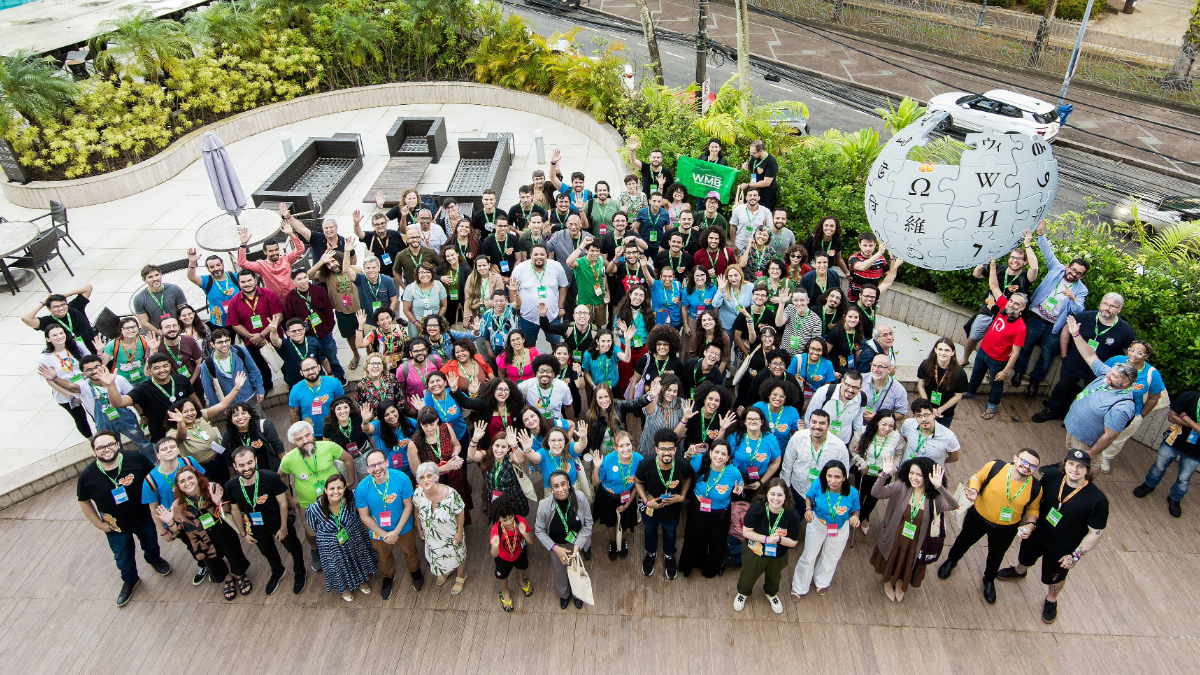
WikiCon Brasil 2025 group photo. Donatas Dabravolskas, CC BY-SA 4.0, via Wikimedia Commons
As Brazil approaches its presidential election on October 4, there are concerns about the impact that social media platforms' handling of election disinformation and other content moderation decisions might have on more than 150 million eligible voters. In August, Amnesty International submitted 15 ads to Facebook as an experiment to test Meta’s detection of election disinformation. Although 14 of them included disinformation, the platform approved eight. The organization reported that the seven ads were not rejected for disinformation, but because they appeared to concern an election or social issue and required identity verification.
Brazil is well aware of this problem, and has been at the forefront of platform liability reform. With an approach firmly based on digital sovereignty and constitutionality, Brazil has developed evolving mandates in areas like duty of care, child protections, and strict content removal timelines.
The world is watching with interest.
Because of its global implications, clearly understanding Brazil’s approach is important. So far, it has been focused on reducing the harm that commercial platforms produce. While such harm is significant, this focus misses part of the broader picture. Removing false information is an important impulse, but this is different from creating reliable information. It is a reactive, rather than proactive, approach. Reliable information depends on more than journalism, academic research, or official data; it requires transparent systems for managing and accessing the information in question. Nonprofit, ad-free platforms with open editorial processes such as the Portuguese-language Wikipedia and Wikidata provide fundamental digital infrastructure for epistemic independence, ensuring that open knowledge remains in the public interest.
Wikimedia Brasil is an independent local chapter of the free and open knowledge, volunteer-led Wikimedia movement. Alongside the US-based Wikimedia Foundation, which hosts the Wikimedia projects and provides support to volunteers, the chapter has experienced how fragile public infrastructure can be. Its experience over the past six years offers a crucial lesson for a global audience: regulation written reactively for ad-driven social media networks threatens to undermine the knowledge commons as a digital public good. Wikimedia, and other public interest projects like it, should not be treated as legislative afterthoughts; instead, they should be protected and promoted as an essential part of any resilient information ecosystem.
Wikimedia Brasil: From volunteers to advocates
A decade of documented harm preceded Brazil’s regulatory moves. Dilma Rousseff's impeachment followed the 2013 protests, which social media platforms amplified. By 2018, renowned journalist Patrícia Campos Mello uncovered coordinated WhatsApp messaging campaigns, which were financed to benefit Jair Bolsonaro’s presidential candidacy. More recent election cycles have continued facing issues of polarization, interference, and now AI-generated synthetic content. In part because of these electoral harms, Brazil has responded as one of the first major democracies in the Global South to attempt comprehensive platform regulation.
Before 2020, Wikimedia Brasil had no urgent need for a dedicated public policy advocacy program. Until then, its work had centered on partnerships with galleries, libraries, archives, and museums (GLAM), educational programs, and encyclopedic content—none of which had previously drawn legislative attention. That changed in April 2020, when Bill 2630 (quickly named the “Fake News Bill”) began moving through the National Congress. The bill introduced traceability requirements, content moderation duties, and a liability regime that drew no distinction between commercial platforms and nonprofit projects. This posed a significant threat to the Wikimedia projects, as complying with the bill’s requirements would be unfeasible for a community-governed platform with limited resources.
Wikimedia Brasil faced a strategic dilemma. If it advocated against the Fake News Bill, it risked undermining a well-meant social momentum for platform accountability, and appearing self-interested at a time that called for solidarity. If it remained silent, it would jeopardize Wikimedia projects’ operating model in the country and, with it, the critical and independent thought such projects have as their goal to offer to everyone, everywhere. Wikimedia Brasil decided to work alongside civil society groups like the Coalizão Direitos na Rede (Digital Rights Coalition) in order to draft and propose a Wikipedia-specific exception. The proposal was successfully incorporated into the revised bill.
Working to dispel the myth of a single internet
Bill 2630 ultimately stalled, but the broader debate it began highlighted a recurring flaw in tech policy: the myth of a single Internet, which leads public policy proposals to treat every platform in the entire digital ecosystem as the same kind of entity. Concerned about the harms of ad-driven social media platforms, internet legislation often leaves encrypted messaging apps, open-source repositories, and nonprofit collaborative projects to fall under the same regulatory category.
This myth and the “one-size-fits-all” approach that goes with it creates two structural problems.
The first relates to governance. Wikipedia’s reliability rests on hundreds of thousands of volunteers who create, source, and curate content through discussion and open consensus. Regulatory frameworks mandating centralized or automated moderation fail to account for the encyclopedia’s approach. These mandates replace a community-led approach with a top-down system, hollowing out the value that open knowledge platforms contribute as unique information spaces online.
The second relates to finances. Public interest platforms like Wikipedia choose to operate without advertising revenue to provide an educational experience. They cannot absorb the compliance, audit, and legal costs designed for the world’s largest technology companies. Resources meant for maintaining infrastructure and supporting volunteer-led projects need to be diverted solely to meet these demands.
In this sense, Brazil’s legal journey highlights both the potential of protective frameworks and the dangers of blanket regulation. The Marco Civil da Internet (Law No. 12,965/2014) historically protected platforms from liability for user-generated content (UGC) unless they ignored court orders to remove it. This allowed volunteer-led platforms like Wikipedia to thrive without constant fear of legal liability. In 2025, however, Brazil’s Supreme Federal Court found the law’s Article 19 partially unconstitutional, and Decree No. 12,975/2026 implemented that ruling as a duty of care enforced by the National Data Protection Agency (ANPD), which represented a significant shift toward greater legal burdens for platforms.
The Wikimedia Foundation filed an amicus brief to the Court arguing that platform hosts with minimal interference in content should retain the protections as interpreted before the ruling, and also that local-representation requirements should be flexible for nonprofit platforms. Some of that flexibility survives in the decree, which stipulates that compliance standards may vary by platform type, the degree of interference with the circulation of UGC, and a provider’s economic scale. The ANPD can, therefore, recognize that different platforms operate differently and should be regulated accordingly.
The Digital Statute for Children and Adolescents (ECA Digital, Law No. 15,211/2025) poses a more categorical challenge. Its broad age-verification mandates threaten to force collaborative platforms serving the public interest to either collect invasive personally identifiable information (PII) or restrict access to educational content. As the implementing regulations were drafted, the Wikimedia Foundation urged authorities to tailor requirements to the actual risk each platform poses, and advocated an interpretation that would fully exempt digital public goods from age verification, protecting freedom of expression and access to reliable information online.
Poorly designed regulations could end up placing an unfair burden on nonprofit digital public goods. To educate lawmakers, Wikimedia Brasil launched campaigns such as “Conhecimento é Direito” (i.e., “Knowledge Is a Right”) in collaboration with civil society partners. The key takeaway of the campaign was that most policymakers shouldn’t assume technology regulation affects only commercial platforms. Changing that mindset requires constant advocacy efforts, time, and resources that nonprofit organizations do not always have.
Policy recommendations: Regulate commercial platforms without crushing the digital commons
Protecting people from online harms does not require sacrificing the digital public goods that support open and free education, promote cultural heritage, and enable democratic debate. These examples from Brazil offer the following important takeaways for a global internet policy audience interested in both regulating big technology platforms and protecting public interest projects like Wikipedia.
1. Create a legal category for digital public goods
Regulatory obligations are usually tied to monthly active users, market share, or size. These metrics equate a widely used, nonprofit platform like Wikipedia with a commercial social media network. A distinct classification should consider how a service operates, including details like nonprofit status, lack of advertising, open-source software, free content, transparent processes, and community-led governance. This category distinguishes public infrastructure from the start, avoiding the need for later exceptions.
2. Scale obligations to actual systemic risk
Requirements should take into account the risk a service’s business model and product design actually produce. Intensive oversight belongs on platforms built around extensive data collection, user profiling, and opaque algorithmic recommendations designed to maximize engagement and profits. Platforms where content is reviewed by humans in a transparent and public manner and without algorithmic amplification for profit require a correspondingly lighter compliance pathway.
3. Protect community governance and pseudonymity
Top-down moderation mandates push platforms toward automated tools that cannot understand context, including historical relevance, educational intent, scientific nuance, and/or satire. Applied to a platform like Wikipedia, that removes the very content for which readers come. Age-verification and retention mandates are costly. Requiring platforms to check readers’ ages or log who edited what runs against the data minimization principle that is common to privacy law worldwide, and creates stores of PII that would not otherwise exist—which malicious actors might then attempt to obtain. Stripping pseudonymity exposes volunteers who document politically sensitive or controversial subjects to harassment or retaliation. These protections are central to how open-knowledge projects work.
- - -
Ultimately, risk-proportional frameworks can hold the largest platforms accountable while leaving room for the collaborative spaces that make the internet a source of reliable public knowledge in the first place. Policy positions that protect and promote the digital commons from the start showcase a nuanced understanding of the parts of the online information ecosystem that enable civic discourse and support public participation.
Brazil’s upcoming election is already producing another round of evidence that commercial platforms cannot be relied on to safeguard electoral information. This strengthens the case for the country—and other countries looking to Brazil as an example—to invest in the parts of the internet that are not failing while simultaneously reigning in the parts that regrettably continue to do so.
Authors



.jpg)